
Monarch's Milkweed Identification Guide
The iconic orange-and-black Monarch butterfly, whose life cycle is tied directly to milkweed plants.
Read the full Monarch's Milkweed encyclopedia entry →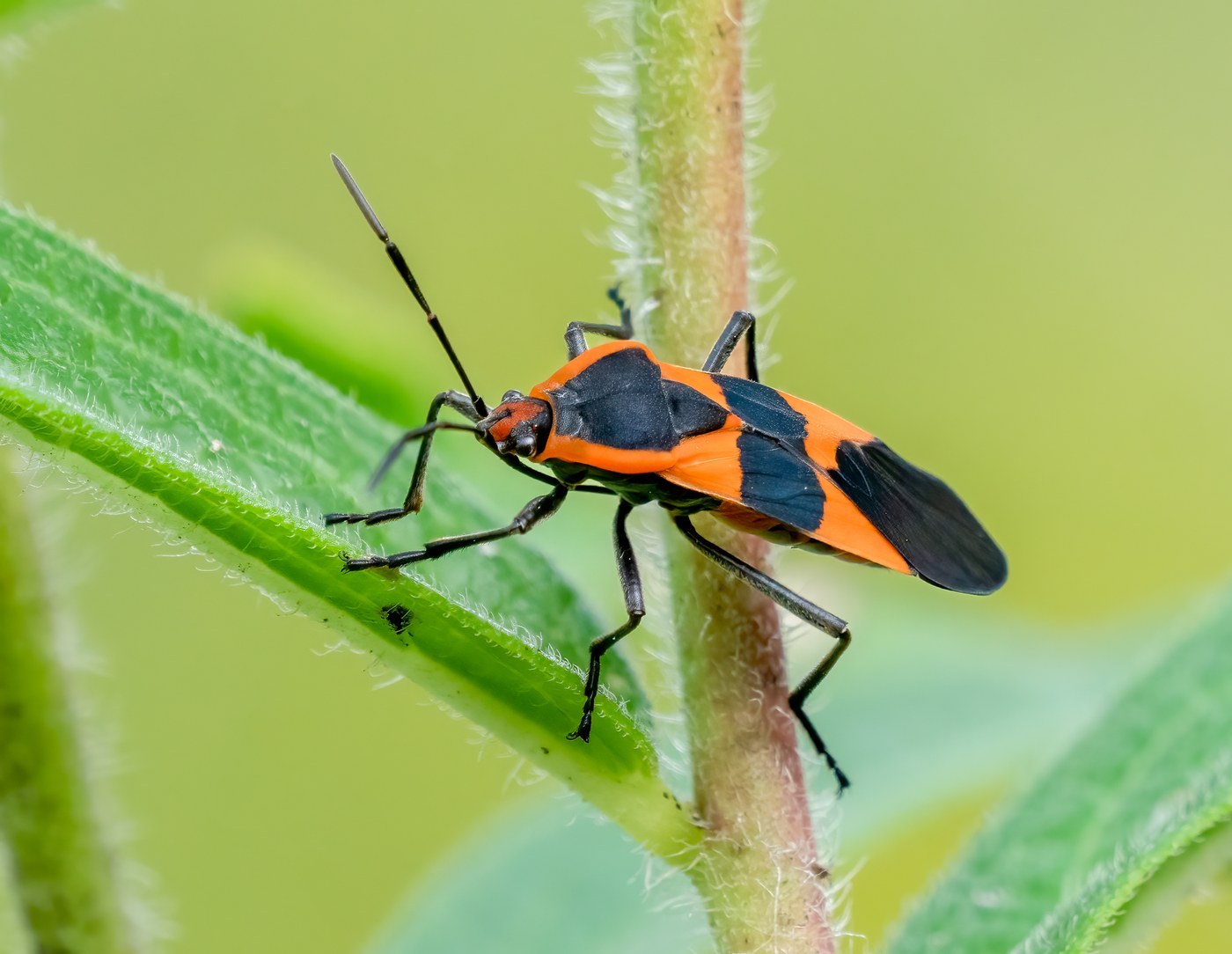
Key Visual Features
The Monarch (Danaus plexippus) is one of the most recognizable butterflies in North America, with a wingspan of about 3.5 to 4 inches.
- Upperside wings are bright orange with bold black veins running through them and a wide black border dotted with two rows of small white spots
- Underside is similarly patterned but slightly paler orange, useful for identification when the wings are closed
- Body is black with rows of white spots along the abdomen and thorax
- Males can be told from females by a small black spot (a scent patch) located on a vein of each hindwing; females lack this spot and generally show slightly thicker black wing veins
- Wings are broad and somewhat elongated, and flight is a distinctive slow, gliding flap-and-soar pattern
Where and When to Look
Monarchs are found across nearly all of North America wherever milkweed (Asclepias species) grows, since milkweed is the required host plant for the caterpillar stage and adults are frequently seen nectaring at milkweed flowers as well as other blooms like asters and goldenrod. Look for them in meadows, prairies, gardens, roadsides, and open fields from spring through fall across most of the range. Monarchs are famous for their long-distance seasonal migration, with populations moving south in autumn to overwintering sites in central Mexico or coastal California, then returning north over several generations each spring and summer.
Similar-Looking Species
- Viceroy: the closest look-alike, but the Viceroy is somewhat smaller and shows an extra black line curving across the hindwing (a postmedian band) that the Monarch lacks; this single line is the most reliable way to separate the two
- Queen butterfly: found mainly in the southern U.S., slightly darker orange-brown overall with more scattered white spotting and less defined black veining than the Monarch
- Soldier butterfly: a Queen relative found in similar southern ranges, distinguished by subtle differences in wing pattern and range from the Monarch
Quick ID Checklist
- Bright orange wings with bold black veins and white-spotted black borders
- No extra black line crossing the hindwing (unlike the Viceroy)
- Males show a small black scent-patch spot on the hindwing vein
- Always associated with milkweed as the larval host plant
- Slow, gliding flap-and-soar flight; long-distance seasonal migrant
Frequently asked questions
How do I tell a Monarch from a Viceroy?
Look at the hindwing: the Viceroy has an extra black line curving across it that the Monarch does not have. The Viceroy is also somewhat smaller overall.
Why are Monarchs always found around milkweed?
Milkweed is the required host plant for Monarch caterpillars, so adult females seek out milkweed patches to lay eggs, and adults commonly nectar at milkweed flowers as well.
How can I tell a male Monarch from a female?
Males have a small black spot on a vein of each hindwing, which functions as a scent patch; females lack this spot and tend to have slightly thicker black wing veins.
Do all Monarchs migrate?
Monarch populations in North America are known for long-distance seasonal migration, traveling to overwintering sites in central Mexico or coastal California and returning north over multiple generations.