
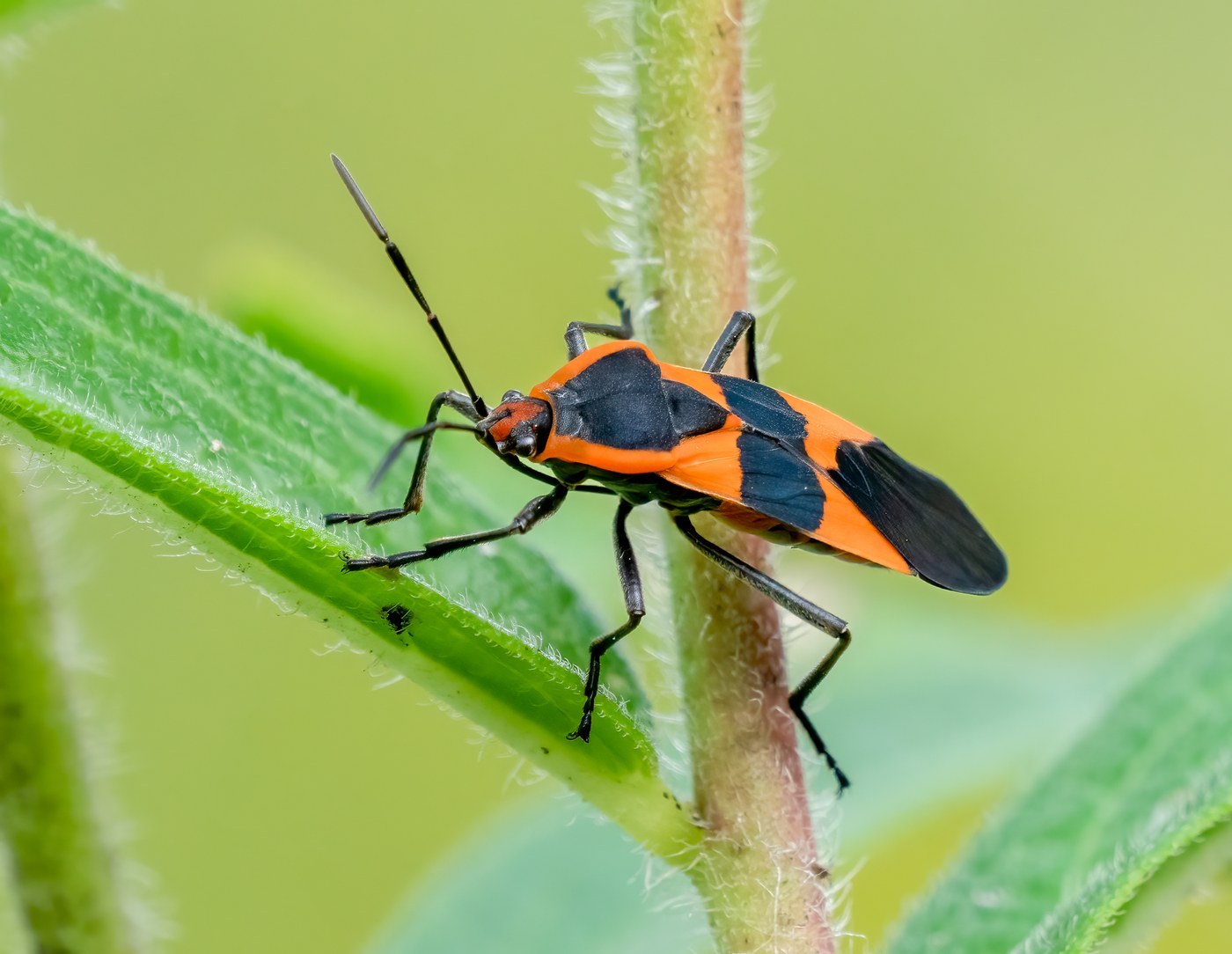
Monarch's Milkweed
Oncopeltus fasciatus
A boldly orange-and-black true bug that shares milkweed plants with Monarch butterfly caterpillars, often clustering in large groups on seed pods and stems.
- Size
- 11–16 mm
- Habitat
- Milkweed patches, old fields, gardens
- Danger
- Harmless
Spotted a bug like this?
Identify any bug or insect from a photo, free.
Overview
This insect, commonly known as the Large Milkweed Bug, is a true bug (order Hemiptera, family Lygaeidae) that lives its entire life on and around milkweed plants — the same plants relied upon by Monarch butterfly caterpillars. Its orange-and-black warning coloration echoes that of the monarch and other milkweed-feeding insects, and the two are often found together, leading many observers to associate the bug directly with the famous butterfly.
Unlike the monarch, which only visits milkweed as a caterpillar before transforming into a butterfly, this bug spends its entire nymph and adult life feeding on milkweed sap and seeds, often forming dense, conspicuous aggregations on seed pods in late summer.
As a common and easily observed milkweed specialist, it plays a useful ecological role in illustrating how multiple unrelated insect species can independently evolve similar bright warning colors while feeding on the same toxic host plant.
How to Identify
- Elongated oval body with a distinctive orange-and-black pattern: an orange head and pronotum, and orange wings crossed by a broad black band and black markings.
- Adults have fully developed wings folded flat over the back, with visible black triangular markings at the wingtips.
- Long, thin antennae and piercing-sucking mouthparts typical of true bugs.
- Nymphs are wingless, bright orange-red with a black abdomen, and often seen in large clustered groups.
- Frequently confused with the smaller Small Milkweed Bug, which has more solid black coloring with an orange "X" or heart-shaped mark on the back.
Habitat & Range
Found throughout much of North America wherever milkweed plants grow, including old fields, roadsides, prairies, and garden milkweed patches. Most abundant from mid to late summer when milkweed seed pods are forming, since seeds are a preferred food source. In warmer climates it may be active nearly year-round; in colder regions it is most visible from summer through early fall.
Behavior & Diet
Both nymphs and adults feed by piercing milkweed stems, leaves, and especially seed pods to withdraw sap and developing seeds, often gathering in large, conspicuous clusters. Its bright coloration serves as a warning signal to predators, reflecting the mild chemical defenses it acquires from its milkweed diet, similar in concept to the coloration seen in Monarch caterpillars and butterflies. It does not bite or sting people, though large aggregations are sometimes considered a minor garden nuisance on ornamental milkweed plantings.
Life Cycle
Females lay clusters of yellow eggs in crevices of milkweed pods or plant debris. Nymphs hatch and pass through five instars, gradually developing wing pads and the adult color pattern, all while feeding on the same milkweed plants. Development is rapid in warm weather, allowing multiple generations per year in warmer regions, while northern populations may migrate south or die off with the onset of cold weather.
Frequently asked questions
Is this bug harmful to Monarch caterpillars?
No, it is a separate species that feeds on milkweed sap and seeds rather than preying on monarch caterpillars, though both may be found on the same plants.
Why is it orange and black like a Monarch?
Its bright warning coloration is thought to signal that it carries mild chemical defenses derived from its milkweed diet, similar in concept to the coloration of monarchs, though the two are unrelated species.
Why do I see so many at once on my milkweed?
This species is gregarious, especially around developing seed pods, and large numbers of nymphs and adults commonly cluster together to feed.
How is it different from the Small Milkweed Bug?
The Large Milkweed Bug has a broader orange coloration with a distinct black band, while the Small Milkweed Bug is mostly black with a more limited orange 'X' or heart-shaped marking.
Monarch's Milkweed guides
In-depth guides for identifying, understanding, and living alongside Monarch's Milkweed.
Other bugs you may enjoy
Bagrada Bug
Arid gardens, crucifer fields, desert-adjacent croplands
Assassin Bug
Gardens, meadows, and vegetation worldwide
Water Boatman Bug
Ponds, lakes, and slow-moving freshwater
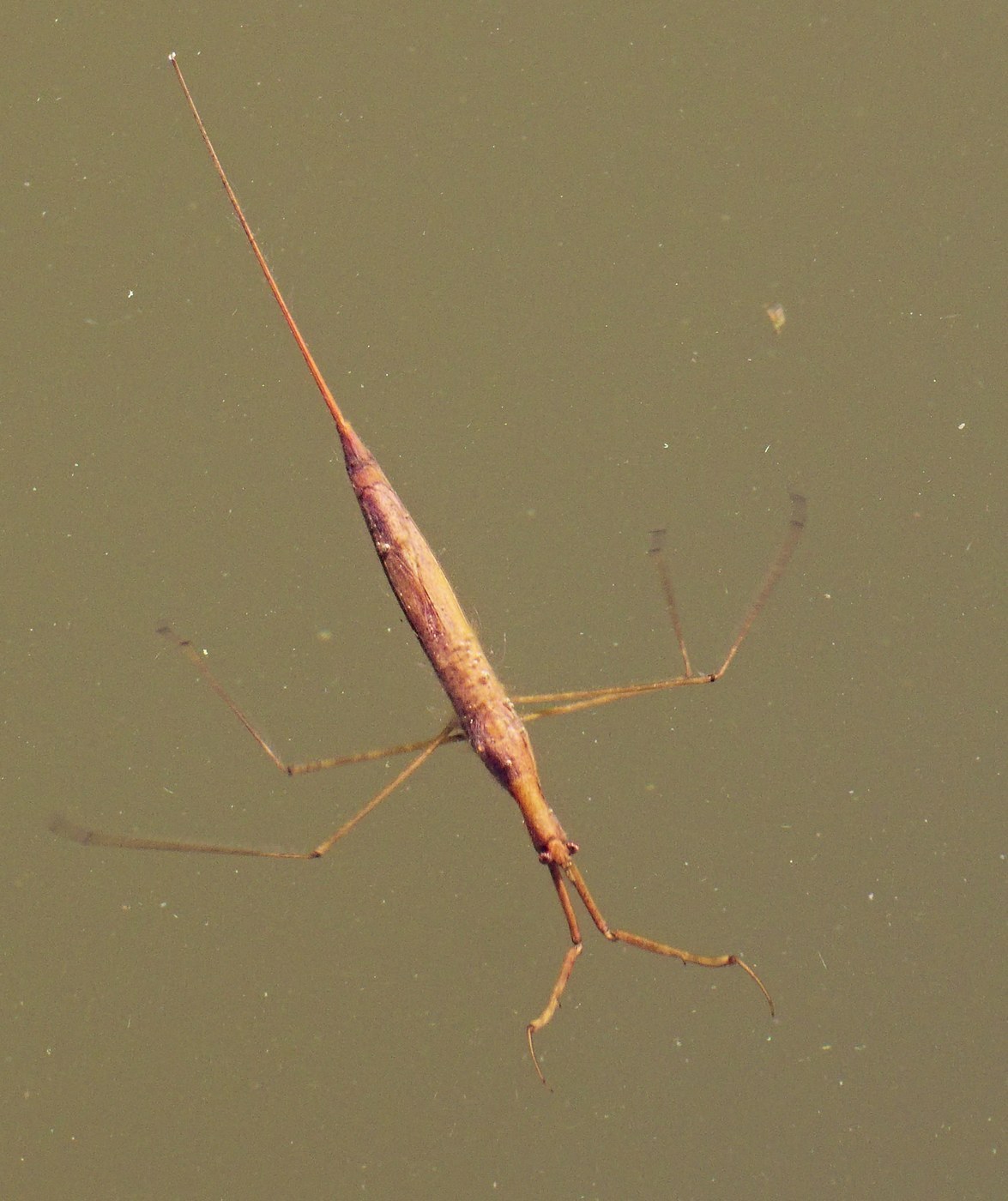
Water Stick Insect
Still and slow-moving water with dense submerged vegetation
Rough Stink Bug
Tree bark, woodlands, orchards, and shrubby vegetation
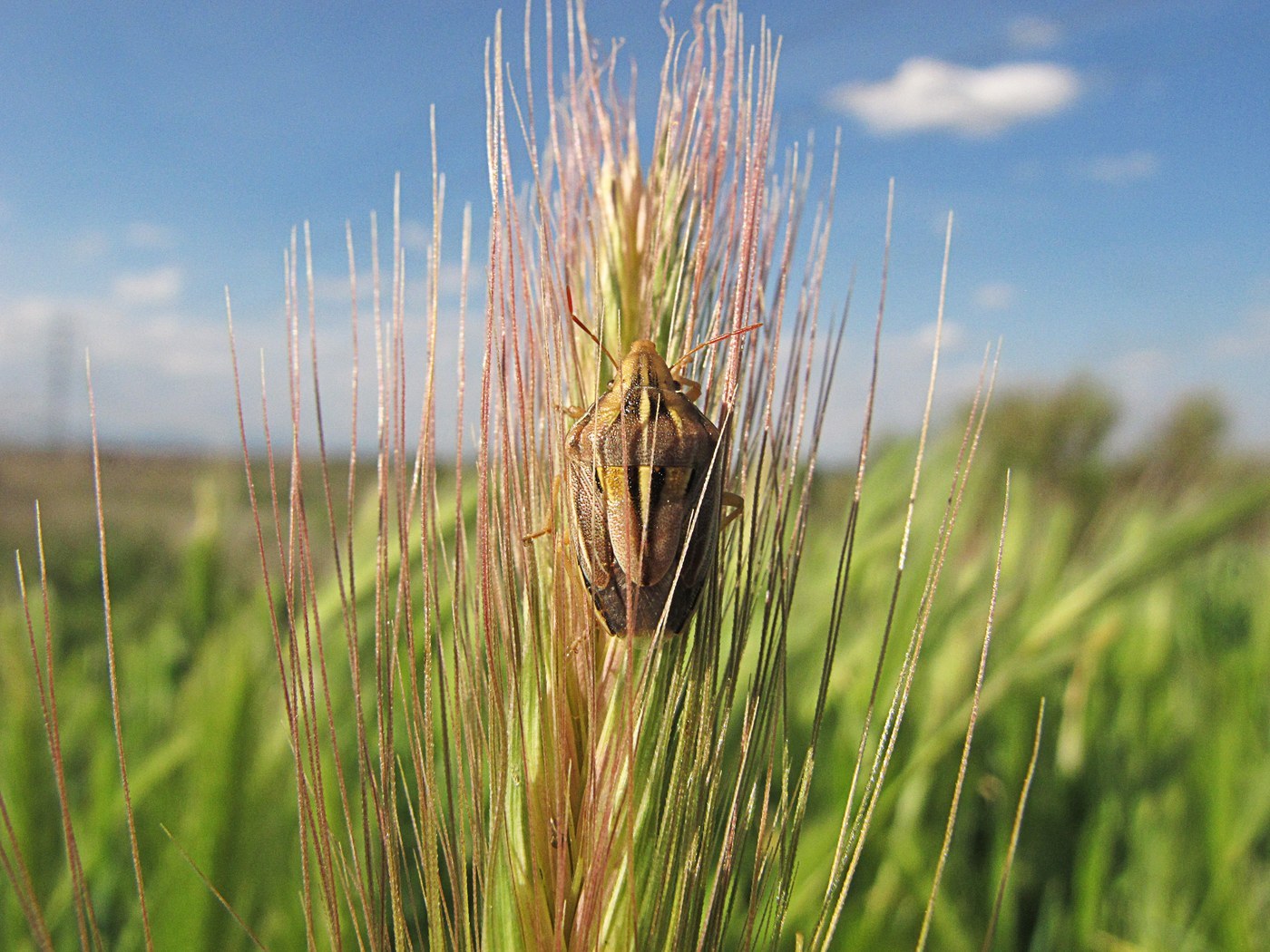
Stink Bug
Gardens, crop fields, and woodlands across temperate and subtropical regions
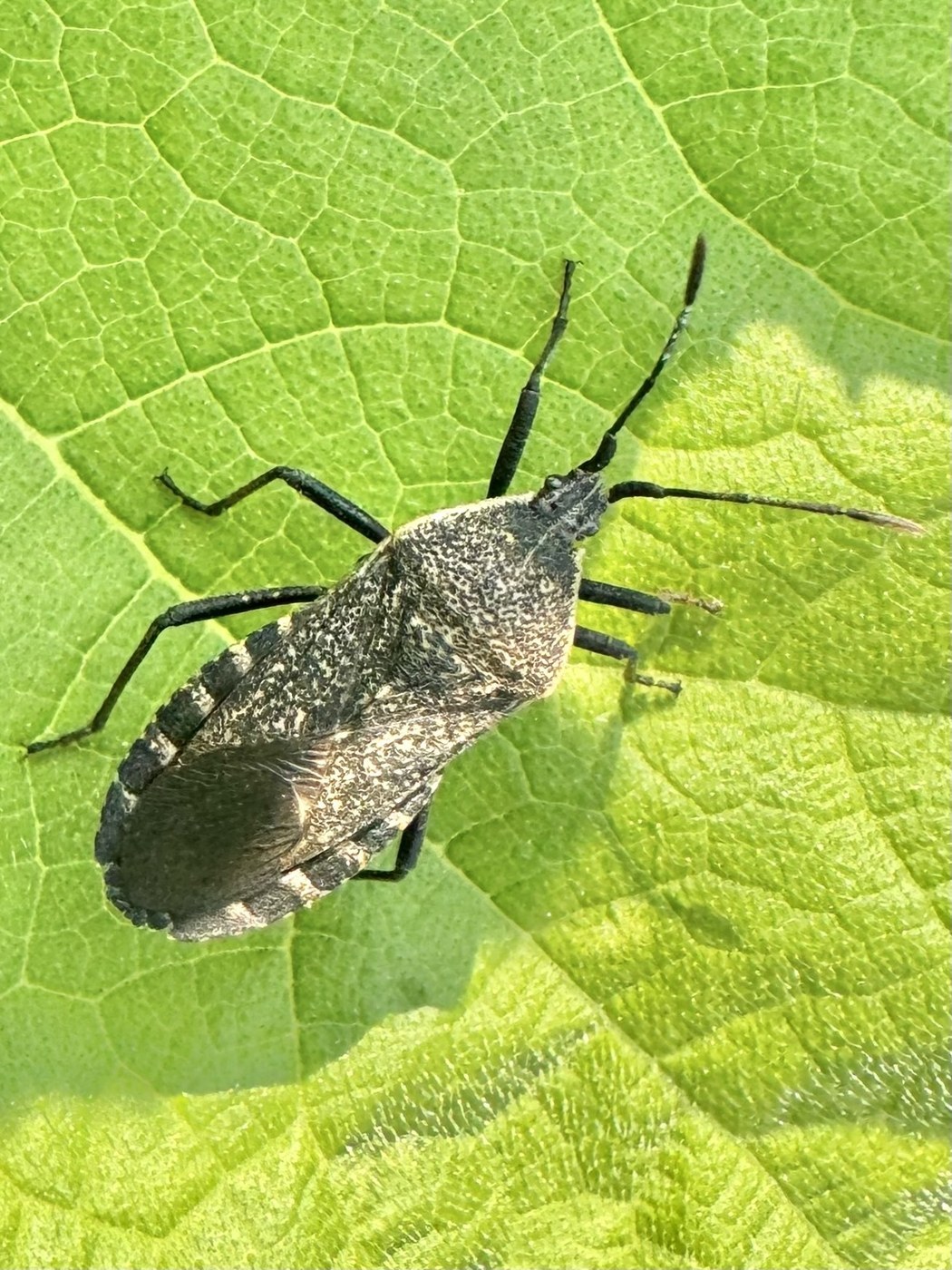
Squash Bug
Vegetable gardens and farm fields growing squash, pumpkin, and other cucurbits
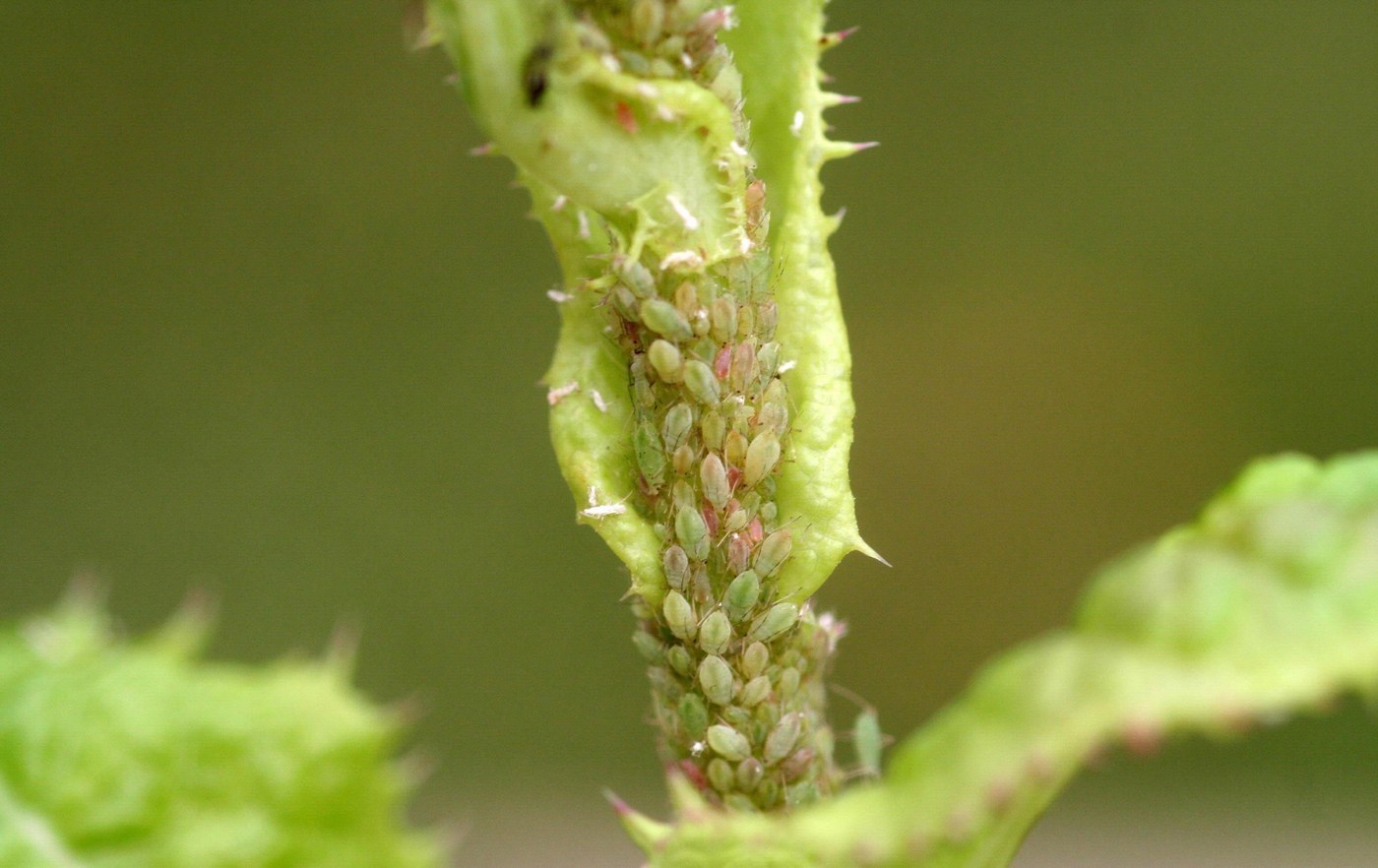
Aphid
On stems, leaves, and buds of a very wide range of host plants
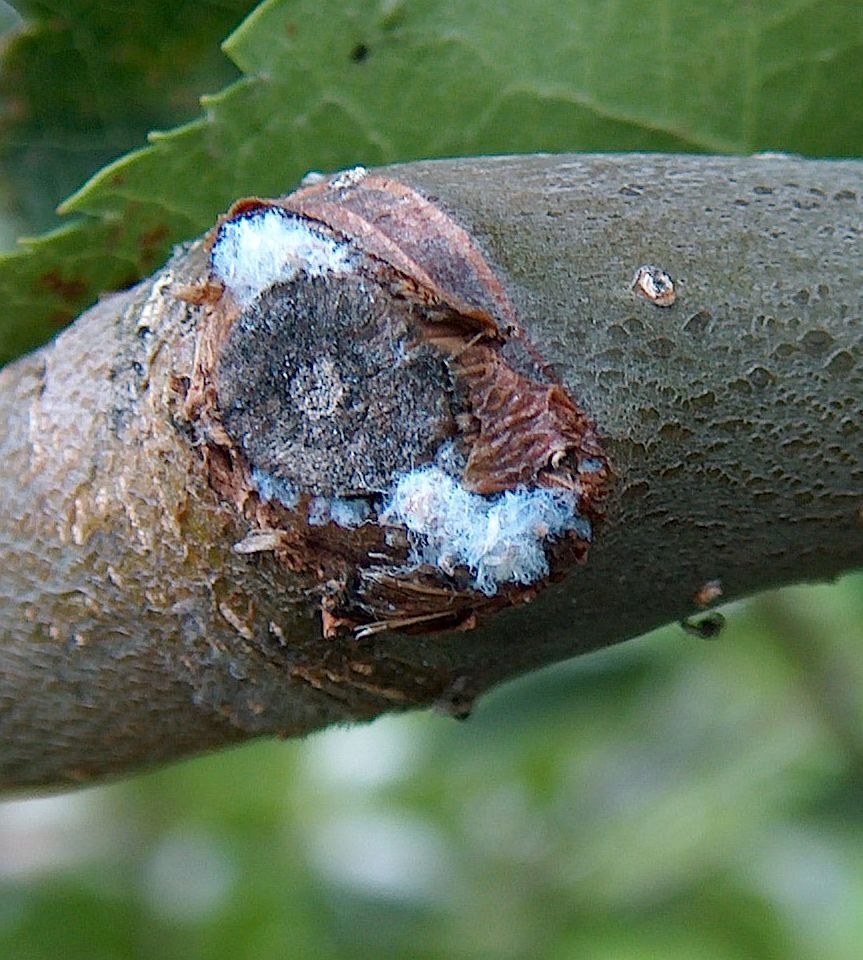
Woolly Aphid
Bark crevices, root collars, and twigs of apple, elm, and alder trees
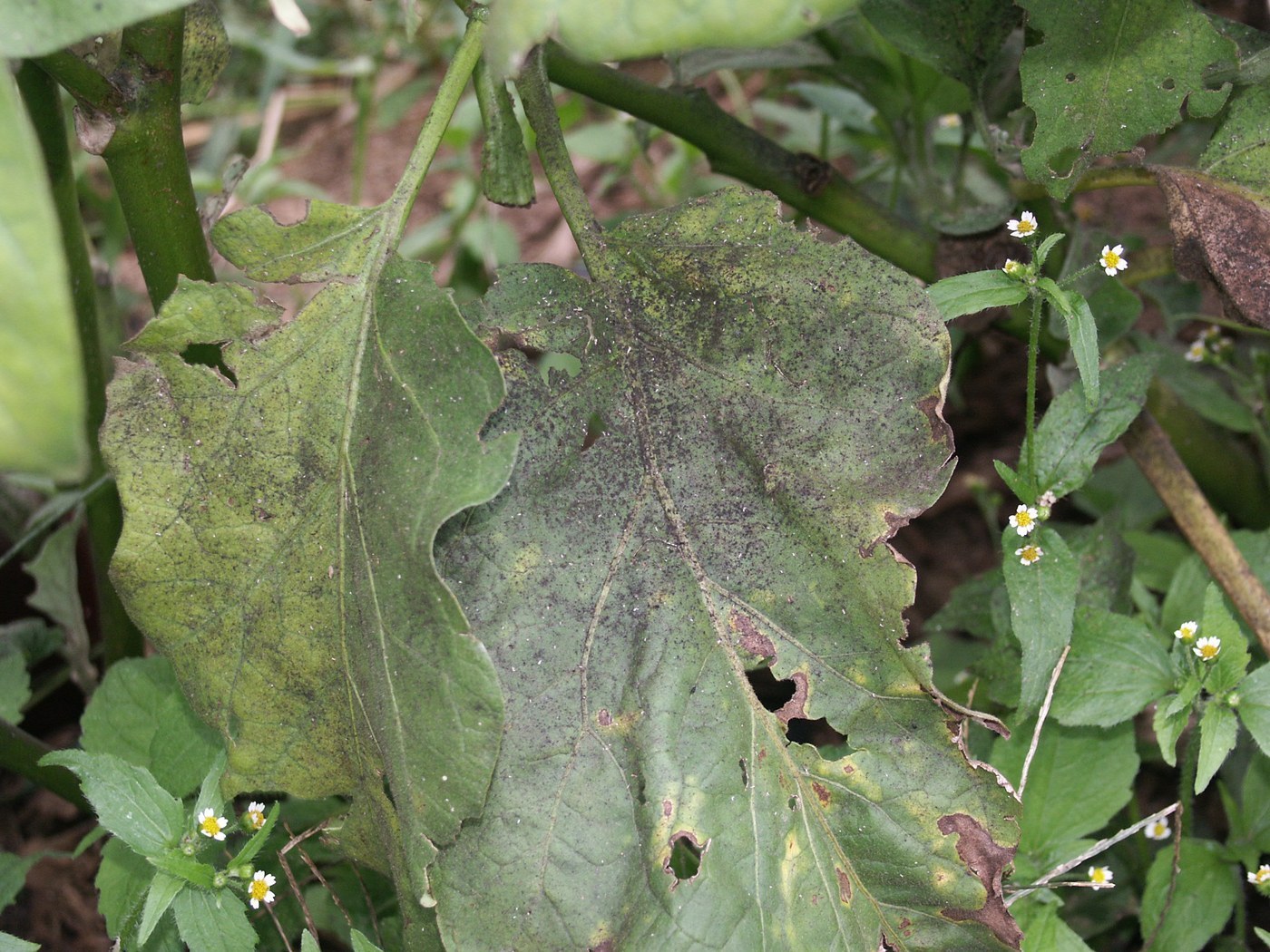
Whitefly
Greenhouses, gardens, and undersides of leaves on host plants
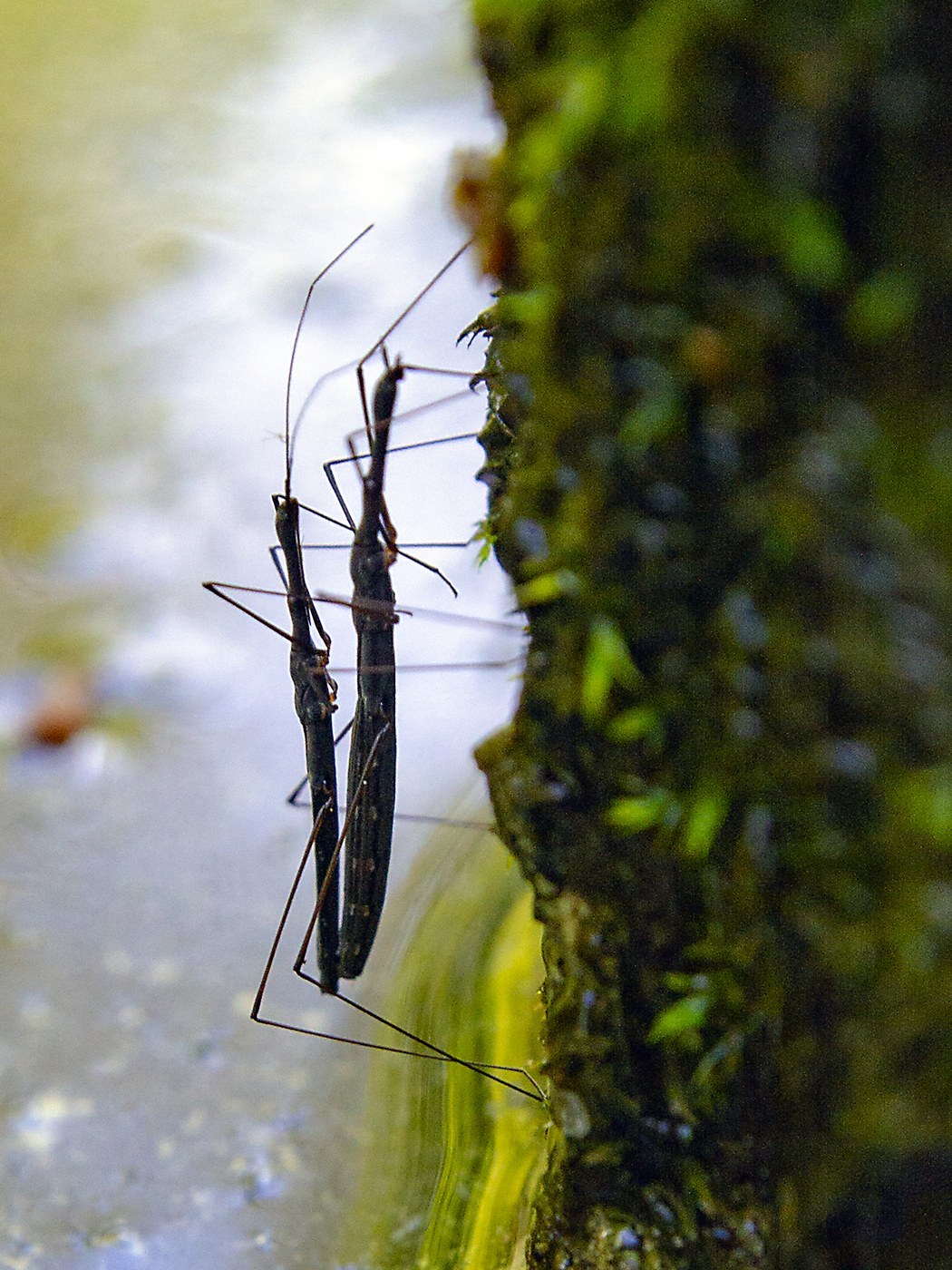
Water Measurer
Quiet edges of ponds, marshes, and slow streams
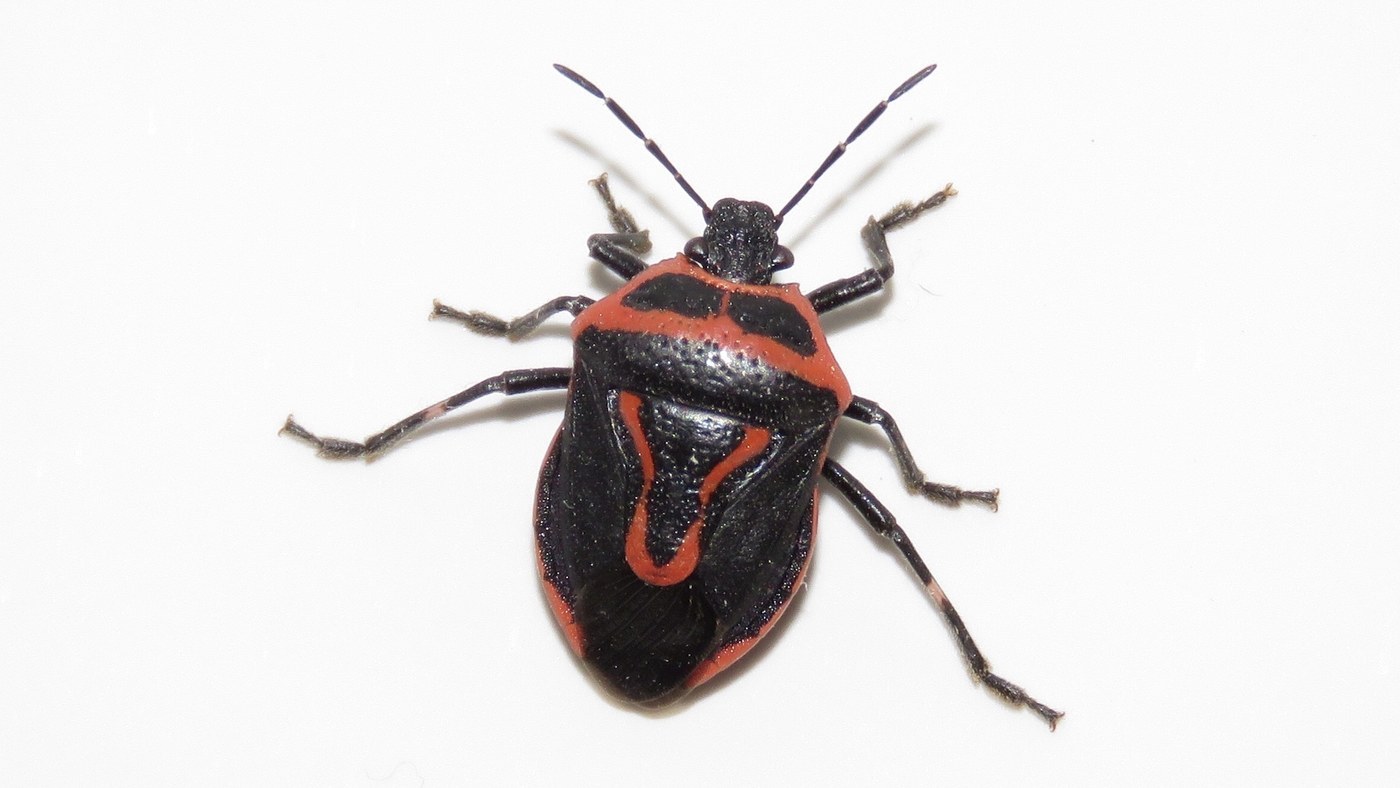
Two-Spotted Stink Bug
Gardens and fields with potato and nightshade-family plants