Money Spider Identification Guide
Spot a money spider by its tiny size, dark body, and delicate horizontal sheet web strung across grass or shrubs.
Read the full Money Spider encyclopedia entry →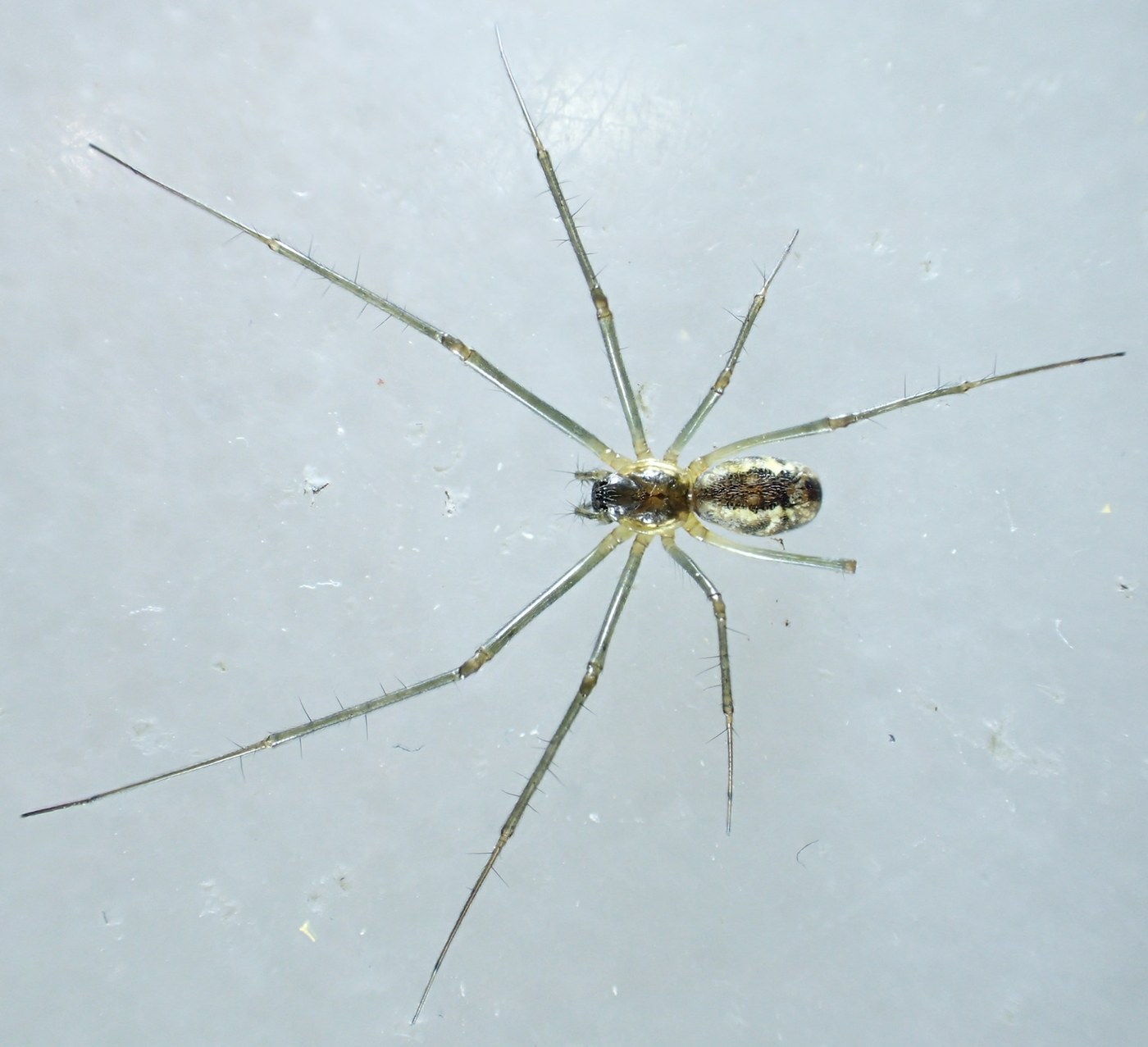
Key Visual Features
Money spiders are a large group of very small sheet-web spiders.
- Size: Typically only 1-5 mm in body length, among the smallest commonly noticed spiders.
- Color: Usually dark brown to black, sometimes with a glossy sheen; a few species show pale or reddish markings on the abdomen.
- Body shape: Small, rounded abdomen with a proportionally small cephalothorax; overall compact and delicate.
- Eyes: Eight eyes, generally clustered close together and hard to distinguish without magnification given the spider's small size.
- Legs: Eight thin, relatively long legs compared to body size, giving them a slightly spindly appearance.
- Web: A fine, horizontal or slightly domed sheet web, often strung between blades of grass, low shrubs, or fence posts, sometimes with a tangle of threads above it.
Where and When You'd See It
Money spiders are extremely common in grasslands, gardens, hedgerows, and agricultural fields. Their sheet webs become especially visible in the early morning when covered in dew, appearing as small silvery platforms low in vegetation. Many species are also known for "ballooning" — releasing a strand of silk to catch the wind and travel through the air — which can be seen on calm, sunny days, especially in autumn, when many silk strands drift visibly through fields.
Similar-Looking Bugs
- Dwarf spiders: Closely related and often grouped with money spiders; distinguishing between the two typically requires close inspection of tiny body details.
- Sheet-web weavers in other families: Some larger sheet-web builders exist, but money spiders are notably smaller and their webs are finer and less structured.
- Young spiderlings of larger species: Can be similarly tiny, but lack the characteristic flat sheet web money spiders construct.
Quick ID Checklist
- Very small size, typically just a few millimeters
- Dark brown to black, compact body with long thin legs
- Fine horizontal or domed sheet web low in grass or shrubs
- Web most visible when dew-covered in early morning
- Silk strands seen drifting through the air during ballooning dispersal
Behavior Notes
Money spiders hang beneath their sheet web and grab insects that stumble onto the strands above, pulling prey down through the silk. Their small size and huge numbers make them important both as predators of tiny insects and as prey for larger animals.
Frequently asked questions
What's the quickest way to spot a money spider's web?
Look low in grass or shrubs on a dewy morning — their fine horizontal sheet webs collect moisture and become visible as small silvery platforms.
Why do money spiders sometimes seem to appear out of nowhere on silk threads?
Many species disperse by 'ballooning,' releasing a strand of silk that catches the breeze and carries the spider through the air, sometimes over long distances.
How can I tell a money spider from a young spiderling of a bigger species?
Money spiders build a distinctive flat or domed sheet web, whereas juvenile spiderlings of larger web-building species usually don't construct this particular web shape at such a small size.
Are money spiders easy to see up close?
Not easily — their body size of just a few millimeters means fine details like eye arrangement are best observed with magnification.
Money Spider identified by the community
Recent Money Spider finds identified with Bug Identifier.