Mourning Cloak Butterfly Identification Guide
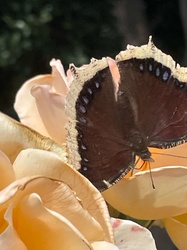
Identify this dark, velvety butterfly by its cream-colored wing border and row of blue spots.
Read the full Mourning Cloak Butterfly encyclopedia entry →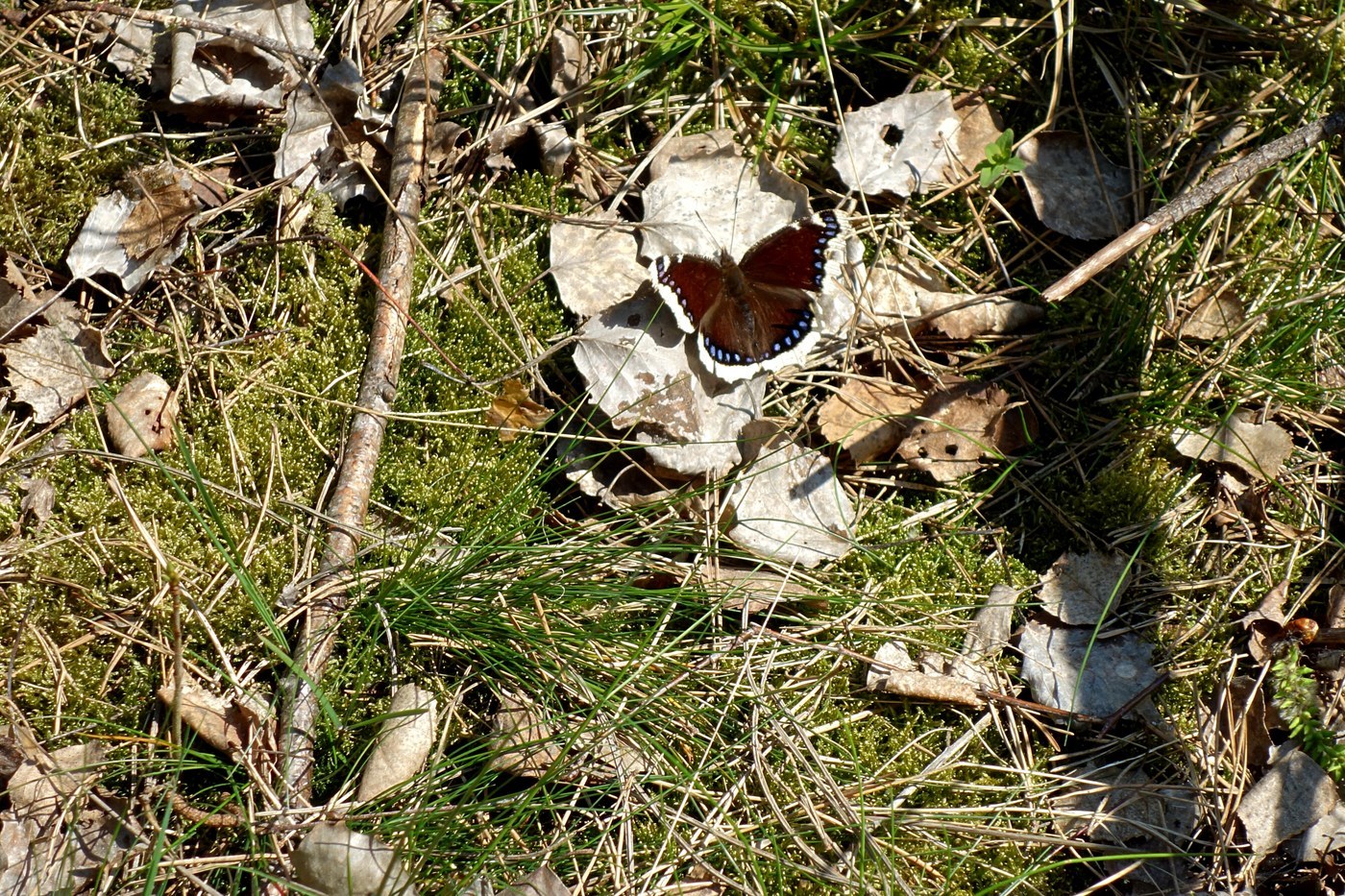
Key Visual Features
The mourning cloak is a large, distinctively bordered butterfly that stands apart from most other species with its dark, understated coloring.
- Wingspan measures about 3 to 4 inches (7.5-10 cm), among the larger butterflies in its range.
- The wing upperside is a deep maroon-brown to almost blackish-purple, giving a velvety appearance.
- A wide, ragged-edged cream to pale yellow border runs along the outer edge of both wings, and just inside this border sits a row of small, bright iridescent blue spots.
- The wing edges themselves are scalloped and irregular rather than smooth, adding to the distinctive silhouette.
- The underside is dull, dark, and bark-like with fine striations, providing camouflage when the butterfly rests with wings closed on tree bark.
- Caterpillars are spiny, black with small white speckles, and a row of red-orange spots down the back, often found feeding in groups on host tree foliage.
Where and When You'd See It
Mourning cloaks are found in woodlands, forest edges, parks, and along streams, wherever host trees such as willow, elm, and poplar grow. This species is notable for overwintering as an adult butterfly rather than as an egg, larva, or chrysalis, tucked into bark crevices or other sheltered spots. Because of this, mourning cloaks are often the very first butterfly seen in early spring, sometimes appearing on warm days even before snow has fully melted, and they can also be seen flying into late fall before settling in for winter. Adults are strong, sometimes erratic fliers and can be spotted basking on tree trunks or bare ground in sunny patches.
Similar-Looking Bugs
- Compton tortoiseshell butterflies share a similar dark, patterned wing but lack the bold, continuous pale border and blue spot row of the mourning cloak.
- Question mark and comma butterflies have jagged wing edges too, but their upperside is more orange and patterned rather than uniformly dark with a pale border.
- Red admirals show bold orange-red bands rather than a cream border and blue spots, making them easy to tell apart.
- The dark body with a continuous cream border and adjacent row of blue spots is unique enough that few other butterflies are confused with a mourning cloak once the wings are seen clearly.
Quick ID Checklist
- Deep maroon-brown to blackish wings with a velvety look
- Wide cream to pale yellow border along the outer wing edge
- Row of small iridescent blue spots just inside the border
- Ragged, scalloped wing edges rather than smooth curves
- Often the earliest butterfly seen in spring, having overwintered as an adult
Frequently asked questions
What is the most distinctive feature of the mourning cloak?
Its dark maroon-brown wings bordered by a wide cream-yellow edge with a row of blue spots just inside that border.
Why might I see a mourning cloak very early in spring?
This species overwinters as an adult butterfly rather than as an egg or pupa, so it can emerge and fly on warm days even before other butterflies appear.
How is the mourning cloak different from a question mark butterfly?
The question mark has a more orange, patterned upperside, while the mourning cloak is uniformly dark with a distinct pale border and blue spots.
What do mourning cloak caterpillars look like?
They are spiny and black with small white speckles and a row of red-orange spots running down the back, often seen feeding in groups.
Mourning Cloak Butterfly identified by the community
Recent Mourning Cloak Butterfly finds identified with Bug Identifier.