
Mourning Cloak Identification Guide
Recognize the mourning cloak by its deep maroon wings edged in cream-yellow and dotted with blue.
Read the full Mourning Cloak encyclopedia entry →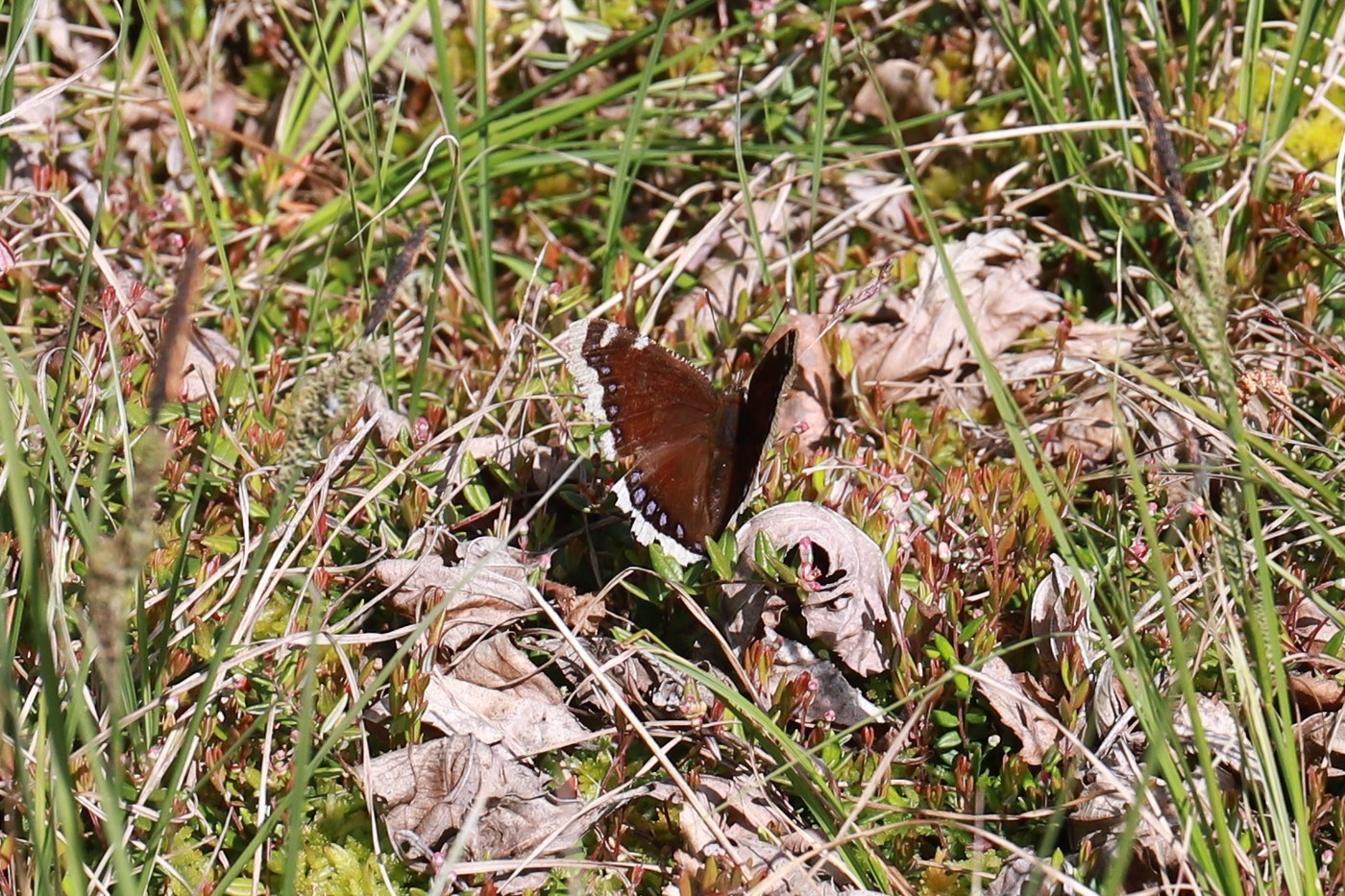
Key Visual Features
The mourning cloak (Nymphalis antiopa) has one of the most distinctive and somber-toned wing patterns of any butterfly, matching its name.
- Size: Wingspan of about 2 1/2 to 4 inches (6.5–10 cm).
- Color: Deep maroon to blackish-brown wings across both the fore- and hindwings.
- Wing border: A wide, ragged-edged cream-yellow band runs along the outer margin of both wings, giving the impression of a frayed cloak edge.
- Markings: A row of bright iridescent blue spots sits just inside the cream border, contrasting sharply with the dark wing color.
- Body shape: Stout, dark body covered in fine hair-like scales.
- Wings: Wing edges are notably scalloped and irregular rather than smooth, adding to the tattered, cloak-like appearance.
- Antennae: Clubbed antennae typical of brush-footed butterflies.
Where and When You'll See One
Mourning cloaks are found across North America, Europe, and Asia in woodlands, forest edges, parks, and along streams, often near host trees like willow, elm, poplar, and birch. Unlike most butterflies, mourning cloaks overwinter as adults, hiding in tree bark crevices or woodpiles, which means they can be one of the very first butterflies seen in early spring, sometimes even flying on unusually warm winter days. They are also active into late fall before entering winter dormancy, giving them one of the longest adult flight seasons of any butterfly.
Similar-Looking Bugs
- Compton tortoiseshell: Similar dark coloring but with a less uniform border and different wing shape, plus a small white spot near the forewing tip that mourning cloaks lack.
- Red admiral: Shares a dark wing background but has bold orange-red bands rather than a pale cream border with blue spots.
- Question mark and eastern comma: Both have ragged wing edges and brownish coloring, but lack the mourning cloak's wide pale border and row of blue spots.
Quick ID Checklist
- Deep maroon-brown wings on both fore- and hindwing
- Wide, ragged cream-yellow border along the wing edge
- Row of iridescent blue spots inside the pale border
- Scalloped, irregular wing margins
- Often seen very early in spring or late into fall, even in cool weather
Frequently asked questions
Why do mourning cloaks appear so early in spring?
Mourning cloaks overwinter as adults rather than as eggs, caterpillars, or a chrysalis, tucking into bark crevices or sheltered spots through winter, which lets them emerge and fly again as soon as temperatures warm, sometimes even before snow has fully melted.
What's the easiest way to identify a mourning cloak?
Look for the combination of dark maroon-brown wings, a wide ragged cream-yellow border, and a row of blue spots just inside that border — this three-part pattern is unique among common butterflies.
How long do mourning cloaks live as adults?
They have an unusually long adult lifespan for a butterfly, often living close to a year when accounting for their overwintering period, giving them one of the longest flight seasons of any species in their range.
Where should I look for mourning cloaks?
Check woodland edges, parks, and areas near streams with willow, elm, poplar, or birch trees, since these serve as host plants and are common places to spot adults basking on tree trunks or bare ground.