
Northern Black Widow Identification Guide
Tell the northern black widow apart by its broken hourglass marking and extra row of red spots along its back.
Read the full Northern Black Widow encyclopedia entry →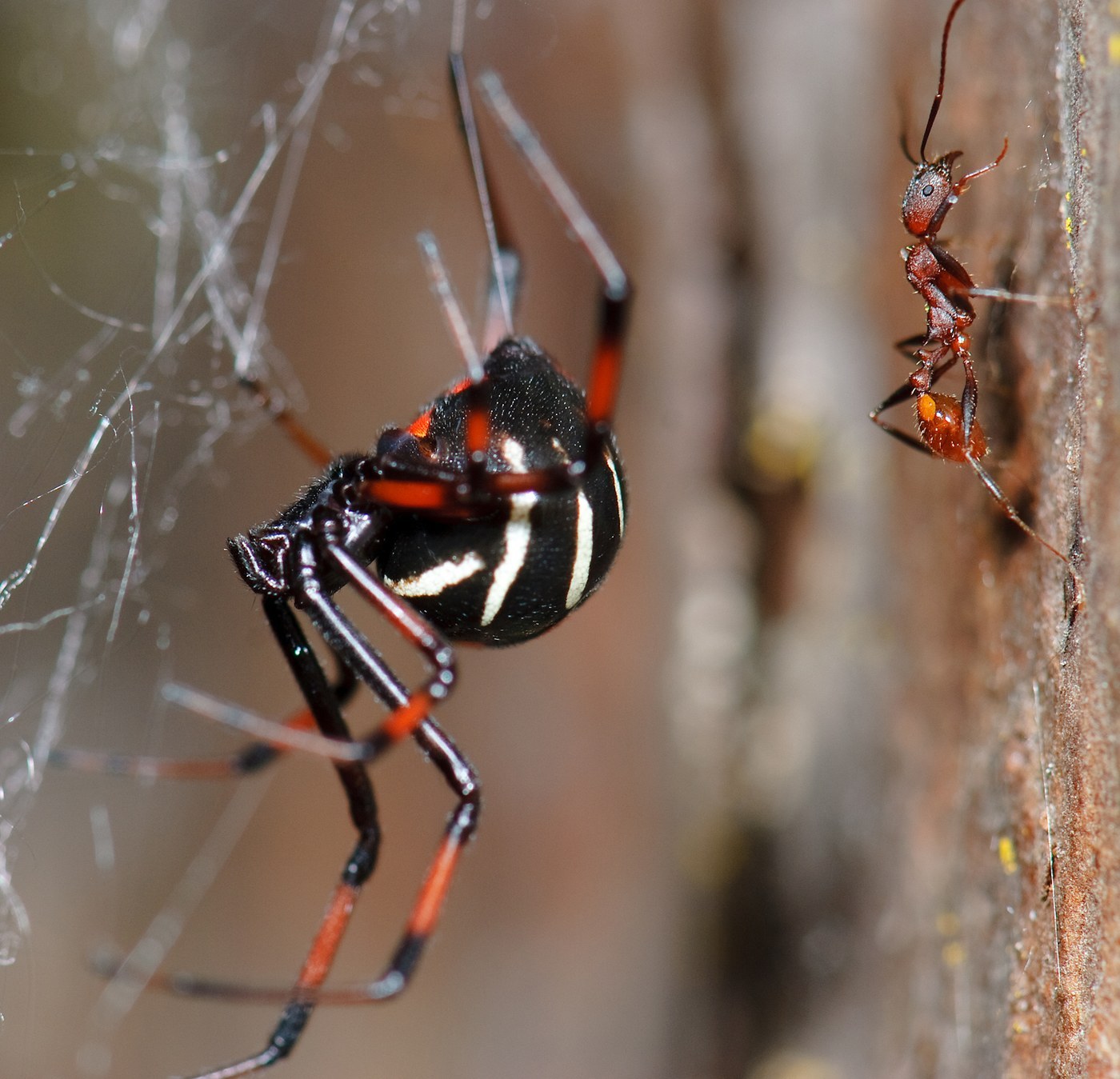
Key Visual Features
The northern black widow has a few markings that set it apart from its southern and western relatives:
- Color: Glossy black body with a smooth, shiny surface, similar in base tone to other widow species.
- Abdomen markings: The most useful clue — the red hourglass on the underside is typically split into two separate triangles rather than forming one continuous shape.
- Back spots: A row of small red or orange spots often runs down the middle of the top of the abdomen, sometimes bordered by pale, thin lines — a feature largely absent in other widow species.
- Size: Females measure around 0.5 inches in body length; males are notably smaller with a more slender abdomen marked in lighter patterns.
- Legs: Long, thin, dark legs typical of the widow group, attached to a small head region.
Where and When You'll See One
This species ranges across the northeastern and north-central United States and adjacent parts of Canada, generally favoring cooler climates than its southern relatives. It builds an irregular, tangled web close to the ground in sheltered spots such as stone walls, woodpiles, brush piles, and dense low vegetation at the edges of fields or woodlands. It tends to be less associated with human structures than the southern species, more often found in natural or semi-natural outdoor settings. Adults are most visible in late summer.
Similar-Looking Spiders
- Southern black widow: Shares the glossy black body but usually shows a single, connected hourglass rather than two separate triangles, and lacks the row of back spots.
- Western black widow: Also glossy black with a red hourglass, but without the distinctive dorsal spot row and generally found in drier western habitats.
- Cobweb spiders (Steatoda): Similar web style but a duller brown-purple body with a pale front band instead of red hourglass and back spots.
Quick ID Checklist
- Glossy black body with a rounded abdomen
- Hourglass marking split into two separate triangles on the underside
- Row of red or orange spots down the center of the back
- Irregular web low to the ground in brush piles, stone walls, or field edges
- Range centered on the northeastern and north-central US and nearby Canada
Frequently asked questions
What is the single most reliable feature for identifying a northern black widow?
The split hourglass marking, appearing as two separate red triangles rather than one connected shape, combined with a row of red spots on the back.
Does the northern black widow build webs in the same spots as the southern species?
It uses similarly sheltered, low-lying locations but is more often found in natural settings like stone walls and brush piles than around buildings.
How can back spots help with identification?
A visible row of red or orange spots running down the top of the abdomen is a pattern mostly unique to the northern black widow among common widow species.
Where is the northern black widow typically found geographically?
It ranges through the northeastern and north-central United States and into nearby parts of Canada, generally in cooler climates than other widow species.