
Northern Bluet Identification Guide
A small, sky-blue damselfly common at ponds and lakes across the northern United States and Canada.
Read the full Northern Bluet encyclopedia entry →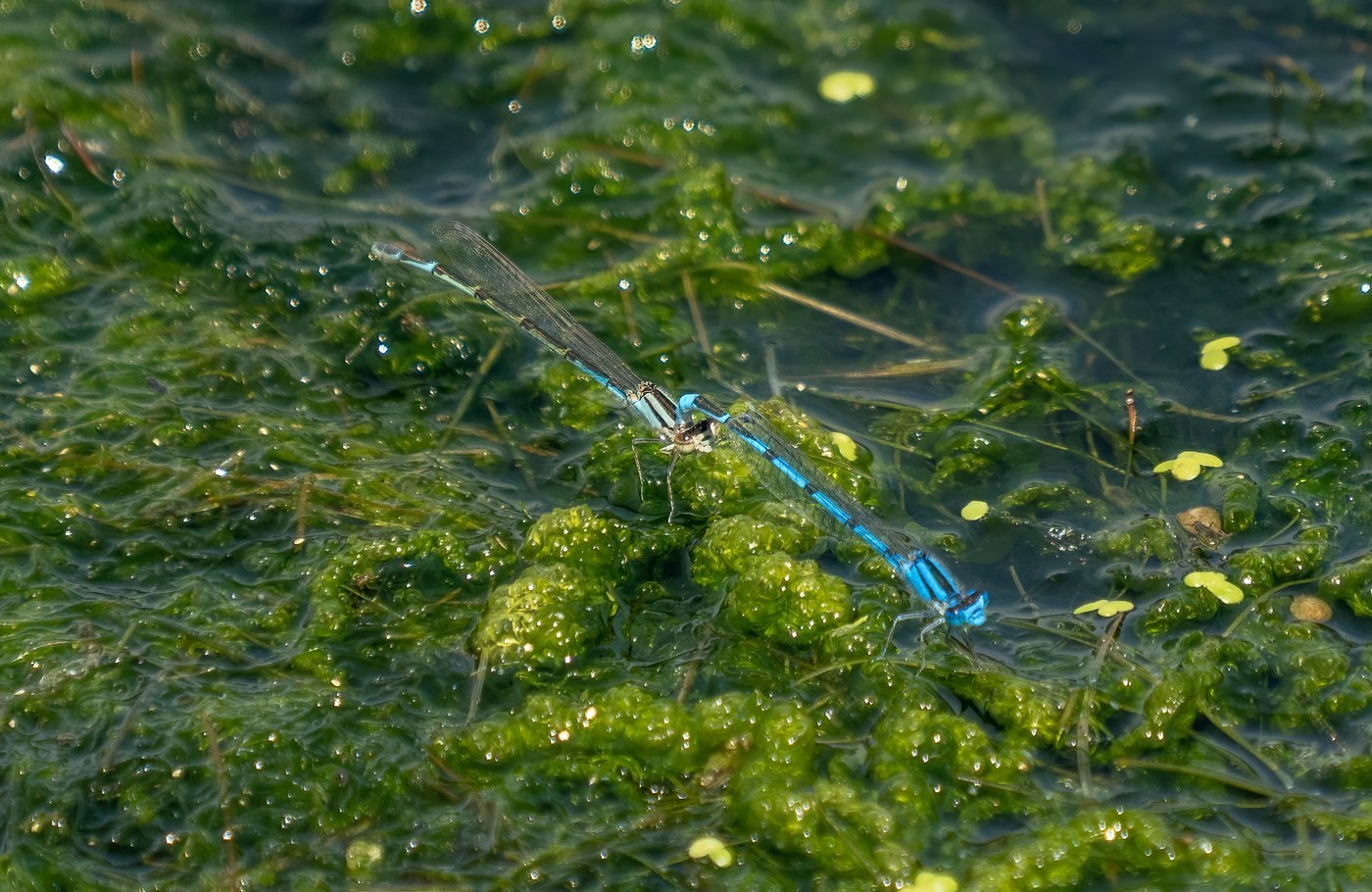
Key Visual Features
The Northern Bluet is a small, slender damselfly in the pond damsel family, typically 1.2 to 1.4 inches (30 to 36 mm) long.
- Color: Mature males are bright blue with black markings, giving the classic "bluet" look shared by many Enallagma species. Females are usually duller, ranging from pale blue to tan or greenish, often with more extensive dark patterning.
- Thorax pattern: The thorax shows blue with black stripes; the exact width and shape of these stripes is one of the main clues used to separate bluet species.
- Abdomen: Long, thin abdomen with black markings on the top of each segment; segments near the tip (especially 8 and 9) are usually mostly blue, an important field mark used to differentiate bluets.
- Eyes: Blue on top with a black cap in mature males, separated by a distinct space, unlike dragonflies whose eyes usually touch.
- Wings and legs: Clear, narrow wings folded over the back at rest; thin legs adapted for perching on emergent vegetation.
Where and When You'd See It
Northern Bluets are common around the still or slow-moving edges of ponds, lakes, marshes, and slow streams across the northern U.S. and much of Canada. They perch on emergent plants, grasses, and low shrubs near the shoreline, often in loose groups. Adults fly from late spring through summer, with peak numbers typically in June and July, and are most active on warm, sunny days.
Similar-Looking Species
Bluets (genus Enallagma) are one of the most difficult damselfly groups to tell apart by sight alone:
- Familiar Bluet: Very similar overall pattern; separating the two often requires examining the shape of the black markings on abdominal segments near the tip.
- Marsh Bluet: Slightly smaller on average, with subtly different thoracic stripe width.
- Tule Bluet: Found in similar habitats but with variations in the black abdominal markings.
Because many bluets are nearly identical in the field, confident identification to species often benefits from close photos of the abdomen tip and thorax pattern, or in-hand examination.
Quick ID Checklist
- Small, slender damselfly with wings closed over the back at rest
- Mature males bright blue with black stripes and markings
- Abdomen segments near the tip mostly blue rather than black
- Found perched on vegetation at pond and lake edges
- Active in loose groups on warm, sunny days in summer
Frequently asked questions
What makes bluets different from other damselflies like dancers?
Bluets belong to the genus Enallagma and are generally found around still water like ponds and lakes rather than rocky streams, and they tend to show a simpler blue-and-black pattern compared to the often more colorful or striped dancers.
Is it possible to identify a Northern Bluet from a photo alone?
It can be challenging since several bluet species look very similar. A clear photo showing the pattern on the last few abdominal segments and the thorax stripes gives the best chance of a confident identification.
Why do male and female Northern Bluets look so different in color?
Males develop bright blue coloring associated with mate recognition, while females often retain duller tan, olive, or pale blue tones that provide better camouflage while they are near vegetation.
Where is the best spot to look for Northern Bluets?
Check emergent grasses, reeds, and low shrubs right at the water's edge of ponds, lakes, and slow-moving streams, especially on calm, sunny days during the summer flight season.