
Northern Pearly-eye Identification Guide
A shade-loving brown satyr with pearly-centered eyespots, found flitting through dappled woodland light.
Read the full Northern Pearly-eye encyclopedia entry →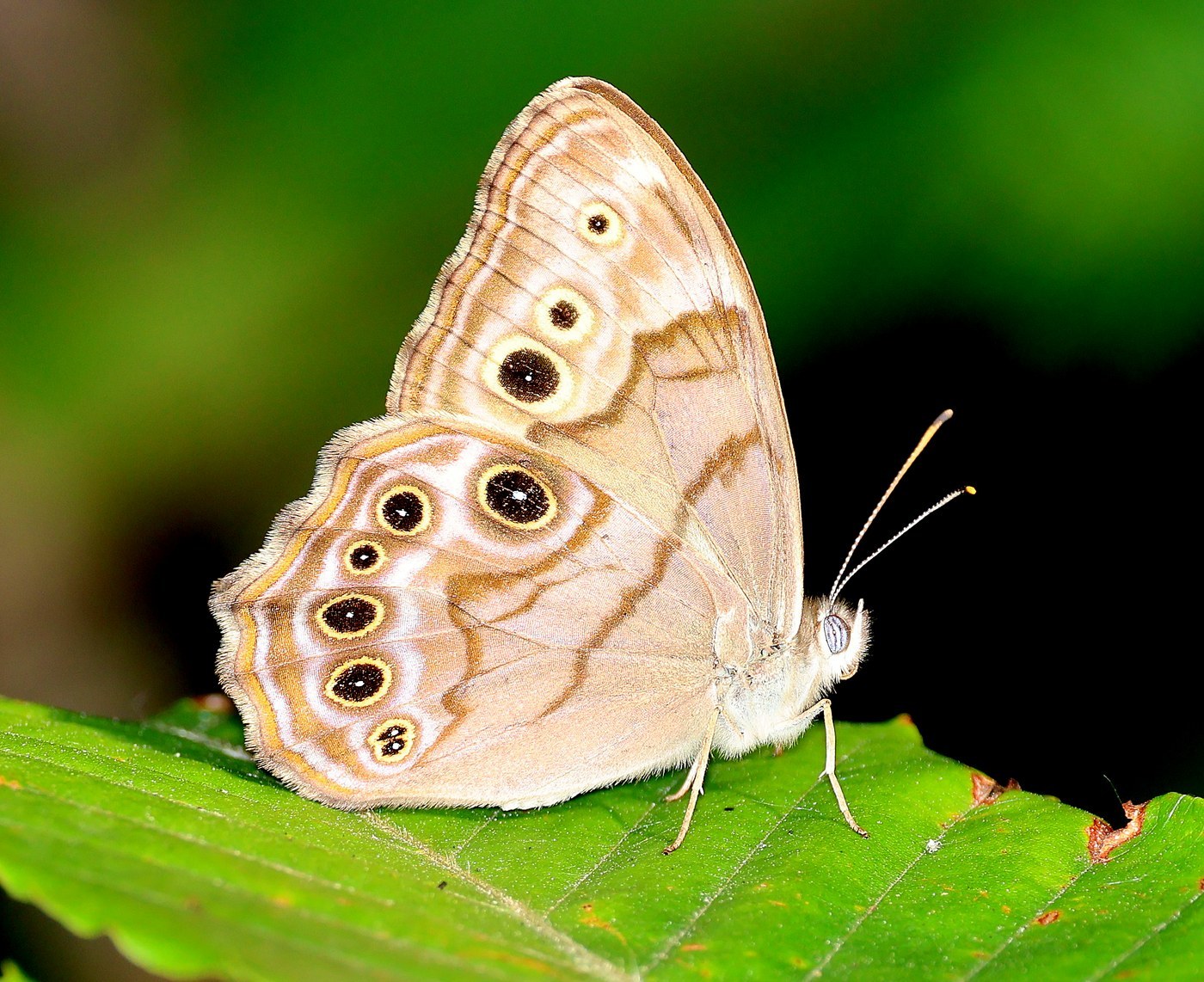
Key Visual Features
The Northern Pearly-eye (Enodia anthedon) is a medium-sized brown satyr with a wingspan of about 1.8 to 2.5 inches, built for camouflage in low forest light.
- Upperside is medium brown with a row of dark, yellow-ringed eyespots along the outer edge of both the forewing and hindwing
- Underside is a paler grayish-brown crossed by fine dark lines, with the eyespots repeated and each containing a small pale ''pearl'' center, which gives the species its common name
- Wings are broad and rounded rather than angular
- Body and antennae are dark brown, unremarkable compared to the wing pattern
- Flight is weak, low, and bouncing, typically moving from one shaded perch to the next rather than in long, open flights
Where and When to Look
This species is a woodland specialist found in deciduous and mixed forests across the northeastern and north-central United States and adjacent Canada, especially near streams, forest trails, and shaded clearings. Unlike many butterflies, it rarely visits flowers, instead favoring tree sap, rotting fruit, and damp mud, and it is often most active in the dim light of dawn, dusk, or overcast, dappled forest interiors. Depending on latitude there are one or two broods, with adults seen from late spring through early fall.
Similar-Looking Species
- Eyed Brown: very similar in color and eyespot pattern, but the Eyed Brown lives in open wet meadows and sedge marshes rather than forest interiors, and its eyespots tend to be more uniform in size
- Appalachian Brown: also similar, but found in wetter, more open habitats like bogs and marsh edges, with slightly different eyespot arrangement and a more southerly/Appalachian distribution
- Little Wood-Satyr: smaller overall, with fewer and bolder eyespots (typically two large ones per wing) rather than the fuller row seen in the Northern Pearly-eye
Habitat is often the quickest clue: a satyr found deep in shaded forest, perched on a tree trunk, is more likely a Northern Pearly-eye than its open-wetland relatives.
Quick ID Checklist
- Brown wings with a row of yellow-ringed eyespots on both wings
- Pale ''pearl'' center in each eyespot, especially visible underneath
- Weak, low, bouncing flight through shaded woodland
- Rarely visits flowers; prefers sap, fruit, and mud
- Found in forest interiors and shaded trails, not open meadows
Frequently asked questions
Why is it called the Northern Pearly-eye?
Each of its eyespots contains a small pale, pearl-like center spot, which is most visible on the underside of the wings.
How can I tell it apart from the Eyed Brown?
Habitat is the best clue: the Northern Pearly-eye lives in shaded forest interiors, while the Eyed Brown is found in open, wet meadows and sedge marshes.
Does the Northern Pearly-eye feed at flowers?
It rarely visits flowers, preferring to feed on tree sap, rotting fruit, and damp mud instead.
What time of day is best for finding this butterfly?
It is often most active in low light conditions such as dawn, dusk, or overcast days within dappled forest habitat.