
Northern Walkingstick Identification Guide
Identify the Northern Walkingstick by its remarkably twig-like, elongated brown or green body and thin, stick-shaped legs.
Read the full Northern Walkingstick encyclopedia entry →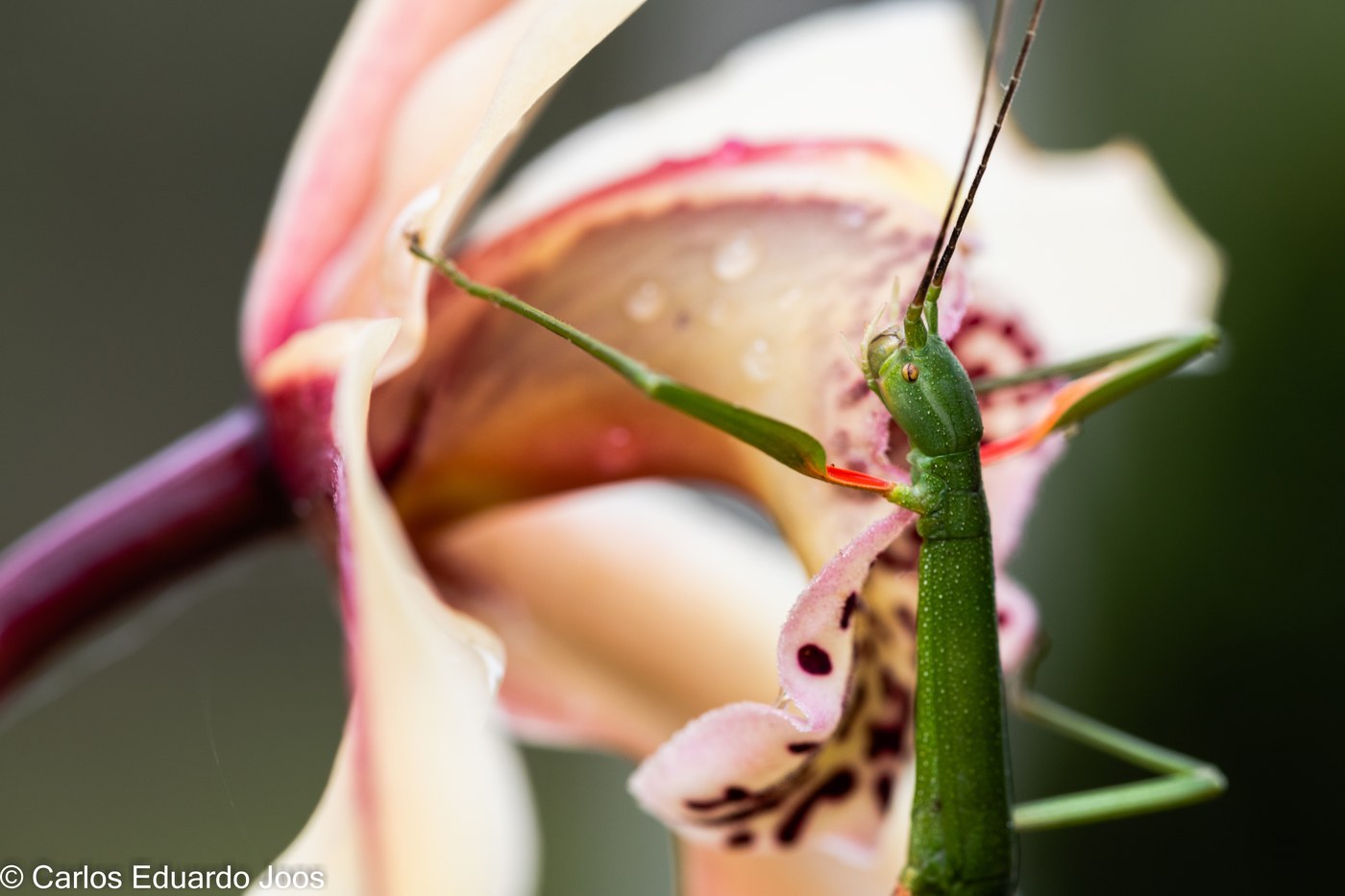
Key Visual Features
The Northern Walkingstick is a slender, wingless insect, typically 3 to 4 inches long in females and somewhat shorter and thinner in males, built to closely resemble a small twig or stick.
- Body: Extremely long and narrow, cylindrical, usually brown, gray, or greenish, sometimes with subtle mottling that mimics bark texture.
- Legs: Thin, stick-like, and held out in line with the body when at rest, further enhancing the twig disguise.
- Antennae: Long and thread-like, roughly half the length of the body or more, held forward.
- Wings: Absent in this species; the Northern Walkingstick is wingless in both sexes, relying entirely on camouflage rather than flight.
- Movement: Slow and deliberate, with a subtle swaying motion while walking that mimics a twig moving in the breeze.
Where and When You'd See It
Northern Walkingsticks are found in deciduous forests, woodland edges, and shrubby areas, typically resting on tree branches, leaves, and understory vegetation where their shape and color blend seamlessly with twigs and stems. They are most active from late spring through fall, with adults commonly encountered in summer and early autumn. Being slow-moving and well camouflaged, they are most often spotted by chance, when a "twig" on a branch or leaf turns out to be moving, or found clinging to tree trunks and foliage after dark, when they tend to be more active feeding.
Similar-Looking Bugs
Northern Walkingsticks can be confused with:
- Other walkingstick species – Related species share the twig-like body plan but differ in exact length, coloring, and regional range.
- Praying mantises – Mantises have a triangular head with large forward-facing eyes and grasping front legs, unlike the uniformly thin legs of a walkingstick.
- Stick-mimicking caterpillars (inchworms) – Inchworms are much shorter, softer-bodied, and move with a distinctive looping crawl rather than a walkingstick's steady six-legged walk.
- Twigs themselves – The closest look-alike is an actual twig; checking for antennae, legs, and slow movement confirms it is an insect.
Quick ID Checklist
- Long, thin, cylindrical body resembling a twig
- Thin, stick-like legs held in line with the body
- Long, thread-like antennae about half the body length
- No wings in either sex
- Slow, swaying walk and strong camouflage on branches and leaves
Frequently asked questions
How can I tell a Northern Walkingstick from an actual twig?
Look closely for thin antennae, six jointed legs, and eyes; a true twig will lack these features, and the insect will also make slow, swaying movements if watched for a moment.
Do Northern Walkingsticks have wings?
No, this species is wingless in both males and females, relying entirely on its stick-like camouflage rather than flight to avoid detection.
What is the easiest way to spot one in the wild?
Since they blend in so well with twigs and stems, they are most often noticed when they move slightly on a branch or leaf, or by checking tree trunks and foliage at night when they tend to be more active.
How do I distinguish a walkingstick from a praying mantis?
A walkingstick has uniformly thin legs used only for walking and a simple elongated head, while a mantis has enlarged, spiky front legs for grasping and a distinct triangular head with large eyes.