Old House Borer Identification Guide
Recognize the old house borer by its mottled gray-brown body, long antennae, and oval exit holes in softwood timber.
Read the full Old House Borer encyclopedia entry →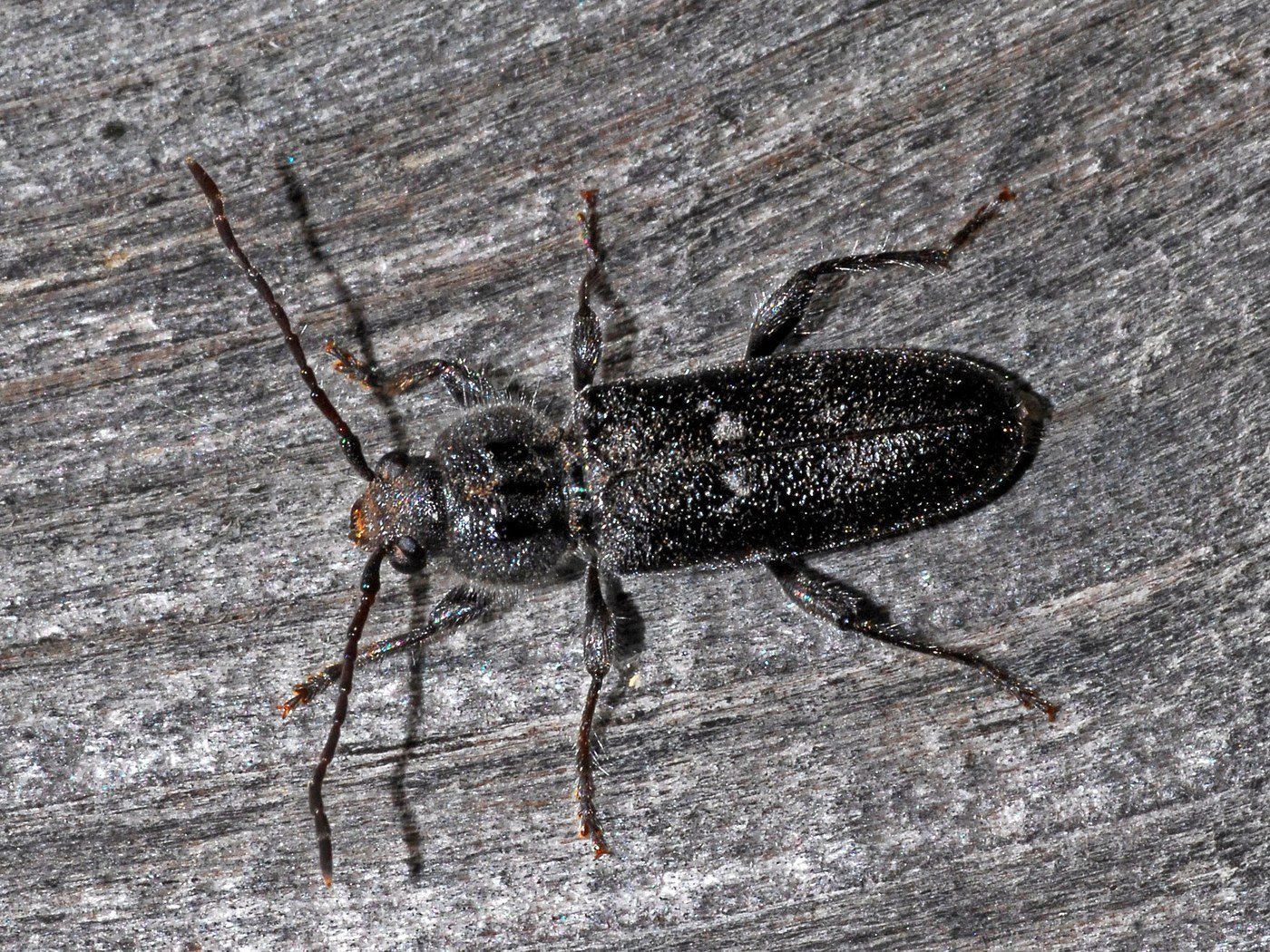
Key Visual Features
The old house borer (Hylotrupes bajulus) is a fairly large longhorn beetle, typically 5/8 to 1 inch long, with an elongated, somewhat flattened body. Its base color is grayish-brown to blackish, but the wing covers show a mottled, uneven texture created by patches of fine gray hair alternating with two smoother, shinier bald patches on the thorax — a helpful field mark when the beetle is seen up close. Faint, irregular grayish bands sometimes cross the wing covers as well. The antennae are long, extending roughly half the length of the body or more, a hallmark of longhorn beetles generally. Because adults can be secretive, larval signs are often the clearest identification cue: oval-shaped exit holes and coarse, rippled frass left in structural softwood.
Where and When You'll See Them
This species specifically targets seasoned softwood, especially pine, used in home construction — floor joists, wall studs, and other structural framing lumber, particularly in older wood-frame buildings. Adults tend to emerge and become active in warmer months, generally late spring through summer, when they seek out bare or lightly finished softwood to lay eggs in cracks and crevices. Because larvae can develop inside wood for several years before emerging, exit holes are sometimes the only visible clue long after initial activity.
Similar-Looking Bugs
- Asian longhorned beetle — larger, shiny black with distinct white spots and boldly banded black-and-white antennae, and targets living hardwood trees rather than structural softwood.
- Furniture beetle — much smaller with round, not oval, exit holes and gritty frass.
- Other longhorn beetles — many share the long-antennae body plan; the two bald thoracic patches and softwood association help narrow down the old house borer specifically.
Quick ID Checklist
- Grayish-brown, mottled body, 5/8 to 1 inch, longhorn beetle shape
- Two shiny bald patches on the thorax amid gray hair
- Antennae about half the body length or longer
- Oval exit holes with coarse, rippled frass
- Found in structural softwood, especially pine, in wood-frame buildings
Frequently asked questions
How can I tell an old house borer from other longhorn beetles?
Look for the two smooth, shiny bald patches on an otherwise gray-haired thorax, along with its association with structural softwood like pine rather than hardwood.
What does old house borer damage look like in wood?
Look for oval-shaped exit holes accompanied by coarse, rippled frass within seasoned softwood framing lumber.
What kind of wood does the old house borer infest?
It specifically targets seasoned softwood, particularly pine, commonly found in structural framing of wood-built homes.
When are old house borer adults typically seen?
Adults are most active in warmer months, generally late spring through summer, when they emerge and seek bare softwood surfaces.
Old House Borer identified by the community
Recent Old House Borer finds identified with Bug Identifier.