
Old Lady Moth Identification Guide
A large, dusky brown moth with intricate dark marbled patterning, often found resting in sheds, outbuildings, and dense ivy.
Read the full Old Lady Moth encyclopedia entry →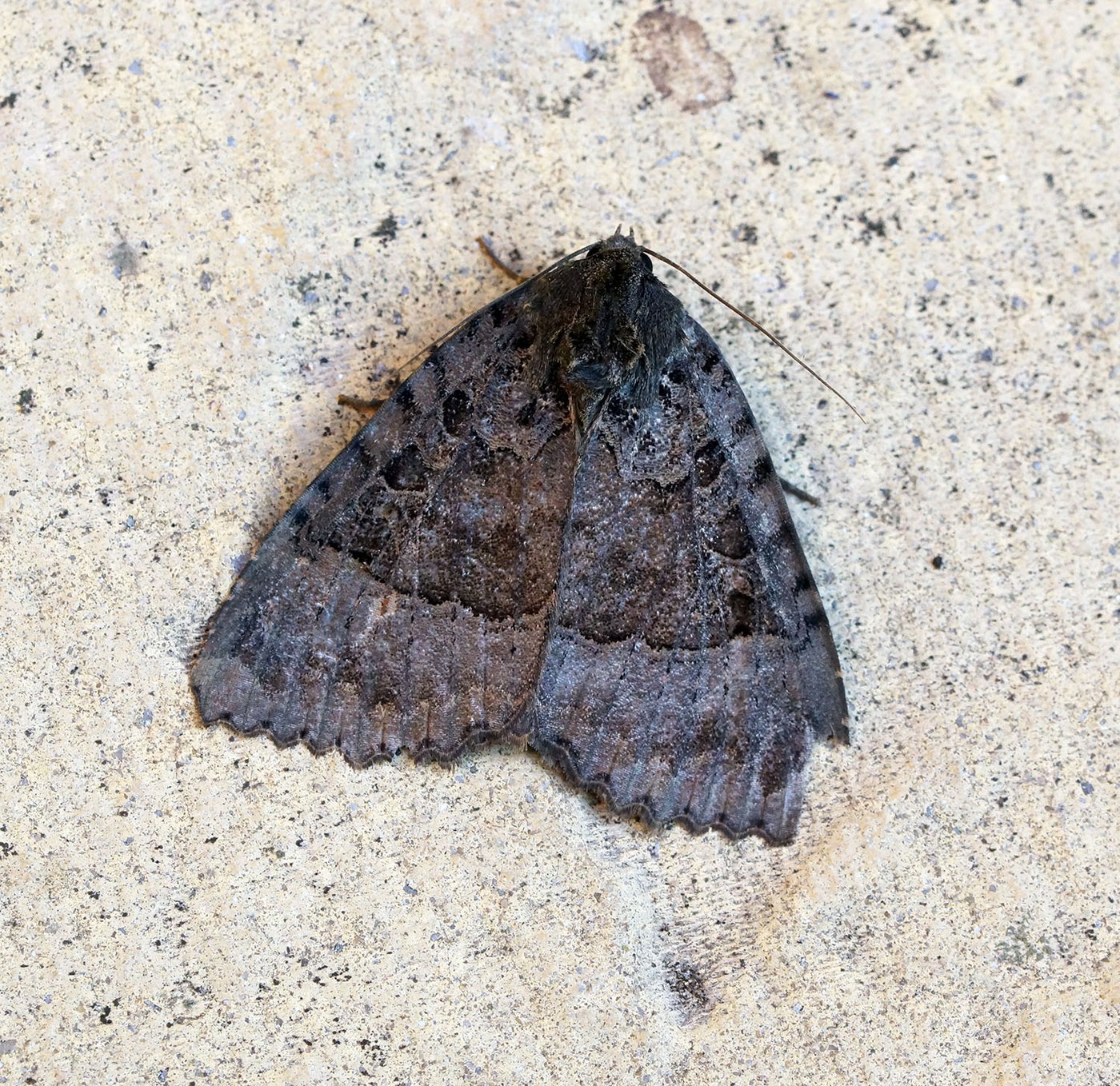
Key Visual Features
The old lady moth is a substantial, somber-colored species with a finely detailed pattern:
- Size: Large moth, wingspan typically 6-6.5 cm (2.4-2.6 in) or more.
- Color: Deep grayish-brown to blackish-brown overall, giving it a notably dark, somber appearance compared to many other owlet moths.
- Markings: Intricate, finely marbled dark lines and mottled patches across the forewings, creating a lace-like or textured look rather than bold, simple markings.
- Hindwings: Similarly dark brownish-gray, without the bright flash colors seen in related underwing moths.
- Body: Broad, stout body covered in dense gray-brown scales, proportionate to its large wings.
- Resting posture: Wings held flat and spread relatively wide compared to many moths, often against a vertical surface such as a wall or tree trunk.
Where and When You're Likely to See It
This moth is often found near woodland edges, hedgerows, gardens, and old outbuildings, favoring areas with ivy, its principal caterpillar host plant. Adults are nocturnal and fly mainly in mid to late summer, and have a well-known habit of resting by day in dark, sheltered locations such as sheds, garages, barns, and dense ivy curtains rather than out in the open. They can also be found at lights and sugar bait after dark, though many sightings come from disturbing a resting individual in a shaded structure during the day.
Similar-Looking Moths
- Underwing moths (Catocala species): Similarly large and dark-mottled on the forewings, but underwing moths reveal brightly colored hindwings when disturbed, which the old lady moth lacks.
- Other large dark owlet moths: Several share the dusky brown tone, but few match the old lady moth's especially fine, marbled patterning and consistently large size.
- Mottled beauty and similar geometer moths: Can appear superficially similar in color but have a slimmer body and different wing shape, typically held flatter and more triangular.
Quick ID Checklist
- Large size with dusky, dark grayish-brown coloring
- Fine, marbled, lace-like patterning across the forewings
- Uniformly dark hindwings, no bright flash color
- Often found resting in sheds, garages, or dense ivy by day
- Associated with ivy as a caterpillar host plant
Frequently asked questions
Why is it called the 'old lady' moth?
The name is thought to reference its somber, dark, intricately patterned wings, reminiscent of old lace or dark shawl fabric traditionally associated with elderly women's clothing.
Why do I often find this moth resting indoors in sheds or garages?
It has a strong habit of seeking dark, sheltered daytime resting spots such as outbuildings and dense ivy, which is why sightings frequently occur when disturbing such areas rather than out in open vegetation.
How does it differ from an underwing moth at a glance?
The old lady moth's hindwings remain a uniform dark brownish-gray, lacking the bright orange, red, or pink flash colors typical of true underwing moths.
When is the old lady moth typically seen flying?
Adults are on the wing mainly during mid to late summer, active at night and occasionally drawn to outdoor lighting or sugar bait.