
Painted Grasshopper Identification Guide
Recognize the Painted Grasshopper by its strikingly bold, multicolored pattern of blues, yellows, and blacks on a stout, flightless body.
Read the full Painted Grasshopper encyclopedia entry →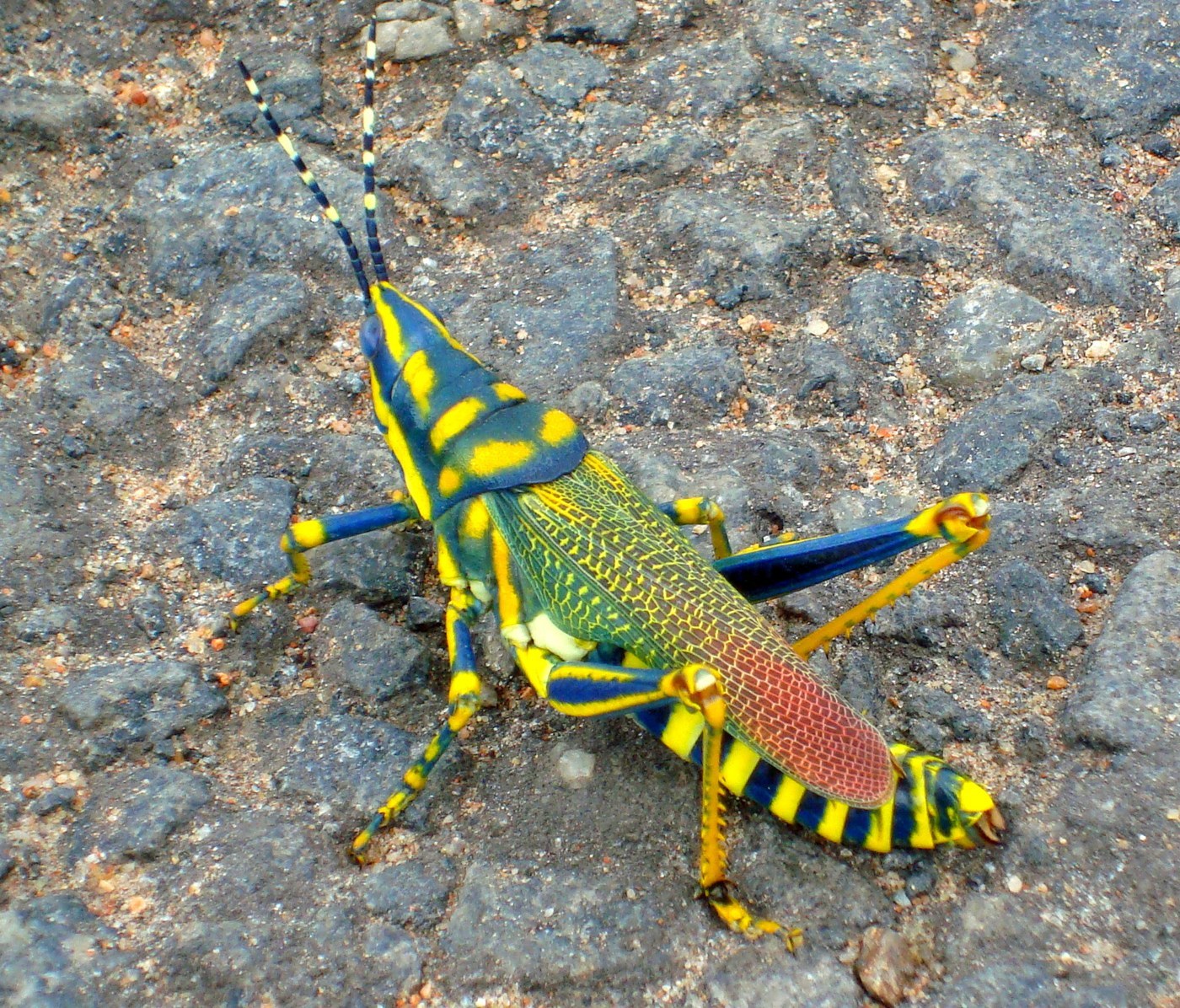
Key Visual Features
The Painted Grasshopper is a small to medium-sized grasshopper, generally 1 to 1.5 inches long, best known for its vivid, contrasting color pattern rather than camouflage.
- Body: Stout and compact, often with a bold combination of black, yellow, orange, and blue markings arranged in bands, spots, or patches across the thorax and abdomen.
- Wings: Reduced or short in many populations, meaning the insect is often flightless or a weak flier despite its colorful appearance, relying instead on its markings.
- Hind legs: Thick and strong, built for jumping, sometimes marked with additional color bands.
- Antennae: Short and thickened, typical of short-horned grasshopper family members.
- Head: Rounded with large eyes and a patterned face that continues the body's bold coloration.
Where and When You'd See It
Painted Grasshoppers are typically found in arid to semi-arid scrubland, rocky hillsides, and open grassy areas, often resting on low vegetation, bare soil, or rocks where their bright colors stand out clearly against the ground. They are most active during warm, dry seasons and are usually seen during daylight hours, basking or feeding on low-growing plants. Because many populations have reduced wings, they are more often found walking or hopping along the ground rather than in flight.
Similar-Looking Bugs
Painted Grasshoppers can be confused with:
- Other brightly marked grasshoppers – Some species share bold color combinations, but the specific pattern layout and color bands differ, so comparing the exact arrangement of spots and stripes helps narrow identification.
- Milkweed or lubber grasshoppers – Some lubber-type grasshoppers also display bright warning colors and reduced wings, but tend to be notably larger and heavier-bodied.
- Camouflaged grasshoppers – Most common grasshoppers rely on green or brown camouflage rather than bold color, making the Painted Grasshopper's vivid pattern a clear distinguishing feature.
- Katydids – Katydids have long, thread-like antennae, unlike the short, thickened antennae of the Painted Grasshopper.
Quick ID Checklist
- Bold, multicolored pattern of black, yellow, orange, or blue
- Stout, compact body with short or reduced wings
- Short, thickened antennae
- Thick jumping hind legs, sometimes color-banded
- Found on the ground or low vegetation in dry, open habitats
Frequently asked questions
Why is the Painted Grasshopper so brightly colored?
Its vivid pattern of contrasting colors makes it stand out visually rather than blend in, which is a striking departure from the green or brown camouflage seen in most common grasshoppers.
Can Painted Grasshoppers fly?
Many populations have short or reduced wings, making them weak fliers or effectively flightless, so they are more commonly observed hopping or walking along the ground.
How do I tell a Painted Grasshopper from other colorful grasshoppers?
Compare the exact arrangement and combination of color bands and spots, along with body size and wing length, since several bright species exist but each has a distinct pattern layout.
What habitat is best for finding a Painted Grasshopper?
Look in dry, open scrubland, rocky hillsides, or grassy areas with bare ground, where the insect rests on soil, rocks, or low plants during the day.