
Parsley Worm Identification Guide
Identify this bold green, black, and yellow banded caterpillar of the Apiaceae family by its striped pattern and defensive forked organ.
Read the full Parsley Worm encyclopedia entry →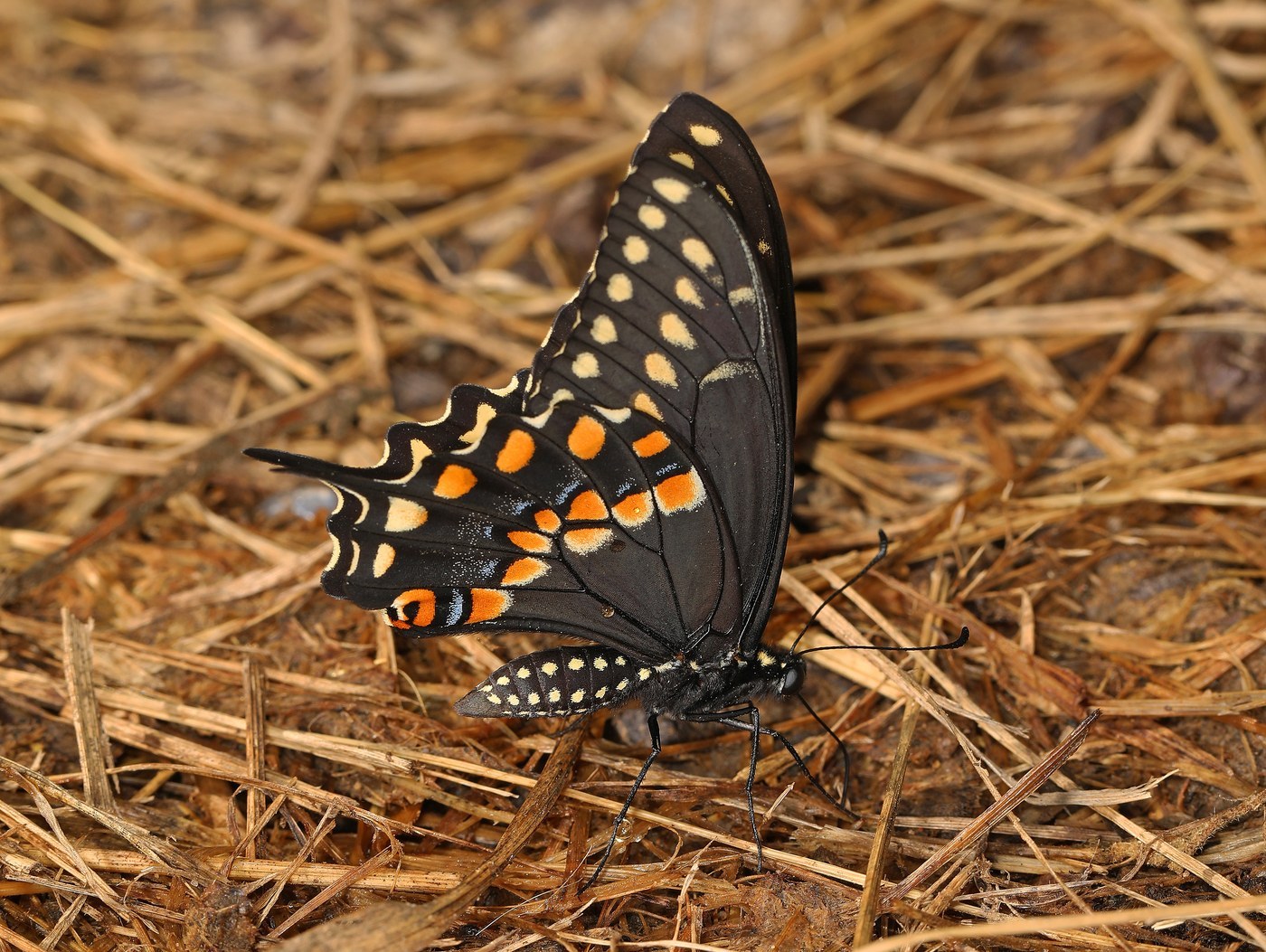
Key Visual Features
The parsley worm is the larval stage of the black swallowtail butterfly, and its bold banding makes it one of the more recognizable caterpillars found in gardens.
- Body color: Bright green base color marked with black bands encircling each body segment, and each black band dotted with small yellow-orange spots.
- Body shape: Smooth, plump, and cylindrical, without spines or hair, tapering slightly at both ends.
- Osmeterium: When disturbed, the caterpillar can extend a forked, fleshy orange structure just behind its head; this organ is retracted and hidden from view most of the time.
- Size: Grows to about 2 inches (5 cm) at full maturity.
- Younger stages: Early instars look quite different from mature larvae, often appearing dark brown and white, resembling bird droppings, before transitioning to the familiar green-black-yellow pattern in later stages.
Where and When You'll See It
Parsley worms are found wherever their host plants in the carrot family (Apiaceae) grow, including parsley, dill, fennel, carrot tops, and Queen Anne's lace. They occur across most of North America and are commonly seen in gardens from spring through fall, with multiple generations possible in warmer climates.
Similar-Looking Caterpillars
- Giant swallowtail caterpillar: Also found on related host plants (such as citrus) but looks like a mottled brown and white bird dropping throughout most of its development, lacking the bold green-black-yellow banding of the mature parsley worm.
- Monarch caterpillar: Also banded in bold colors, but shows white, black, and yellow bands rather than green, black, and yellow, and feeds exclusively on milkweed rather than Apiaceae plants.
- Anise swallowtail caterpillar: Very similar green-black-yellow banding pattern to the parsley worm and also feeds on Apiaceae plants; the two can be difficult to distinguish without knowing the geographic range, as their host plants and appearance overlap closely.
Quick ID Checklist
- Green body with black bands dotted with yellow-orange spots
- Smooth, plump, cylindrical shape with no spines
- Orange forked osmeterium that can extend from behind the head when disturbed
- Found on parsley, dill, fennel, or carrot family plants
- Early instars look like small brown-and-white droppings before developing the mature striped pattern
Frequently asked questions
Why is it called a parsley worm if it is a caterpillar?
It is a common older name for the larva, reflecting its frequent presence on garden parsley, though it also feeds on other plants in the carrot family.
What is the orange forked structure some parsley worms show?
It is called an osmeterium, a retractable organ located just behind the head that the caterpillar can briefly extend when disturbed.
Do young parsley worms look the same as mature ones?
No, early instars are dark brown and white and resemble bird droppings, only developing the recognizable green, black, and yellow banding in later stages.
What does the adult parsley worm become?
It develops into the black swallowtail butterfly, recognized by its black wings marked with rows of yellow spots.