Peacock Butterfly Identification Guide
An unmistakable maroon butterfly with four huge, staring eyespots, common in gardens across Europe and temperate Asia.
Read the full Peacock Butterfly encyclopedia entry →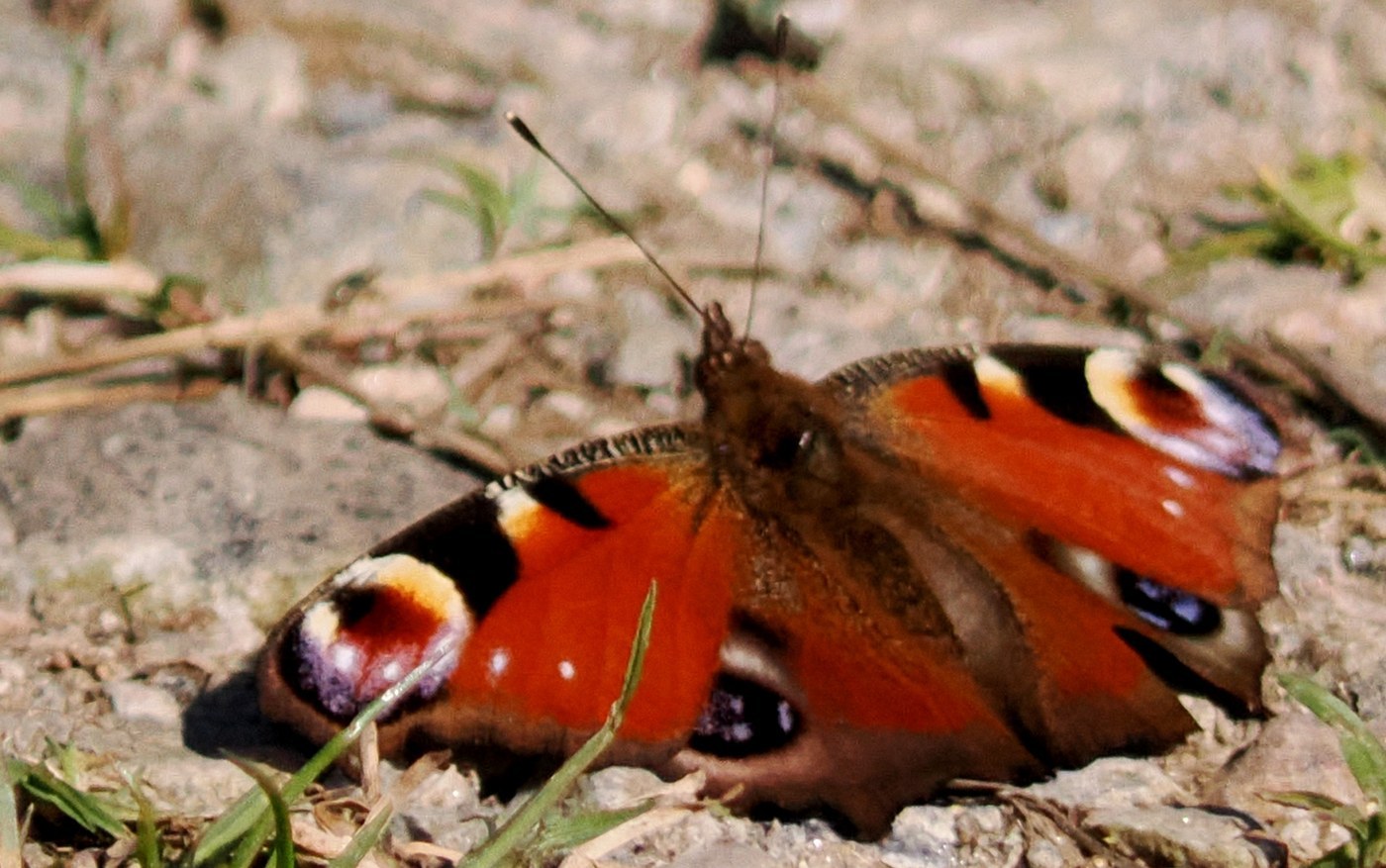
Key Visual Features
The Peacock Butterfly (Aglais io) is a striking, medium-sized butterfly with a wingspan of about 2.2 to 2.6 inches, named for the dramatic eye-like markings on its wings.
- Upperside is a rich, deep red-brown to maroon color
- Each wing carries one large, bold eyespot combining blue-black, yellow, and sometimes white or red scales, for a total of four striking ''eyes,'' one on each forewing and one on each hindwing
- The eyespots are thought to startle or confuse would-be threats when the wings are suddenly opened
- Underside is almost entirely blackish-brown with fine dark striations, giving excellent camouflage that resembles a dead leaf when the wings are closed
- Wing margins are somewhat scalloped rather than perfectly smooth
- Body is dark brown, matching the wing tone
Where and When to Look
This species is common and widespread across Europe and temperate parts of Asia, found in gardens, parks, meadows, woodland edges, and hedgerows, almost anywhere flowering plants are available. Adults overwinter as hibernating adults in sheltered spots such as tree hollows, sheds, or dense vegetation, then emerge on the first warm days of early spring. A new generation appears in mid-to-late summer, and both generations are frequently seen nectaring at flowers such as buddleia, thistles, and ivy blossom.
Similar-Looking Species
- Small Tortoiseshell: shares similar orange-red tones and a European garden habitat, but lacks the four large single eyespots, showing instead a more complex pattern of black, yellow, and blue marginal spots
- Comma Butterfly: has ragged, deeply scalloped wing edges and a small white comma-shaped mark on the underside, quite different from the Peacock's smooth eyespot pattern
- Red Admiral: shows bold red-orange bands across dark wings rather than large circular eyespots
The four unmistakable eyespots make the Peacock one of the easiest European butterflies to identify at a glance.
Quick ID Checklist
- Deep maroon-red wings
- Four large blue-black-and-yellow eyespots, one per wing
- Nearly black, leaf-like underside when wings are closed
- Found in gardens, parks, and woodland edges across Europe/temperate Asia
- Overwinters as an adult, seen in early spring and again in mid-to-late summer
Frequently asked questions
What is the most distinctive feature of the Peacock Butterfly?
Its four large eyespots, one on each wing, combining blue-black and yellow coloring, are unmistakable and give the species its name.
Why does the underside look so different from the upperside?
The underside is nearly black with fine dark striations, camouflaging the butterfly as a dead leaf when its wings are closed, which contrasts sharply with the colorful eyespotted upperside.
When can I see Peacock Butterflies?
Adults overwinter and can be seen on warm days in early spring, with a new generation appearing and flying through mid-to-late summer.
Where is the best place to look for one?
Gardens, parks, meadows, and woodland edges across Europe and temperate Asia, especially near nectar sources like buddleia or thistle.
Peacock Butterfly identified by the community
Recent Peacock Butterfly finds identified with Bug Identifier.