
Peck's Skipper Identification Guide
Identify this small grass skipper by the blocky pale yellow patches on its hindwing underside.
Read the full Peck's Skipper encyclopedia entry →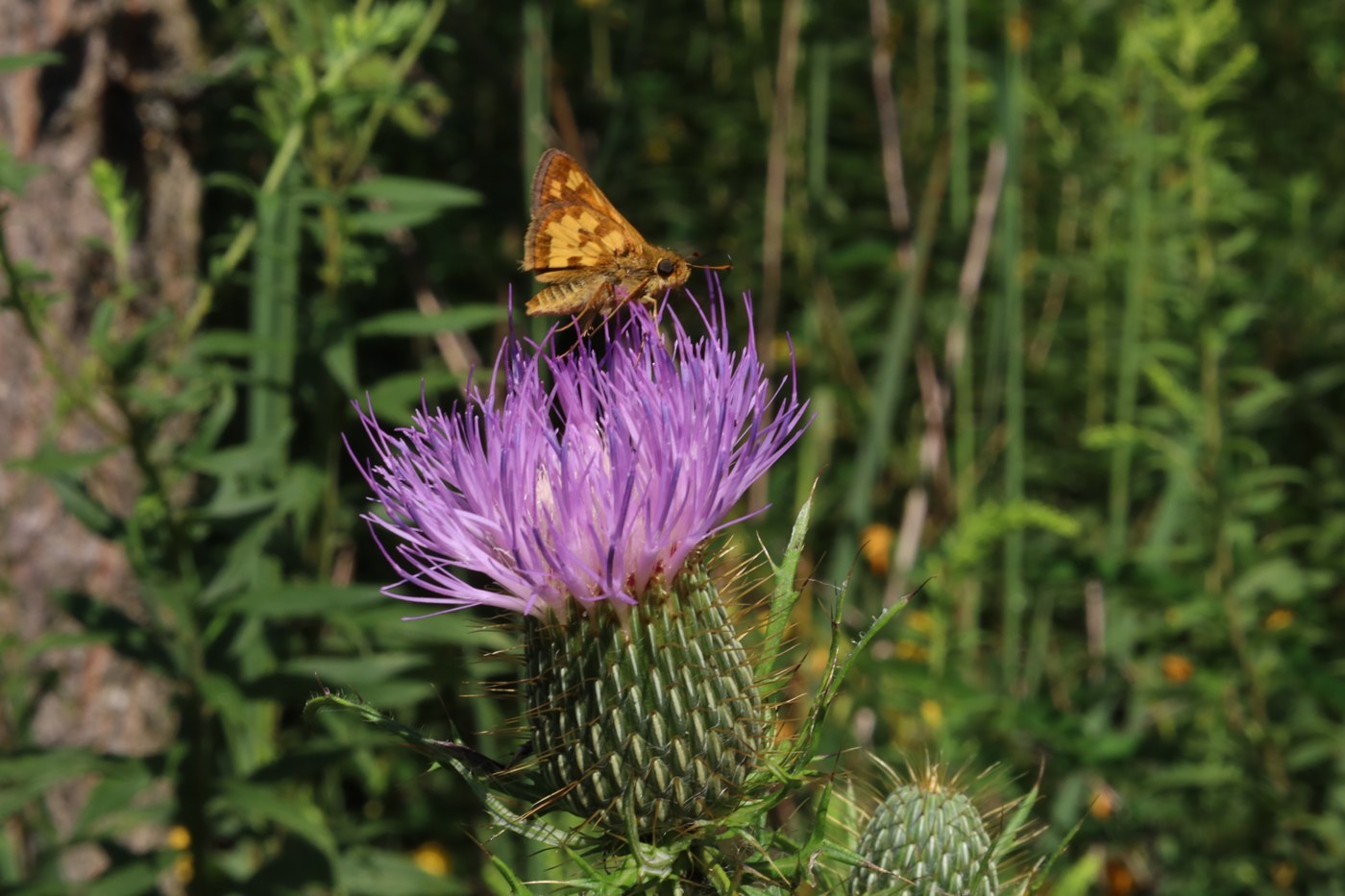
Key Visual Features
Peck's Skipper (Polites peckius) is a small skipper with a wingspan of about 1 to 1.25 inches.
- Dorsal wings: Forewing is dark brown to black with irregular orange patches; hindwing is dark with an irregular band of yellow-orange patches.
- Diagnostic underside: The ventral hindwing shows distinctive pale yellow, blocky, rectangular patches that form a broken band pattern, the key feature for identifying this species.
- Body: Small and compact, typical of grass skippers.
- Antennae: Short, clubbed antennae with hooked tips.
- Flight style: Quick, low flight, often close to the ground among grasses and low flowers.
Where and When You'll See It
Peck's Skipper is common across much of the northeastern and north-central United States and adjacent parts of Canada, found in meadows, fields, gardens, and roadsides. It favors open, grassy habitats since its larvae feed on grasses. Adults fly from late spring through early fall, with multiple broods in much of its range, and are frequently seen perching on low flowers or basking with wings partly open.
Similar-Looking Species
- Other Polites skippers: Many closely related species have a similar overall size and orange-and-brown coloring, but differ in the exact shape and arrangement of the pale patches on the ventral hindwing.
- Key distinction: Peck's Skipper's blocky, rectangular yellow patches on the underside are more angular and distinct compared to the more rounded or continuous patterns seen in some related species, making the underside pattern the most reliable identification feature.
Quick ID Checklist
- Small skipper with dark brown wings and orange patches
- Blocky, rectangular pale yellow patches on the ventral hindwing (diagnostic)
- Short, hooked clubbed antennae
- Fast, low flight over grassy habitat
- Common in meadows, fields, and gardens in the northeastern and north-central US
Frequently asked questions
What is the most reliable way to identify a Peck's Skipper?
Check the underside of the hindwing for pale yellow, blocky rectangular patches forming a broken band, which is the species' most distinctive feature.
Where is Peck's Skipper most commonly found?
It's common across the northeastern and north-central United States, favoring meadows, fields, gardens, and roadsides.
How does Peck's Skipper differ from other Polites skippers?
The shape of the pale patches on the ventral hindwing differs; Peck's Skipper shows more blocky, angular patches compared to some closely related species.
What habitat does Peck's Skipper prefer?
It favors open, grassy habitats like meadows and fields, since its caterpillars feed on various grass species.