Pill Millipede Identification Guide
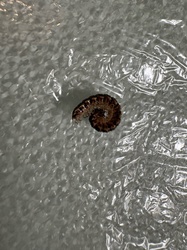
Recognize pill millipedes by their short, domed body that rolls into a tight, armored ball.
Read the full Pill Millipede encyclopedia entry →Key Visual Features
Pill millipedes have a compact, rounded shape that sets them apart from the long, worm-like millipedes most people picture.
- Size: Generally small, ranging from about 0.4–0.8 inches (1–2 cm) for common species, though some tropical species grow larger.
- Color: Usually dark brown, gray, or black, sometimes with a slight sheen; some species show pale edging along the segment margins.
- Body shape: Short and strongly domed or convex, made up of relatively few large, overlapping plates rather than many narrow segments — giving a shell-like, beetle-like silhouette.
- Legs: Multiple pairs of short legs tucked beneath the body, largely hidden from above when the animal is at rest or curled.
- Wings/antennae: No wings; a short pair of antennae is visible at the head end when the animal is uncurled.
- Markings: The overlapping plate structure itself is the main visual marker, along with the ability to roll into a tight, seamless ball as a resting posture.
Where and When You'd See Them
Pill millipedes live in leaf litter, moss, and moist soil in forests and grasslands, favoring cool, damp microhabitats. They are most visible after rain or in the early morning when moisture is high, foraging across the ground surface, and they retreat under leaf litter or into soil during dry or hot periods.
Similar-Looking Bugs
- Pill bugs (roly-polies), which are crustaceans, look extremely similar when rolled up, but have seven pairs of legs total versus the pill millipede's many more numerous, shorter leg pairs, and a more flattened, plated look with two tail-like appendages at the rear.
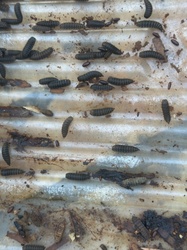
- Regular millipedes are long and worm-like with many narrow segments, unlike the short, domed body of a pill millipede.
- Pill bugs and pill millipedes can both roll into a ball, but the millipede's ball is typically smoother and more perfectly spherical, with no visible antennae once curled.
- Beetle larvae with a curled resting posture lack the segmented plate armor and true many-legged structure of a pill millipede.
Quick ID Checklist
- Short, strongly domed, shell-like body rather than long and worm-like
- Rolls into a tight, near-perfect ball when disturbed
- Dark brown, gray, or black coloring
- Legs mostly hidden beneath the body from above
- Found in moist leaf litter and soil, most active after rain
Frequently asked questions
How is a pill millipede different from a pill bug (roly-poly)?
Pill millipedes have far more leg pairs and a smoother, more evenly rounded ball shape, while pill bugs are crustaceans with seven pairs of legs and a more flattened, plated look with tail appendages.
Why does a pill millipede roll into a ball?
Rolling into a tight ball is a natural resting posture that tucks the legs and antennae beneath a hardened, domed shell of overlapping plates.
What habitat do pill millipedes prefer?
They favor moist leaf litter, moss, and soil in forests and grasslands, staying in damp microhabitats and becoming more active after rain.
How big do pill millipedes get?
Most common species are quite small, around 0.4 to 0.8 inches long, though some tropical species can be larger.
Pill Millipede identified by the community
Recent Pill Millipede finds identified with Bug Identifier.