
Pink Toe Tarantula Identification Guide
A dark, velvety tree-dwelling tarantula with distinctive pink-orange leg tips that make it easy to spot.
Read the full Pink Toe Tarantula encyclopedia entry →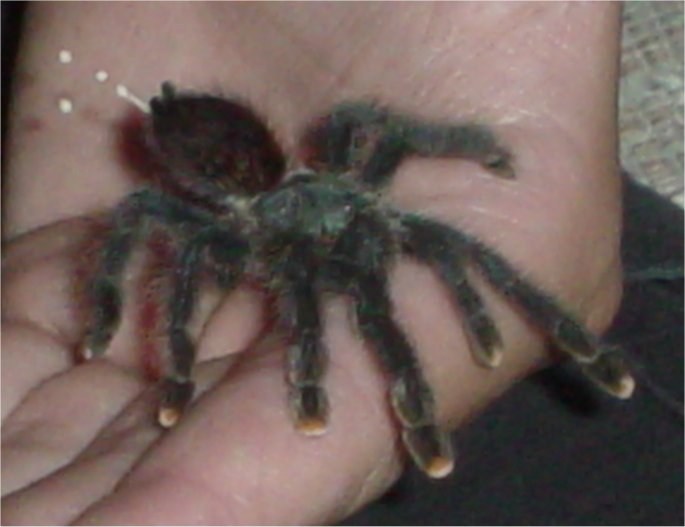
Key Visual Features
The pink toe tarantula (Avicularia avicularia) is a medium-large arboreal tarantula best known for the soft pink-to-orange coloring on the tips of its legs and feet, which contrasts sharply against its otherwise dark brown or black, velvety body.
- Size: Leg span of roughly 4.5–6 inches (11–15 cm) in adults; body length around 2 inches.
- Color: Body and upper legs are dark brown, black, or bronze-black with a slight iridescent sheen; the tarsi (leg tips) are a soft salmon-pink to orange, giving the species its common name.
- Body shape: Typical tarantula build — a rounded, hairy cephalothorax and abdomen, with relatively long, slender legs compared to ground-dwelling tarantulas.
- Hair/texture: Covered in fine, short setae (hairs) that give a velvety appearance rather than the shaggy look of some other tarantula species.
- Legs: Long and built for climbing, with dense tufts of hair near the tips that aid in gripping bark and foliage.
Where and When You'd See It
Pink toe tarantulas are native to tropical rainforests of South America and parts of the Caribbean. They are arboreal, meaning they live in trees and shrubs rather than burrows, often building funnel-shaped silk retreats among leaves, bark crevices, or tree hollows several feet off the ground. They are most active at night (nocturnal) and tend to stay hidden in silk retreats during the day. In captivity or warm humid climates, they may also be seen on vertical surfaces such as cork bark or enclosure walls.
Similar-Looking Species
- Other Avicularia species (e.g., Amazon sapphire pink toe): Very similar body shape but may show bluish or purplish sheens instead of the classic salmon-pink leg tips.
- Green bottle blue tarantula: Has blue-green legs and an orange abdomen rather than pink tips, and is more ground/burrow dwelling.
- Curly hair tarantula: Lacks pink tips, has visibly curled hairs, and is terrestrial rather than tree-climbing.
- Antilles pink toe: Nearly identical in coloring; often distinguished by native range and subtle body proportions rather than appearance alone.
Quick ID Checklist
- Dark brown-black velvety body with pink to orange leg tips
- Long, slender legs suited for climbing rather than burrowing
- Found on tree bark, foliage, or silk retreats above ground level
- Active at night; hidden in a funnel web by day
- Native to tropical/rainforest habitats in South America and the Caribbean
Frequently asked questions
What makes the pink toe tarantula different from other tarantulas?
Its combination of a dark velvety body with pink-to-orange leg tips and an arboreal, tree-climbing lifestyle sets it apart from the mostly ground-dwelling, burrowing tarantulas found in many regions.
Is the pink toe tarantula hairy like other tarantulas?
Yes, it has fine short hairs covering its body, but they give a smoother, velvety look rather than the long shaggy fur seen on some terrestrial tarantula species.
Where would I most likely find one in the wild?
Look up rather than down — they build silk retreats in tree bark crevices, palm fronds, and shrubs in tropical forest habitats, usually well above the ground.
Do juvenile pink toe tarantulas look different from adults?
Young pink toe tarantulas often show more blue or purple iridescence and less pronounced pink tips, with the classic salmon-pink coloring becoming more defined as they mature.