Pipevine Swallowtail Identification Guide
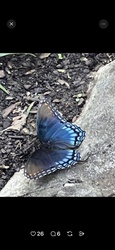
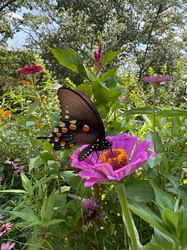
Identify the pipevine swallowtail by its glossy blue-green iridescent hindwings and orange spot row underneath.
Read the full Pipevine Swallowtail encyclopedia entry →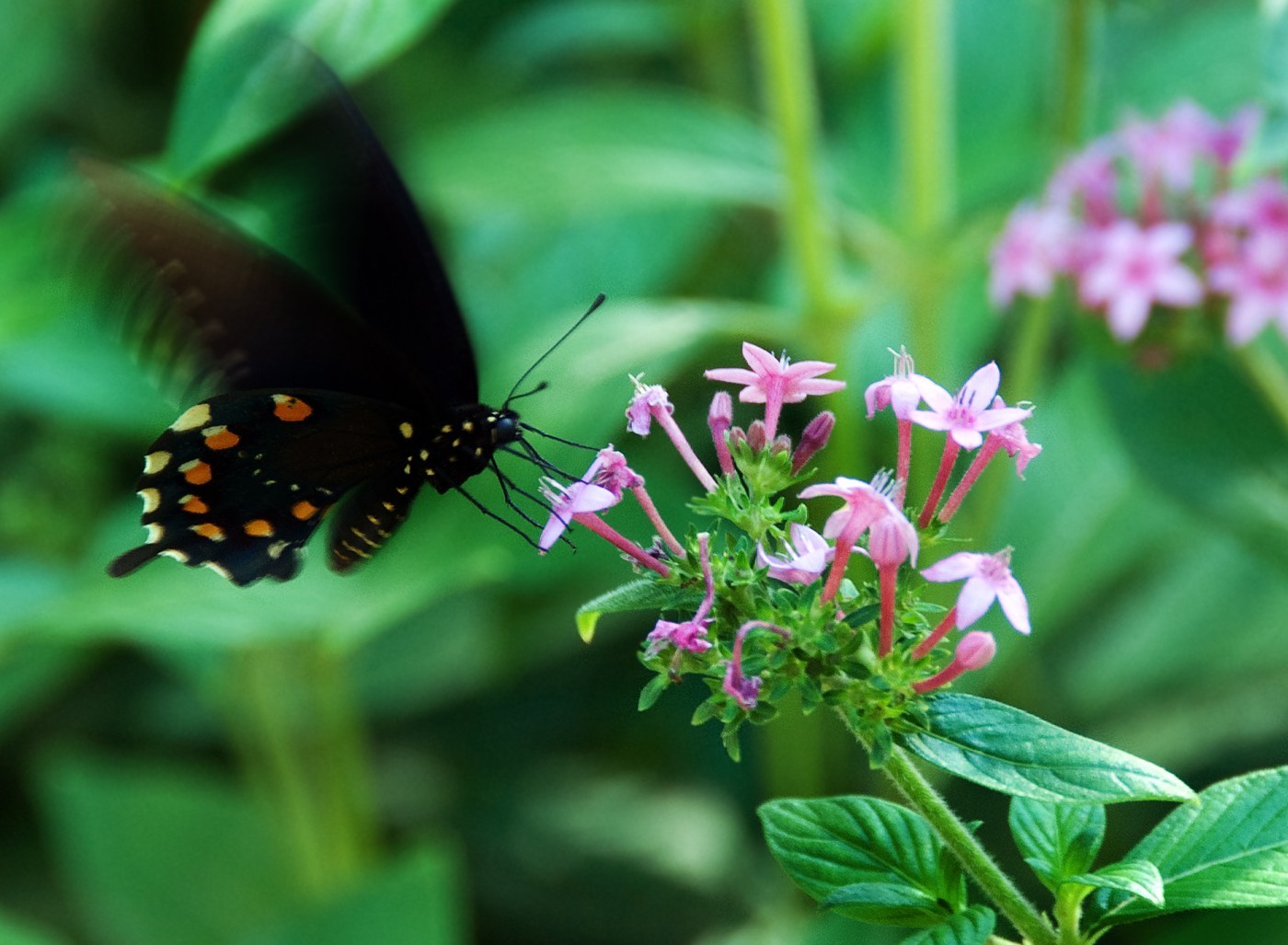
Key Visual Features
The pipevine swallowtail (Battus philenor) is known for its striking iridescent sheen, which sets it apart from other dark swallowtails.
- Size: Wingspan of about 2 3/4 to 5 inches (7–12.5 cm).
- Color: Wings are mostly black, but the hindwings show a brilliant iridescent blue-green to blue-purple sheen that shifts with viewing angle, most pronounced in males.
- Body shape: Black body, sometimes with a faint bluish sheen along the abdomen.
- Wings: Hindwings end in a single narrow tail; along the outer margin of the hindwing there is a row of small, pale cream to white crescent-shaped spots.
- Underside: The underside of the hindwing shows a row of large, round orange spots set against the blue-green iridescent background, arranged in an arc — a very distinctive and reliable feature when the wings are closed.
- Sex differences: Males show more intense, saturated blue-green iridescence, while females tend to be duller with less shine.
- Antennae: Black, clubbed antennae.
Where and When You'll See One
Pipevine swallowtails are found across the southern and eastern United States into Mexico and Central America, in woodlands, forest edges, meadows, and gardens. They are closely tied to pipevine plants (Aristolochia species), which serve as the required host plant for caterpillars, so their presence often clusters around areas where these vines grow. Adults fly from spring through fall in warmer regions, with a strong, fairly rapid flight, and are frequently seen nectaring at flowers like milkweed, thistle, and lantana, as well as puddling at damp soil.
Similar-Looking Bugs
- Black swallowtail: Shows two distinct rows of yellow spots on the wings, which the pipevine swallowtail lacks; the pipevine's iridescent blue-green sheen is also much more pronounced.
- Spicebush swallowtail: Also has blue-green hindwing shading, but shows pale cream spots along the wing margin rather than the pipevine's bold row of orange spots on the underside.
- Dark-morph eastern tiger swallowtail (female): Larger, with a faint shadow of vertical tiger striping still visible, unlike the pipevine swallowtail's more uniform black wings with strong iridescence.
- Several mimics (such as red-spotted purple): Some non-swallowtail species have evolved similar blue-black coloring to mimic the pipevine swallowtail's appearance, but they lack the tails on the hindwing.
Quick ID Checklist
- Mostly black wings with strong blue-green iridescent sheen on hindwings
- Single narrow tail on each hindwing
- Row of large orange spots on the underside hindwing, arranged in an arc
- Row of pale cream crescents along the upper hindwing margin
- Found near pipevine (Aristolochia) plants in woodlands and gardens
Frequently asked questions
What makes the pipevine swallowtail's coloring unique among swallowtails?
Its hindwings show an especially strong iridescent blue-green to blue-purple sheen, most vivid in males, which is more intense than the subtler blue shading seen in similar dark swallowtails.
How can I tell a pipevine swallowtail from a black swallowtail?
The black swallowtail has two rows of distinct yellow spots across the wings, while the pipevine swallowtail lacks yellow spotting entirely and instead shows strong iridescence plus a row of orange spots on the underside.
What plant should I look for to find pipevine swallowtails?
Pipevine plants (Aristolochia species) are the required host plant for their caterpillars, so wooded areas or gardens containing these vines are the most reliable places to spot adults and eggs.
Why do some other butterflies look like the pipevine swallowtail?
Several unrelated species have evolved similar dark, iridescent-blue coloring to resemble the pipevine swallowtail's appearance, though these mimics can usually be told apart by differences such as the lack of tails on the hindwing.
Pipevine Swallowtail identified by the community
Recent Pipevine Swallowtail finds identified with Bug Identifier.