
Pond Skater Identification Guide
Recognize this water-walking bug by its long, spindly legs, dark slender body, and habit of skating across the surface film.
Read the full Pond Skater encyclopedia entry →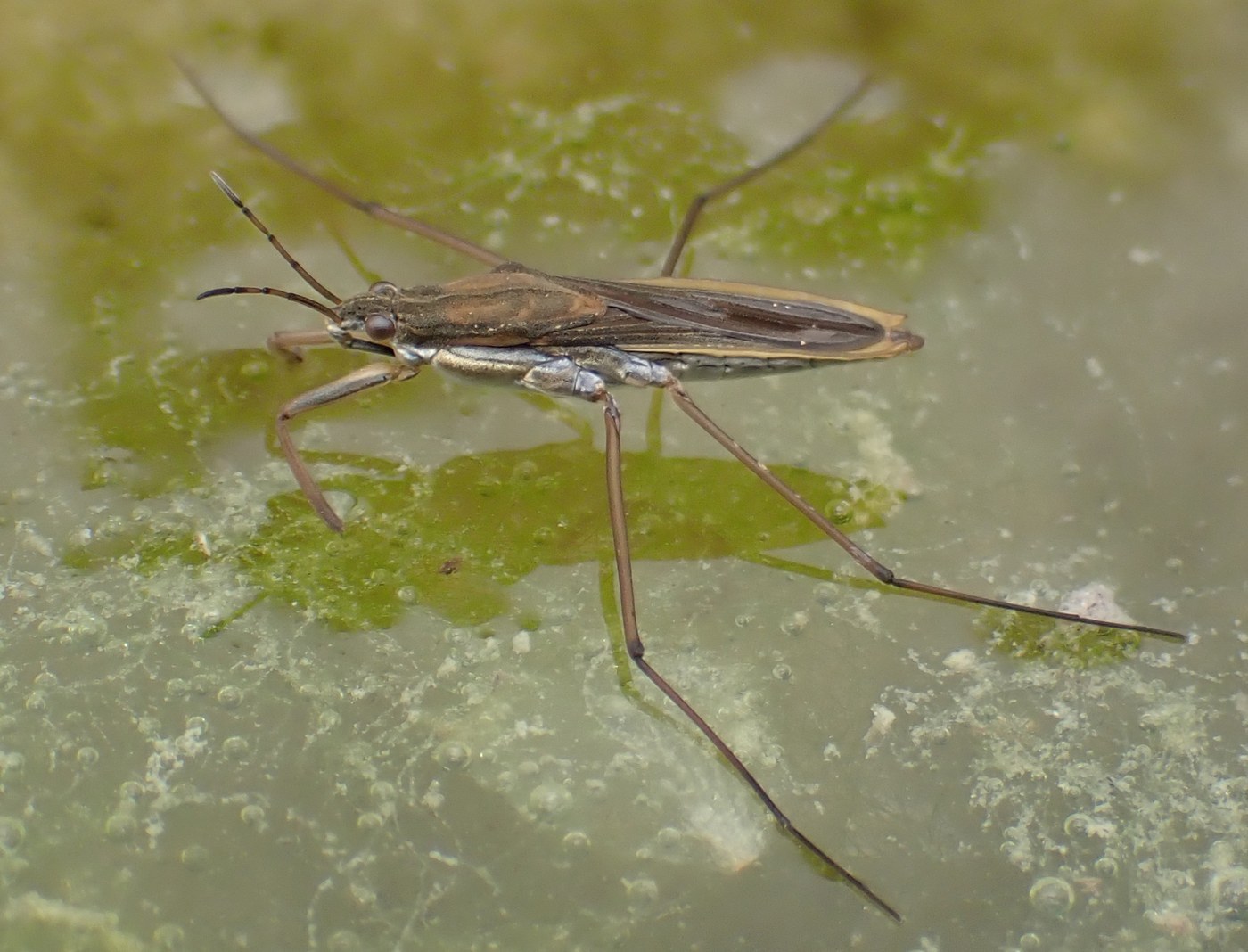
Key Visual Features
Pond skaters (also called water striders) are slender true bugs famous for walking on top of water.
- Size: Body length typically 10-20 mm, though the spread of the long legs makes the insect appear much larger.
- Color: Dark brown, grey, or black, sometimes with a faint bronze sheen, and often coated with fine water-repellent hairs that give a slightly velvety look.
- Body shape: Narrow and elongated, with a distinct division between a small head, a slightly wider thorax, and a slender abdomen.
- Legs: Extremely long, thin legs are the most obvious feature — the middle and hind pairs are much longer than the body and are used to row and glide across the surface film, while the short front pair is used to grab prey.
- Wings: Many individuals are winged and capable of flight to disperse between water bodies, though wing length can vary, with some populations short-winged or wingless.
- Antennae: Thin, segmented antennae project forward from the head, noticeably shorter than the legs.
Where and When You'd See It
Pond skaters are found gliding across the surface of still or slow-moving water, including ponds, lake edges, slow streams, and even puddles, using surface tension to stay afloat without breaking through the film. They are active from spring through autumn, often seen in small groups skating in short darting bursts, and can be spotted resting motionless on the surface between movements while watching for prey that fall onto the water.
Similar-Looking Bugs
- Water crickets: Similar surface-walking bugs but generally stockier and darker, found more often in flowing streams rather than still ponds.
- Whirligig beetles: Swim in tight spinning circles on the surface rather than gliding with long legs, and have a shiny, oval, beetle-like shell rather than a slender bug body.
- Water measurers: Much thinner and slower-moving, walking deliberately rather than skating in quick darting glides, with a more stick-like body.
Quick ID Checklist
- Slender dark body, roughly 10-20 mm, with extremely long, thin legs
- Middle and hind legs much longer than the body, used for rowing
- Glides and darts across the surface film without breaking it
- Short front legs held ready to grab prey
- Found on still or slow-moving fresh water surfaces
Frequently asked questions
How does the pond skater stay on top of the water?
It distributes its weight across long, water-repellent legs that rest on the surface film, using surface tension rather than swimming or floating structures to stay above the water.
What separates a pond skater from a whirligig beetle on the same pond?
A pond skater has a slender bug body with long spindly legs and glides in darting movements, while a whirligig beetle has a shiny oval beetle shell and swims in tight, fast spinning circles.
Which legs does a pond skater use for movement versus catching prey?
The long middle and hind legs are used to row and glide across the surface, while the much shorter front legs are held forward to grab items that land on the water.
Where are pond skaters most commonly found?
They favor still or slow-moving fresh water such as ponds, lake margins, slow stream stretches, and even puddles, wherever an undisturbed surface film is present.