
Portia Spider Identification Guide
Identify a Portia spider by its tufted, leaf-litter-like body and unusually large, forward-facing eyes.
Read the full Portia Spider encyclopedia entry →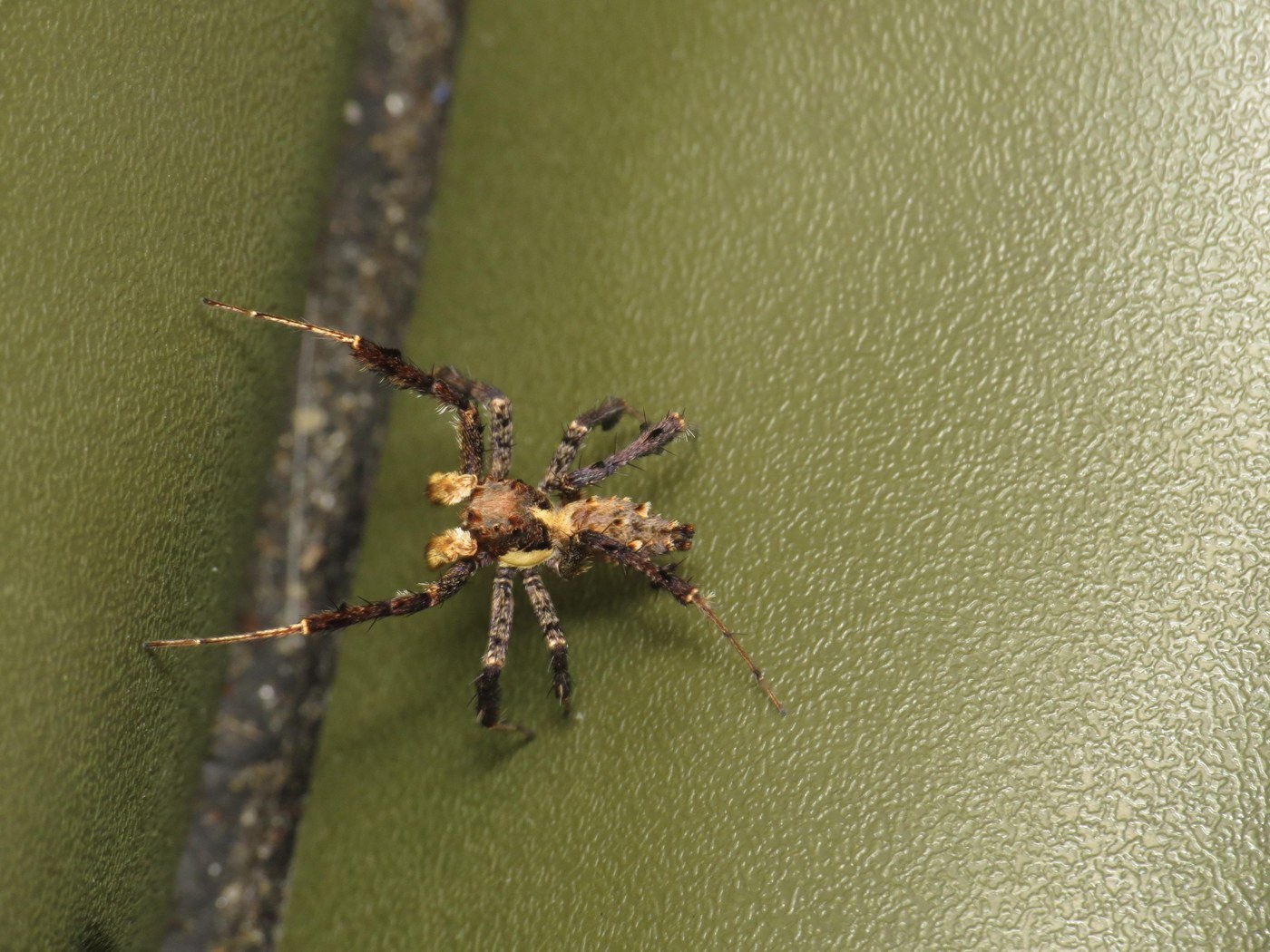
Key Visual Features
Portia spiders are a group of jumping spiders known for their irregular, leaf-litter-like appearance and complex hunting behavior.
- Size: Body length typically 6-10 mm.
- Color: Mottled brown, tan, and cream tones with irregular patches, closely resembling a bit of dead leaf or debris.
- Body shape: Irregular outline with tufts of hair and small projections along the legs and abdomen that break up its silhouette, unlike the smooth outline of many other jumping spiders.
- Eyes: Eight eyes, with the two large anterior median eyes being especially prominent and forward-facing — a hallmark of jumping spiders generally, but in Portia these eyes are set within a distinctly textured, irregular head region.
- Legs: Eight legs, often held in an asymmetrical or awkward-looking posture while walking, which is actually a form of movement camouflage to appear like a piece of wind-blown debris rather than a living animal.
- Palps: Noticeably hairy pedipalps near the mouth, adding to the ragged, plant-debris look.
Where and When You'd See It
Portia spiders live in forested and shrubby habitats, frequently found on or near the webs of other spiders, since they are known for hunting other spiders as prey. They are active during the day, moving slowly and often pausing for long stretches, especially when approaching another spider's web, which makes their movement pattern almost as distinctive as their appearance.
Similar-Looking Bugs
- Other jumping spiders: Share the two large anterior eyes but typically have a smoother, less tufted body outline.
- Bark-mimicking spiders in other families: Can also look like debris, but usually lack the specific combination of large jumping-spider eyes with a ragged silhouette.
- Crab spiders: Sometimes similarly mottled for camouflage, but have a flatter body and the first two leg pairs held out crab-like, rather than the upright jumping-spider stance.
Quick ID Checklist
- Irregular, tufted outline resembling a bit of leaf debris
- Two large, forward-facing anterior eyes typical of jumping spiders
- Mottled brown and tan coloring for camouflage
- Slow, deliberate, sometimes jerky movement, especially near other spiders' webs
- Found in forested or shrubby habitat, often close to other spiders' webs
Behavior Notes
This spider is best known for approaching other spiders' webs with slow, irregular movements that mimic vibrations of debris or trapped prey, allowing it to get close to a web-owner while avoiding detection.
Frequently asked questions
What makes a Portia spider look different from other jumping spiders?
Its body has an irregular, tufted outline that resembles a piece of dead leaf or debris, unlike the smoother silhouette typical of most jumping spiders.
Where is a Portia spider likely to be found?
In forested or shrubby habitats, often on or near the webs built by other spiders.
How does its movement help with identification?
It moves slowly and sometimes jerkily, especially near another spider's web, a pattern that mimics debris rather than a normal walking gait.
Does a Portia spider have the large eyes typical of jumping spiders?
Yes, it has the same two large, forward-facing anterior eyes seen across the jumping spider family, though set within a more irregular, textured head region.