Potter Wasp Identification Guide
Spot the delicate wasp that sculpts miniature mud jugs on twigs and walls to house each of its young.
Read the full Potter Wasp encyclopedia entry →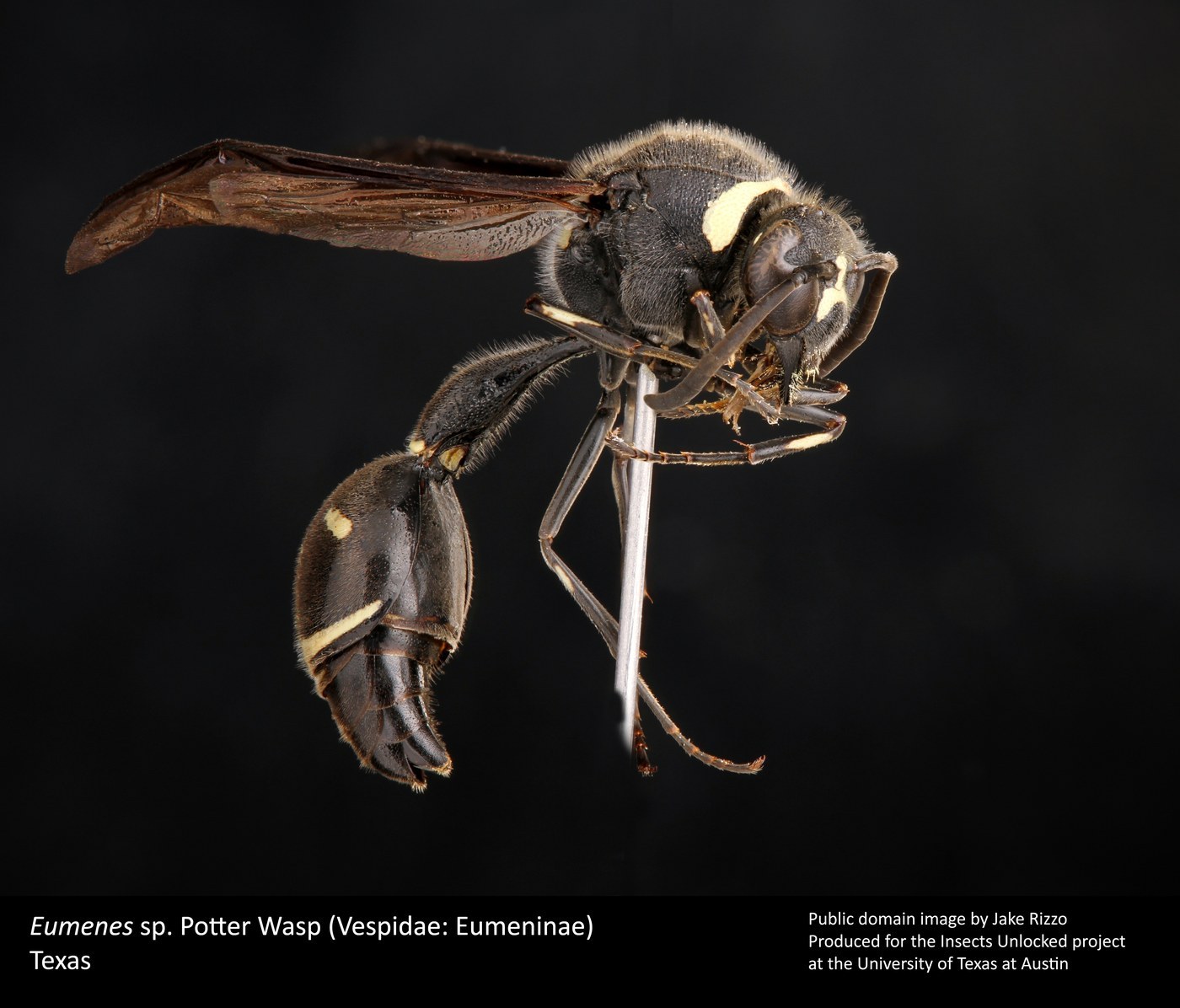
Key Visual Features
Potter wasps are solitary wasps named for the tiny, urn-shaped mud pots they craft, one at a time, as nests.
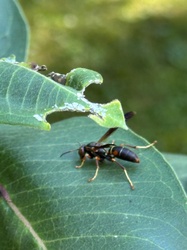
- Size: Typically 12–20 mm (0.5–0.8 inches), smaller and more delicate than many other wasps.
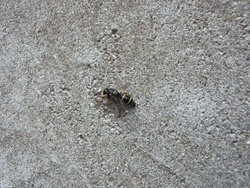
- Color: Black or dark brown body marked with crisp white, cream, or yellow bands and spots, especially across the thorax and abdomen.
- Body shape: A narrow waist and a somewhat rounded abdomen; the overall silhouette is slimmer than a paper wasp but less thread-like than a mud dauber.
- Wings: Clear to lightly smoked, folded along the back at rest.
- Legs: Slender, often marked with pale coloring at the joints.
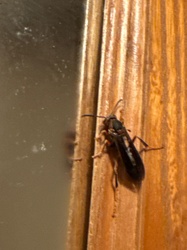
- Antennae: Thin, elbowed, dark, and constantly probing while the wasp works mud or investigates surfaces.
Where and When You'll See One
Potter wasps favor sunny, dry conditions and are most active in the warmer months.
- Watch twigs, small branches, fences, and exposed walls for small, rounded mud pots roughly the size of a marble or grape, often with a narrow "spout" opening.
- Adults visit flowers for nectar, particularly in gardens with asters, mints, and other small-flowered plants.
- Females can be seen alone, kneading mud balls at damp soil edges before flying them to the nest site.
- Most active on warm, sunny afternoons in spring through late summer, depending on region.
Similar-Looking Bugs
- Mud daubers: Build elongated tube nests in rows rather than single rounded pots, and tend to be larger and more thread-waisted.
- Paper wasps: Construct open, papery combs instead of solid mud pots, and have a longer, more visible waist in flight.
- Yellowjackets: Build enclosed paper nests underground or in cavities, not individual mud pots, and are social rather than solitary.
- Small carpenter bees: Similar size but fuzzier and rounder, without the crisp pale banding potter wasps typically show.
Quick ID Checklist
- Small, jug- or urn-shaped mud pot attached to a twig, stem, or wall
- Dark body with clean white or yellow banding
- Narrow waist, moderate body length under an inch
- Seen alone provisioning or sealing a single mud pot
- Visits flowers for nectar between nest-building trips
Frequently asked questions
How is a potter wasp nest different from a mud dauber's?
Potter wasps build small, individual, jug-shaped pots, while mud daubers build longer tube-shaped cells, often several side by side.
Do potter wasps live in colonies?
No, they are solitary — each female builds, provisions, and seals her own mud pot without help from other wasps.
What size is a typical potter wasp mud pot?
Most pots are about the size of a small marble or grape, roughly a centimeter or two across, often with a narrow neck opening.
Where do potter wasps usually build their pots?
Common spots include thin twigs, plant stems, fence rails, and sheltered exterior walls where the mud can dry undisturbed.
Potter Wasp identified by the community
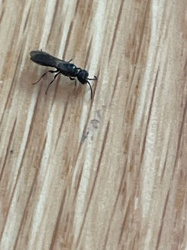
Recent Potter Wasp finds identified with Bug Identifier.