Promethea Moth Identification Guide
Tell males from females of this giant silk moth and learn why males are unusual among moths for flying by day.
Read the full Promethea Moth encyclopedia entry →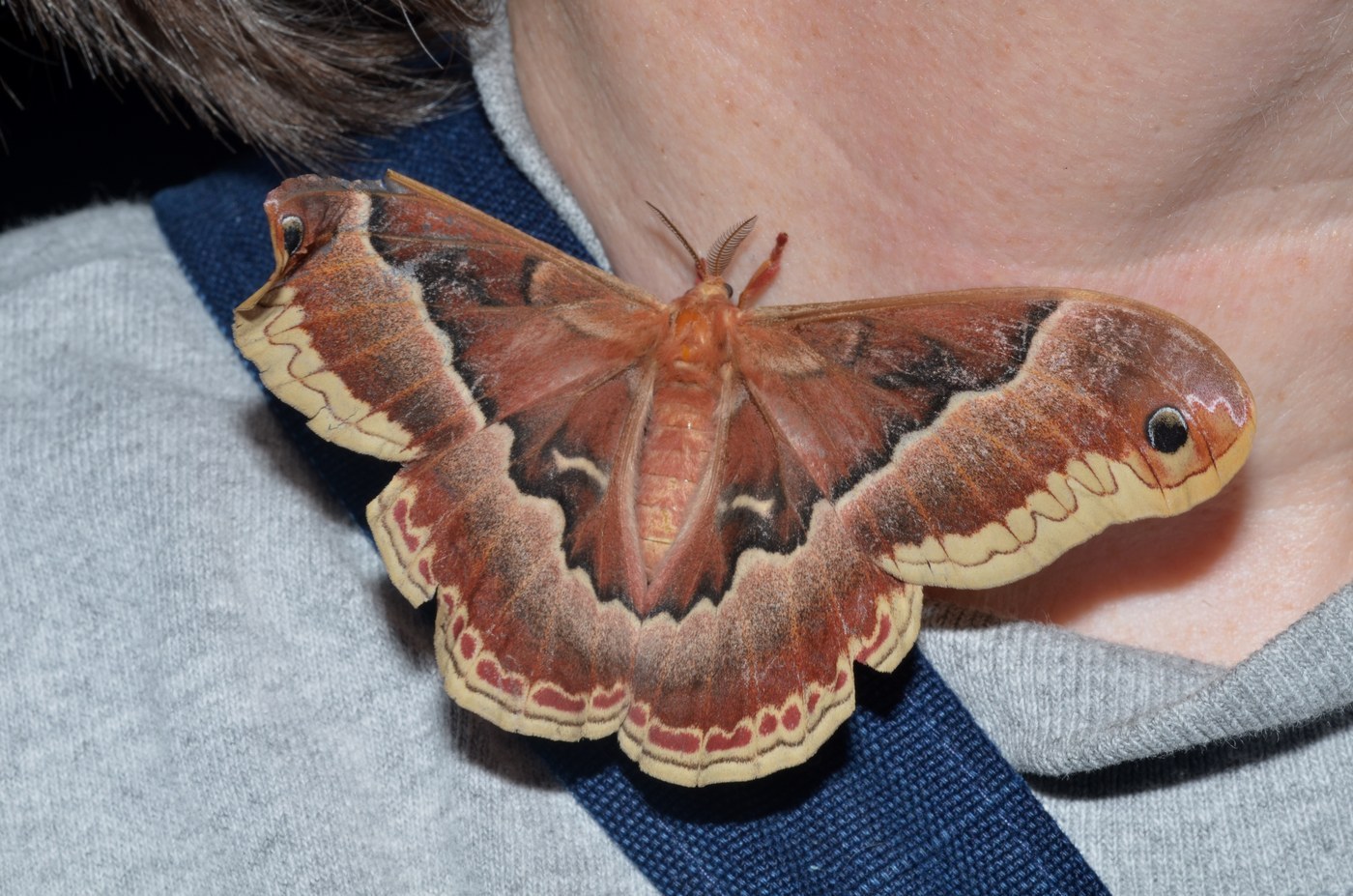
Key Visual Features
The promethea moth is a giant silk moth (family Saturniidae) notable for the striking difference in appearance between males and females.
- Size: Wingspan of roughly 3-4 inches.
- Color and pattern: Males are dark blackish-brown to maroon with a pale tan border along the wing margins and small crescent-shaped markings; females are lighter reddish-brown to tan overall, with more prominent eyespot-like markings and bolder wing patterning.
- Body shape: Robust, furry body typical of silk moths.
- Wings: Broad and rounded with no tails, distinguishing it from tailed relatives like the luna moth.
- Legs and antennae: Antennae are feathery (plumose), especially broad and comb-like in males, used to detect female pheromones from a distance; female antennae are narrower and less developed.
Where and When You'll See It
This species favors wooded areas with host trees such as wild cherry, spicebush, sassafras, and tulip tree, and it occurs across eastern North America, from woodland edges into suburban parks and gardens with mature trees. Adults fly from late spring into summer, with one or two generations depending on region and climate. Unusually for a silk moth, males fly during daylight hours, often in the afternoon, while searching for females, whereas females are more active around dusk and into the night and tend to remain still on foliage until a male locates them.
Similar-Looking Moths
The cecropia moth is a similar-sized relative but is considerably larger and has bold red-and-white banding across the wings that the promethea entirely lacks. The io moth is smaller, mostly yellow, and marked with large eyespots on the hindwings — quite different from promethea's darker, tailless wings and overall subdued coloring. The promethea's overall darker coloring, absence of tails, and the male's unusual habit of flying in daylight are the best combined clues for confident identification.
Quick ID Checklist
- Robust, furry moth with a 3-4 inch wingspan
- Males near-black with a tan wing border; females reddish-tan
- Broad, feathery (plumose) antennae
- No tails on the hindwings
- Males often seen flying in daylight near cherry or sassafras trees
Frequently asked questions
How do male and female promethea moths differ?
Males are dark blackish-brown with a pale tan border, while females are lighter reddish-brown with bolder markings.
Is it unusual for this moth to fly during the day?
Yes, males commonly fly in daylight searching for mates, which is atypical among giant silk moths.
How can I distinguish it from a cecropia moth?
The cecropia moth is larger and has bold red-and-white banding, while the promethea moth is darker overall and lacks that banding.
What kind of antennae does it have?
Feathery, plumose antennae, particularly broad and comb-like in males.
Promethea Moth identified by the community
Recent Promethea Moth finds identified with Bug Identifier.