Purple Emperor Identification Guide
Learn to catch the iridescent purple flash of this powerful woodland butterfly.
Read the full Purple Emperor encyclopedia entry →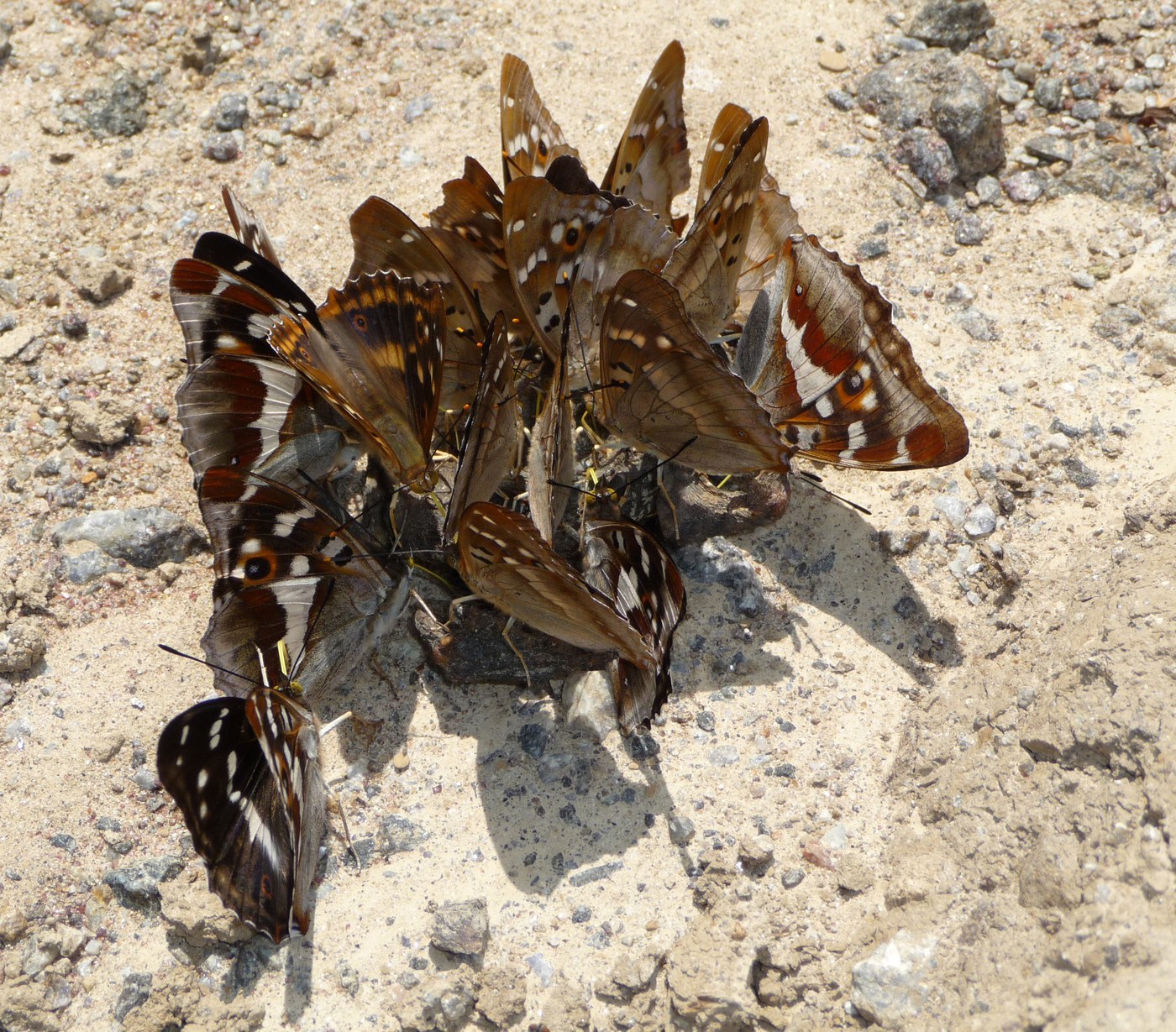
Key Features
- Large, powerful woodland butterfly, wingspan 7–8.5 cm (2.8–3.3 inches)
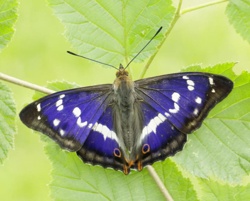
- Males display a striking iridescent purple sheen across the dark brown-black wings when viewed at certain angles in sunlight; the purple is structural color, not pigment, so it can flash on and off as the butterfly moves or tilts its wings
- Females are larger than males but lack the purple sheen, appearing plain dark brown with the same white markings
- Both sexes show bold white bands and spots across the fore- and hindwings, plus a small orange-ringed eyespot near the hindwing margin
- Strong, direct, high-flying behavior — often seen gliding around treetops on stiff wingbeats rather than fluttering near the ground like most butterflies
- Stout body and relatively short antennae compared to the wing size, typical of the emperor group
Where & When to Spot One
- Found in mature broadleaf woodland with tall oaks, especially where sallow (willow) shrubs grow in the understory, since sallow is the caterpillar's primary host plant
- Range covers much of Europe and temperate Asia
- Single generation per year, flying from late June through August
- Males spend much of their time high in the canopy around favored "master trees" but descend to woodland rides, tracks, and even puddles, animal droppings, or sap runs to feed on mineral-rich fluids rather than nectar
- Most active on warm, sunny mornings, with activity often dropping off by early afternoon
Similar Species
- White Admiral shares woodland habitat and white banding but is smaller, with a slower gliding flight and no purple sheen
- Female Purple Emperors can resemble large White Admirals or other dark brown woodland butterflies; look for the larger size and the orange-ringed hindwing eyespot to confirm
- The purple iridescence, when visible, is unique among European woodland butterflies and is the most reliable confirming feature for males
- Poplar Admiral, found in parts of continental Europe, is similar in size and pattern but lacks the structural purple color entirely
Quick ID Checklist
- Large size with strong, direct flight high around treetops
- Iridescent purple sheen on males in the right light
- Bold white bands across dark wings
- Orange-ringed eyespot on hindwing
- Mature oak woodland with sallow understory, mid-to-late summer
Frequently asked questions
Why can't I see the purple color in some photos?
The purple is a structural, angle-dependent effect, so it only appears when light hits the wing scales at the right angle — from other angles the wings look plain dark brown.
Do females have the purple sheen too?
No, only males show the iridescent purple; females are dark brown with the same white banding pattern.
Where should I look to spot one?
Scan sunlit treetops and woodland tracks in mature oak woods with sallow shrubs nearby, especially in the morning.
How is it different from a White Admiral?
Purple Emperors are noticeably larger, fly higher and faster, and males show the purple sheen, which White Admirals never have.
Purple Emperor identified by the community
Recent Purple Emperor finds identified with Bug Identifier.