Red Admiral Identification Guide
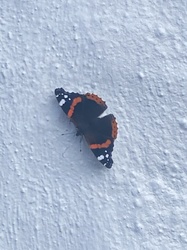
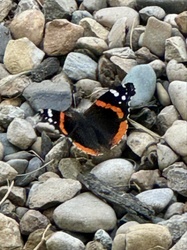
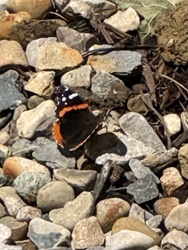
Identify the red admiral by its bold red-orange bands slashing across black wings.
Read the full Red Admiral encyclopedia entry →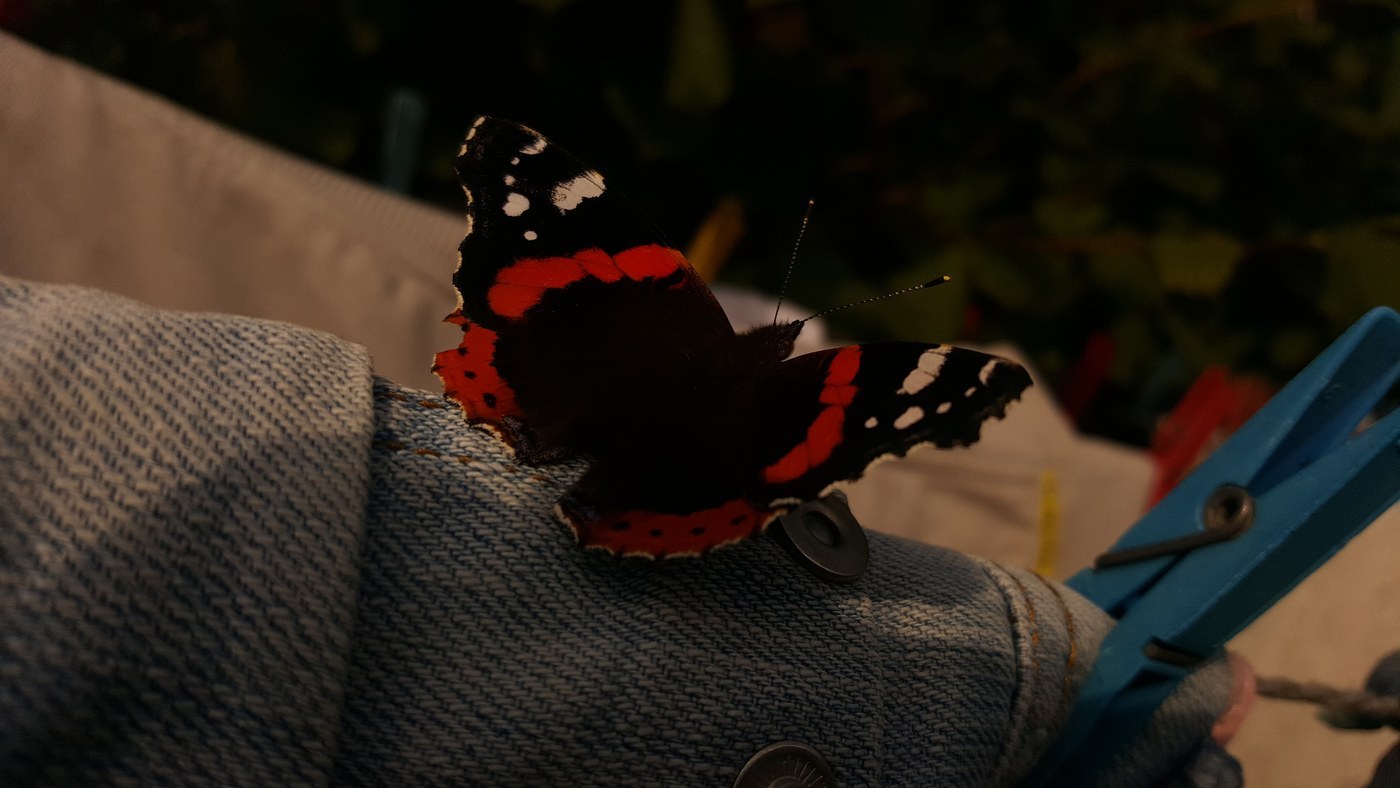
Key Visual Features
The red admiral (Vanessa atalanta) is a striking, easily recognized butterfly thanks to its bold, high-contrast pattern.
- Size: Wingspan of roughly 1 3/4 to 3 inches (4.5–7.5 cm).
- Color: Wings are mostly black to dark brown, crossed by a vivid orange-red band on each forewing and a matching band along the outer edge of each hindwing.
- Body shape: Slender, dark body typical of brush-footed butterflies.
- Wings: Forewings have several small white spots near the tips in addition to the orange band; hindwings show a row of small blue spots along the lower edge of the red-orange band.
- Antennae: Black clubbed antennae with fine white or pale segments near the tip.
Where and When You'll See One
Red admirals are found across North America, Europe, Asia, and parts of North Africa, in habitats ranging from woodland edges and parks to gardens, riverbanks, and even urban lots. They are strongly territorial — males frequently perch on a favored sunny spot, such as a fence post or leaf, and dart out to intercept other butterflies or passing insects before returning to the same perch. Look for them from spring through fall, with activity peaking on warm, sunny afternoons. Overripe fruit and sap flows are frequent feeding sites, alongside nectar flowers like buddleia and aster.
Similar-Looking Bugs
- Painted lady: Overall orange-pink background rather than the red admiral's mostly black wings with narrow orange-red bands.
- American lady: Also orange-based rather than black-based, with different underside eyespot markings.
- Monarch or viceroy: Both have a solid orange background crossed by black veining, quite different from the red admiral's black wings with narrow colored bands.
Quick ID Checklist
- Black wings crossed by bold orange-red bands
- White spots near the black forewing tips
- Row of small blue spots along the hindwing's outer band
- Territorial perching behavior, often returning to the same spot
- Common in gardens, woodland edges, and near sap or fruit
Frequently asked questions
What is the easiest feature to spot a red admiral by?
The bold orange-red diagonal band across an otherwise black forewing is the fastest giveaway — few other common butterflies combine that dark background with such a sharp, contrasting stripe.
Why do red admirals seem to return to the same perch?
Males are territorial and often stake out a sunny perch such as a fence post, rock, or leaf, chasing off intruders before settling back in the same spot, a behavior that makes them easier to watch and identify over time.
Where are red admirals most likely to be seen?
They favor woodland edges, parks, gardens, and riverbanks with sunny open patches, and are often found near sap flows or fallen fruit as well as nectar-rich flowers.
Do red admirals migrate?
In cooler regions, red admirals often migrate seasonally, moving toward warmer areas as temperatures drop and returning as conditions warm again, similar to the migratory pattern seen in painted ladies.
Red Admiral identified by the community
Recent Red Admiral finds identified with Bug Identifier.