
Regal Fritillary Identification Guide
A large prairie fritillary with striking dark blue-black hindwings dotted in cream and white.
Read the full Regal Fritillary encyclopedia entry →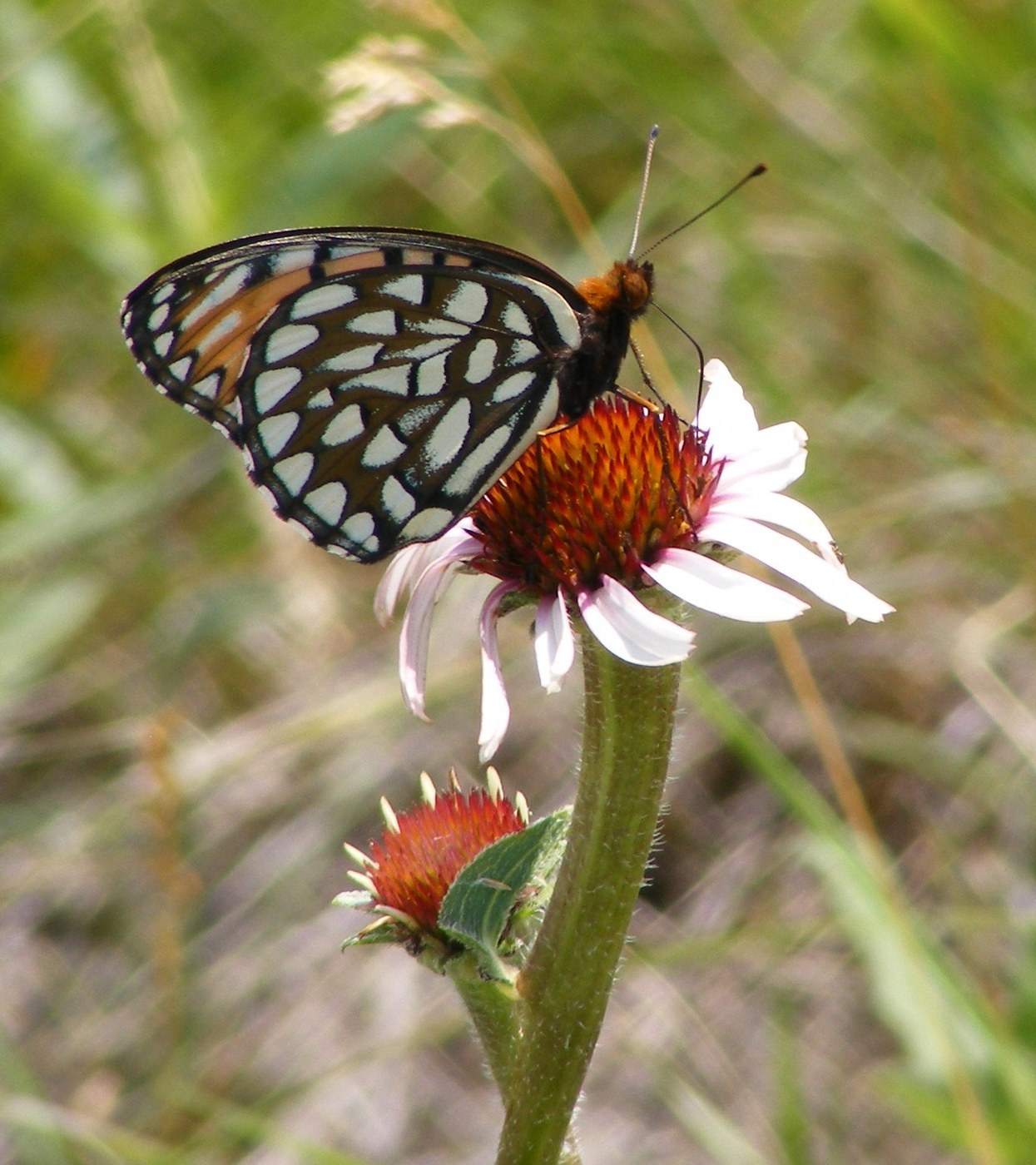
Key Visual Features
The Regal Fritillary (Argynnis idalia, also listed as Speyeria idalia) is one of the largest North American fritillaries, with a wingspan of roughly 2.7 to 4.1 inches. It is strikingly two-toned.
- Forewings are bright orange-brown marked with black spots and bars, typical of the fritillary group
- Hindwings are dark blue-black to nearly black on the upperside, set with two neat rows of pale spots: an inner row of cream-white spots and an outer row of orange-red spots (in males) or all-white spots (in females)
- Underside hindwing is olive-brown to buff with large, bold silver-white spots scattered across it
- Body is stout and dark, with the same contrasting orange-and-black coloring carried onto the thorax
- Females tend to be larger than males and show more white in the hindwing spotting
Where and When to Look
This species is a tallgrass and mixed-grass prairie specialist. It is now restricted to high-quality native prairie remnants, primarily in the Midwest and parts of the northeastern United States, and has disappeared from much of its former eastern range. Look for it flying low over grasses and nectaring on milkweeds, thistles, and coneflowers in open prairie during a single flight period, generally from late June through August.
Similar-Looking Species
- Great Spangled Fritillary and other Speyeria species: both hindwing surfaces are orange-brown like the forewings, lacking the Regal's dark blue-black hindwing upperside
- Diana Fritillary: females show blue-black wings too, but Diana females have blue-black forewings as well, not just orange forewings paired with dark hindwings, and the two species have largely non-overlapping ranges (Diana in southern Appalachians/Ozarks, Regal in prairie regions)
The combination of orange forewings with dark, spotted hindwings on the upperside is essentially unique among North American fritillaries and makes the Regal easy to confirm once seen well.
Quick ID Checklist
- Large fritillary, wingspan up to 4 inches
- Orange forewings contrasted with dark blue-black hindwings
- Two rows of pale spots on hindwing upperside
- Large silver spots on olive-brown hindwing underside
- Found only on native prairie remnants, flying low over grasses in mid-to-late summer
Frequently asked questions
What makes the Regal Fritillary easy to recognize?
Its dark blue-black hindwings contrasted against bright orange forewings on the upperside are distinctive and not shared by other North American fritillaries.
Where should I look for a Regal Fritillary?
It is a prairie specialist, so search high-quality native tallgrass or mixed-grass prairie remnants, mainly in the Midwest, flying low over grasses and visiting flowers like milkweed and coneflower.
How do I tell males and females apart?
Males show an outer row of orange-red spots on the hindwing, while females have an outer row of white spots instead and tend to be slightly larger.
When is the best time of year to see one?
Adults fly in a single generation, generally from late June through August, depending on the region.