Regal Jumping Spider Identification Guide
One of the largest North American jumping spiders, known for its plush black body, iridescent scales, and vivid orange or white markings.
Read the full Regal Jumping Spider encyclopedia entry →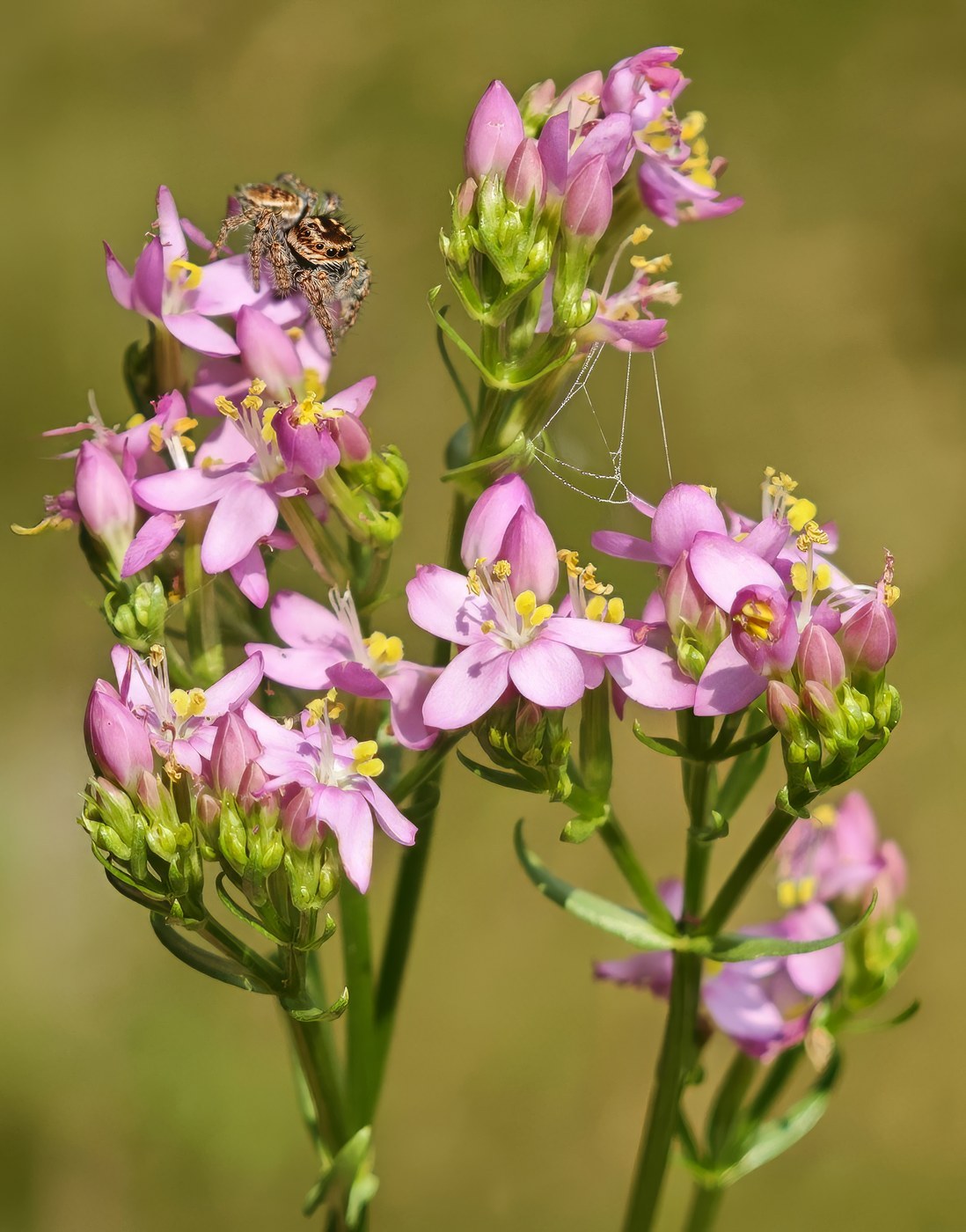
Key Visual Features
The regal jumping spider (Phidippus regius) is among the largest and most striking jumping spiders in North America, easily recognized by its size and bold coloring.
- Size: Body length of roughly 0.5–1 inch (12–22 mm), making it noticeably larger and bulkier than most other jumping spiders.
- Color: Highly variable — commonly black, gray, or dark brown with a large white, orange, or tan triangular or diamond-shaped pattern on the abdomen. Some individuals appear nearly all-white or tan.
- Body shape: Robust and rounded, with a broad abdomen and thick legs.
- Eyes: Two large, forward-facing central eyes dominate the face, flanked by smaller eyes for peripheral vision, giving a highly alert appearance.
- Iridescence: Chelicerae (mouthparts) often shine metallic green or blue in good light, especially on males.
- Legs: Thick, strong, and often banded, built for powerful jumps that can span many times its body length.
Where and When You'd See It
Regal jumping spiders are common across the southeastern United States, particularly in Florida and neighboring states, though their range extends further north and west. They favor sunny, open habitats such as fence posts, tree bark, palm fronds, garden shrubs, and building exteriors. Being diurnal hunters, they are most visible on warm days, often seen basking or stalking prey in bright light. At night they retreat into silk-lined shelters tucked into bark crevices or leaf litter.
Similar-Looking Species
- Bold jumping spider: Smaller and consistently black with a white or orange triangular mark, whereas regal jumping spiders show more color variation and larger size.
- Cardinal jumping spider: Solid red-orange abdomen rather than the patterned black-and-white or black-and-orange combination of the regal jumping spider.
- Other large Phidippus species: Overall shape is similar; regal jumping spiders are distinguished mainly by their larger size and the range of color morphs (white, gray, black, orange) within the same species.
Quick ID Checklist
- Large size for a jumping spider, often close to an inch long
- Bold, variable pattern — white, orange, or tan markings on a black or gray body
- Two oversized front-facing eyes creating a distinctive "face"
- Found basking on sunny walls, bark, or foliage in warm climates
- Thick, powerful legs used for long jumps rather than web-spinning
Frequently asked questions
Why do regal jumping spiders look so different from one individual to the next?
The species shows unusually high color variation, with morphs ranging from solid black with white markings to pale gray or tan, all within the same species and even the same location.
How big can a regal jumping spider get compared to other jumping spiders?
It is one of the largest jumping spiders in North America, with a body that can approach an inch in length, notably bulkier than common species like the bold or zebra jumping spider.
Do regal jumping spiders make webs to catch prey?
No, they hunt actively using sharp eyesight and powerful jumps rather than trapping prey in a web; silk is used mainly for shelters and safety lines.
Where in a yard would I most likely spot one?
Check sunny vertical surfaces like fence posts, tree trunks, palm fronds, and exterior walls, especially during the warmer months when they are most active.
Regal Jumping Spider identified by the community
Recent Regal Jumping Spider finds identified with Bug Identifier.