
Rocky Mountain Wood Tick Identification Guide
See how to spot the Rocky Mountain wood tick by its ornate patterning and preference for high-elevation habitats.
Read the full Rocky Mountain Wood Tick encyclopedia entry →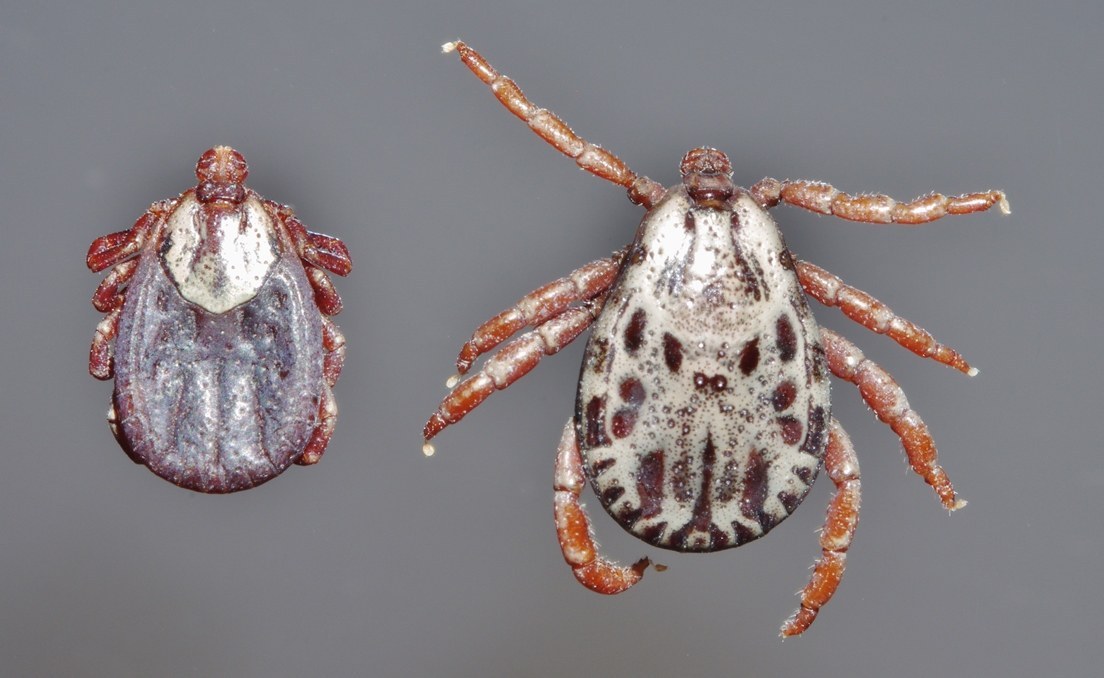
Key Visual Features
The Rocky Mountain wood tick (Dermacentor andersoni) closely resembles its relative the American dog tick but has its own regional identity.
- Size: Unfed adults are around 3/16 to 5/16 inch (4-8 mm), expanding considerably when engorged with a blood meal.
- Color: Reddish-brown to grayish-brown base color with cream or silvery ornate markings on the scutum.
- Body shape: Broad, flattened, oval body, widest toward the rear in unfed individuals.
- Legs: Eight legs (adults), banded in tone from the body, ending in small claws for gripping vegetation.
- Markings: The scutum bears an intricate pale mottled pattern; in males, this ornamentation extends over most of the back, while in females it is limited to the smaller anterior shield.
- Mouthparts: Short, visible capitulum at the front of the body.
Where and When You'd See It
As the name suggests, this species is closely tied to higher-elevation habitats in the Rocky Mountain region and nearby areas of western North America, typically favoring open, brushy slopes, grasslands, and forest edges rather than dense timber. Ticks quest on grass stems and low shrubs, waiting with front legs extended. Activity peaks in spring and early summer as temperatures warm at elevation, tapering off later in the season.
Similar-Looking Bugs
- American dog tick: Nearly identical ornate pattern, but tends to occupy lower-elevation, more easterly and coastal ranges; the two are best distinguished by locality and subtle differences in the shape of markings.
- Blacklegged tick: Much smaller and lacks any ornate silvery pattern, appearing plain reddish-brown with dark legs.
- Soft ticks: Rounded, wrinkled, and lack the hard ornamented shield entirely.
Quick ID Checklist
- Ornate cream-and-brown mottled pattern on a flattened oval body
- Found at higher elevations in mountainous, brushy, or grassy terrain
- Eight legs (adult) tipped with small gripping claws
- Questing posture on grass and low shrubs, front legs extended
- Most active in spring through early summer
Frequently asked questions
How is the Rocky Mountain wood tick different from the American dog tick?
The two look very similar with ornate mottled patterns, but the Rocky Mountain wood tick is generally found at higher elevations in mountainous western terrain, while the American dog tick favors lower-elevation grassy and brushy areas.
What does the ornate pattern on this tick look like?
It has a cream or silvery mottled design over a reddish-brown to grayish base, most visible on the shield behind the head and, in males, spread over most of the back.
When is this tick most commonly seen?
Activity typically peaks in spring and early summer as mountain temperatures warm, with numbers declining later in the season.
What kind of terrain does it prefer?
Open, brushy slopes, grasslands, and forest edges at higher elevations are the typical habitat, rather than dense forest interiors.