
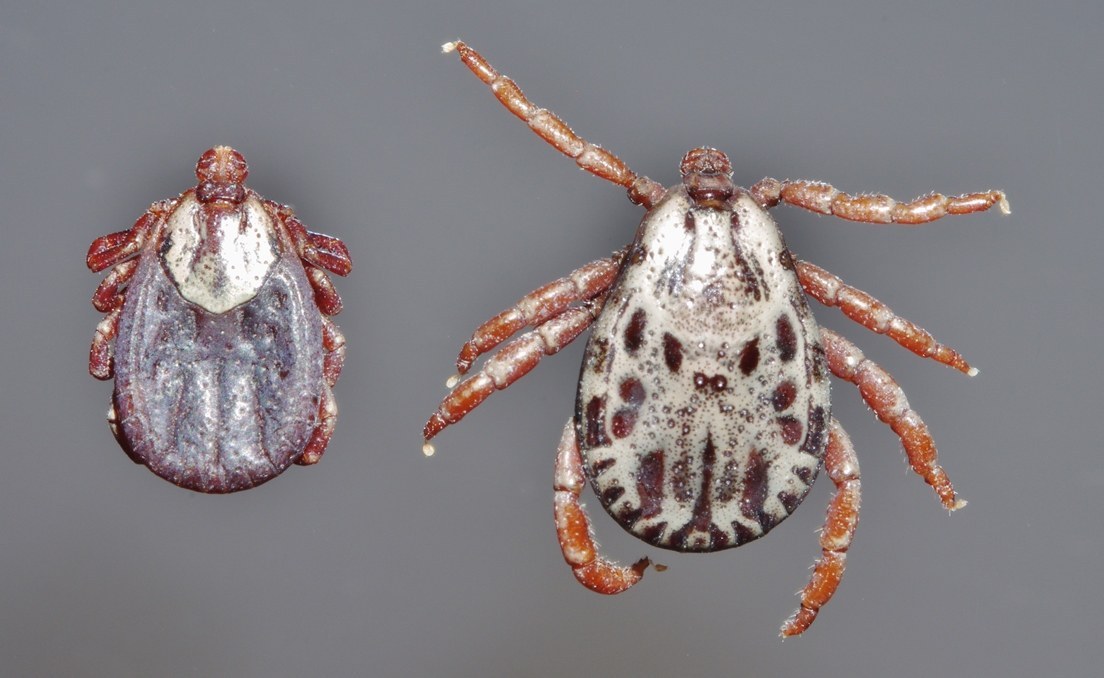
Rocky Mountain Wood Tick
Dermacentor andersoni
A robust, ornately patterned tick of the western mountains that clings to shrubs and grasses waiting to grab a passing mammal.
- Size
- 4-6 mm unfed; up to 12 mm engorged
- Habitat
- Sagebrush shrublands, grasslands, and montane forest edges
- Danger
- Bites
Spotted a bug like this?
Identify any bug or insect from a photo, free.
Overview
The Rocky Mountain wood tick is a hard tick found throughout the intermountain west and Rocky Mountain region, occupying higher elevations and drier habitats than many other North American ticks. It closely resembles the American dog tick, sharing a similar body shape and a mottled silvery-white pattern on the scutum, but the two species occupy largely separate geographic ranges with only limited overlap.
Adults are stout and flattened when unfed, with a reddish-brown body offset by a pale, patterned shield. As with other Dermacentor species, this tick is a three-host feeder, using small rodents such as ground squirrels and chipmunks during its larval and nymphal stages before moving to larger mammals like deer, elk, and livestock as an adult.
This species is a frequent subject of regional tick ecology research in the western United States and southwestern Canada, where it is one of the more thoroughly studied ticks of montane shrubland and grassland habitats.
How to Identify
- Reddish-brown body with an ornate, mottled gray-white pattern on the scutum, similar in overall look to the American dog tick.
- Males have the pale pattern covering most of the dorsal surface, while females show it only on the smaller shield behind the head.
- Unfed adults measure about 4-6 mm; engorged females can reach up to 12 mm and take on a bluish-gray, swollen appearance.
- Eight legs as adults and nymphs, six as larvae; body is broadly oval and flattened before feeding.
- Distinguished from the American dog tick mainly by range, as the two are difficult to separate visually and largely occupy different regions of North America.
Habitat & Range
This tick is found primarily in the Rocky Mountain states and adjacent regions of the western United States and western Canada, favoring open habitats such as sagebrush flats, dry grasslands, and the edges of montane coniferous forests, typically at moderate to higher elevations. It becomes active as snow melts in spring, with peak questing activity from early spring through early summer before declining in the hotter, drier months.
Behavior & Diet
Rocky Mountain wood ticks feed on a range of hosts depending on life stage, with immatures targeting ground squirrels, chipmunks, and other small rodents, while adults attach to larger mammals including deer, elk, cattle, and other grazing animals. They quest from low vegetation, extending their front legs to catch hosts brushing past, and are inactive underground or in leaf litter during unfavorable cold or dry periods. Within their ecosystem they contribute to the parasite load regulating small mammal populations and serve as prey for some ground-foraging birds.
Life Cycle
Females deposit a single large egg mass on the ground after their final blood meal and then die. Eggs hatch into six-legged larvae that find a small rodent host, feed, and drop off to molt into nymphs, which repeat the process on a similar or slightly larger host. Nymphs then molt into adults, which seek a larger mammal for a final blood meal and mating. The full cycle can take one to three years depending on temperature, elevation, and host availability, with the tick capable of overwintering at multiple life stages.
Frequently asked questions
Where is the Rocky Mountain wood tick found?
It occurs mainly in the Rocky Mountain region and intermountain west of the United States and Canada, favoring sagebrush shrublands, dry grasslands, and forest edges at moderate to higher elevations.
How is it different from the American dog tick?
The two species look very similar with matching mottled patterns, but they largely occupy different geographic ranges, with the Rocky Mountain wood tick centered in western mountain habitats.
When is this tick most active?
It is most active from early spring through early summer as snow melts, tapering off during the hotter, drier parts of summer.
What animals does it feed on?
Immature ticks feed on small rodents like ground squirrels and chipmunks, while adults attach to larger mammals such as deer, elk, and livestock.
Rocky Mountain Wood Tick guides
In-depth guides for identifying, understanding, and living alongside Rocky Mountain Wood Tick.
Other bugs you may enjoy
Wood Tick
Grassland, shrub-steppe, and open woodland of western North America
Yellow Scorpion
Arid scrubland, rocky slopes, and desert margins
Whip Spider
Tropical caves, rainforest leaf litter, and under bark
Water Mite
Ponds, lakes, streams, and other freshwater bodies
American Dog Tick
Grassy fields, trails, and low vegetation near woodlands
Arizona Bark Scorpion
Rocky desert terrain, tree bark, and structures in the Southwest
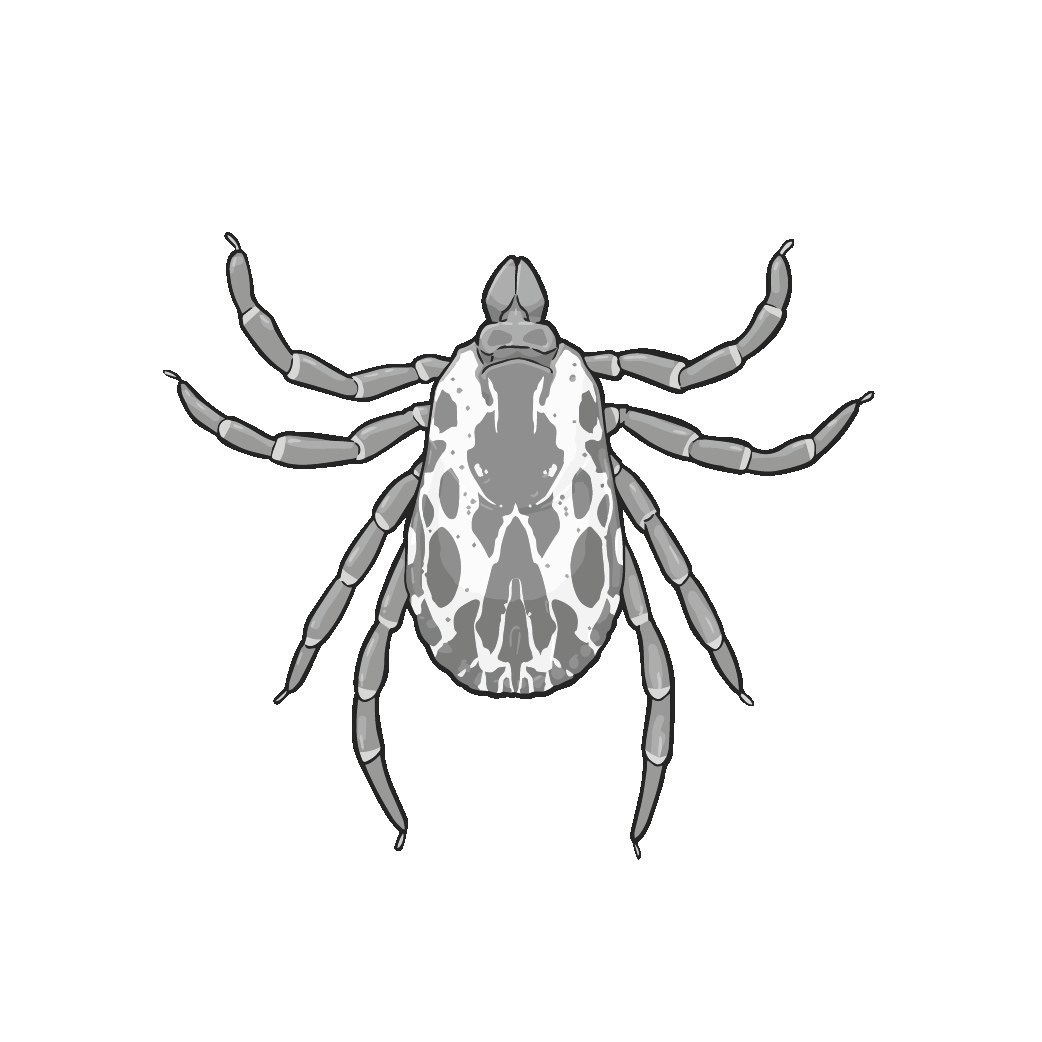
Tick
Tall grass, brush, woodland edges, and animal trails
Soil Mite
Soil, leaf litter, moss, and decaying organic matter worldwide
Two-Spotted Spider Mite
Undersides of leaves on garden plants, crops, and houseplants
Spider Mite
Undersides of leaves on garden plants, houseplants, and field and orchard crops worldwide
Whip Scorpion
Tropical and subtropical caves, tree bark, and rock crevices worldwide
Scabies Mite
Within the outer skin layer of mammal hosts; no independent outdoor habitat