Rose Hair Tarantula Identification Guide
Identify the rose hair tarantula by its soft pink-brown coloring and dense, gently rose-tinted hair covering its body.
Read the full Rose Hair Tarantula encyclopedia entry →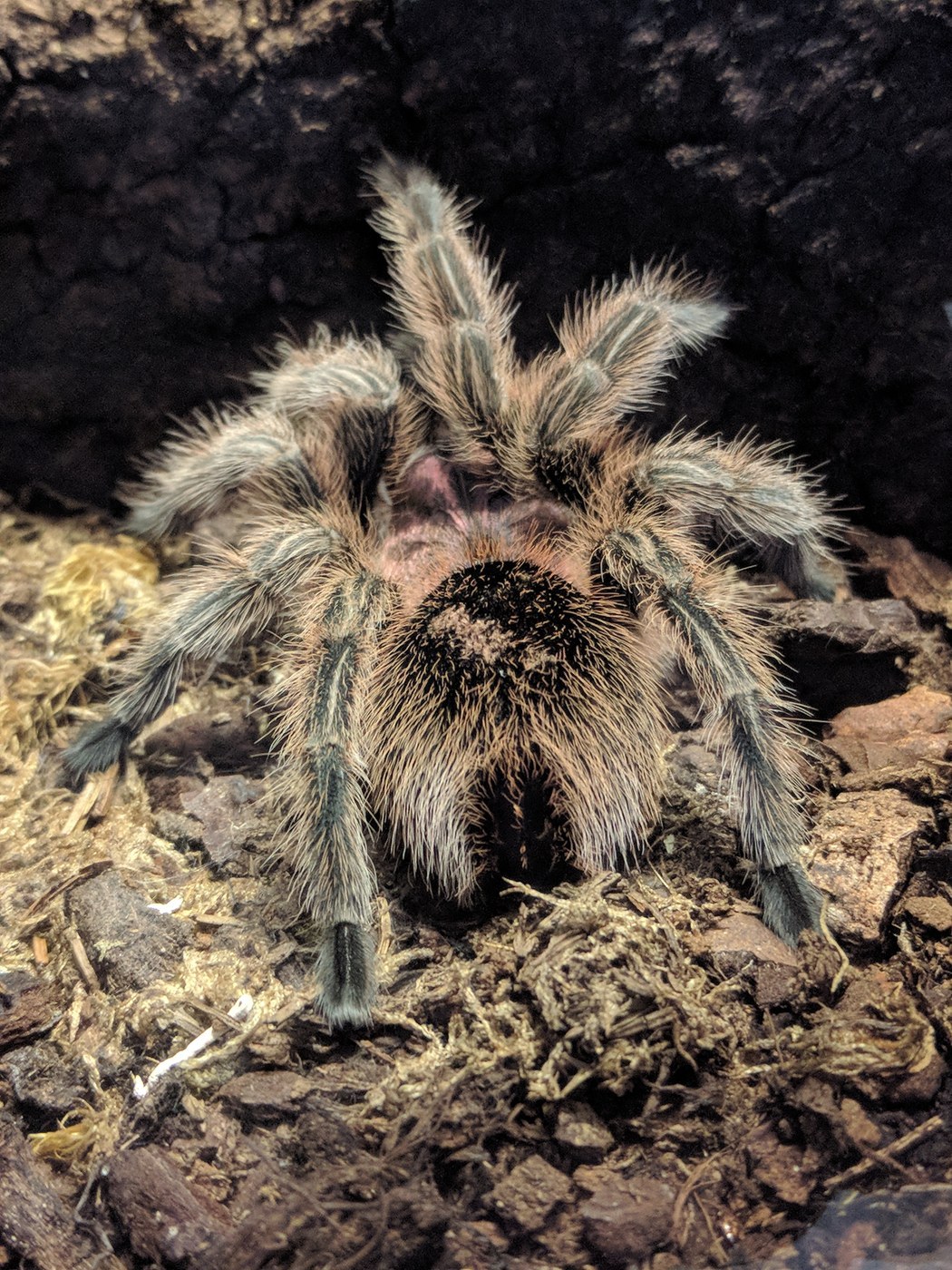
Key Visual Features
The rose hair tarantula has a soft, muted color palette that sets it apart from more boldly marked tarantula species:
- Color: A base of brown to tan overlaid with pink, rose, or copper-tinted hairs, especially noticeable on the legs and around the edges of the abdomen; the exact shade can range from pale pink-gray to a deeper rusty rose depending on the individual and lighting.
- Size: Leg span typically 4-5 inches in mature adults, with a moderately robust but not exceptionally bulky body.
- Body shape: A rounded abdomen and thick carapace covered in dense hair, giving the spider a soft, fuzzy appearance overall.
- Legs: Sturdy legs of even coloring without bold contrasting bands, distinguishing it from species with striped or banded leg joints.
- Abdomen hairs: Covered in fine urticating hairs used defensively, contributing to the soft, bristly texture of the abdomen.
Where and When You'll See One
This species is native to the arid and semi-arid regions of Chile in South America, where it lives in burrows dug into dry, sandy, or rocky soil, often at the base of shrubs or rocks that provide some shade and structure. It is a slow-moving, docile, ground-dwelling spider that is primarily active at dusk and during the cooler parts of the day, retreating to its burrow during peak daytime heat. Because of its calm temperament and manageable size, it is also one of the most widely kept tarantulas in the pet trade.
Similar-Looking Spiders
- Mexican redknee tarantula: Easily told apart by its bold black-and-orange leg banding, which the rose hair's more uniform pink-brown coloring lacks.
- Goliath birdeater: Much larger overall with a uniform brown tone, lacking the distinct rose or pink tint seen in this species' hair.
- Other Grammostola species: Closely related tarantulas from similar South American habitats can show comparable coloring, differing mainly in subtle hue and regional range.
Quick ID Checklist
- Pink, rose, or copper-tinted hair over a brown-tan base color
- Moderate size with a leg span around 4-5 inches
- Rounded, densely haired abdomen without bold leg banding
- Slow, deliberate movement and generally calm demeanor
- Native to dry, sandy, or rocky burrow habitat in Chile
Frequently asked questions
What gives the rose hair tarantula its name?
The pink or rose-tinted hairs covering its brown-tan body, especially visible on the legs and abdomen edges under good lighting, are the source of its common name.
How can I tell a rose hair tarantula from a redknee tarantula?
The rose hair lacks the bold black-and-orange banding at the leg joints that defines the redknee, showing instead a more uniform pink-brown coloring throughout.
What time of day is a rose hair tarantula most likely to be seen active?
It's most active at dusk and during cooler parts of the day, staying inside its burrow to avoid the heat of full daytime sun.
What kind of habitat does the rose hair tarantula naturally live in?
It's native to dry, semi-arid regions of Chile, where it digs burrows in sandy or rocky soil, often near the shelter of shrubs or rocks.
Rose Hair Tarantula identified by the community
Recent Rose Hair Tarantula finds identified with Bug Identifier.