
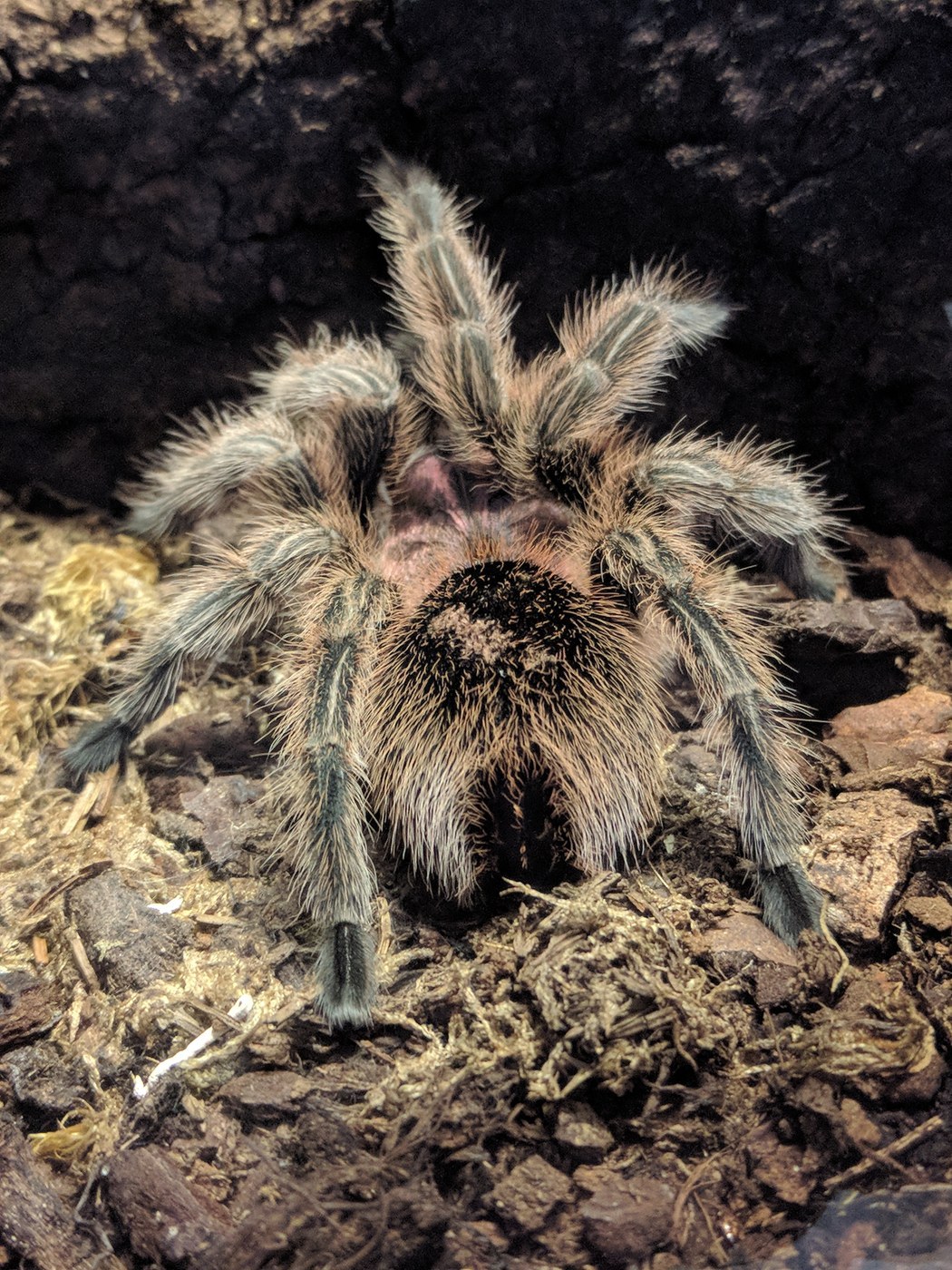
Rose Hair Tarantula
Grammostola rosea
A calm, ground-dwelling tarantula from the deserts of Chile, the rose hair is named for the pinkish sheen its bristly hairs can take on in certain light, and is known for its slow, deliberate movements and generally placid temperament.
- Size
- Body 5-7 cm; leg span up to 14 cm
- Habitat
- Burrows in arid scrub and desert of northern Chile and Argentina
- Danger
- Mildly venomous
Spotted a bug like this?
Identify any bug or insect from a photo, free.
Overview
The rose hair tarantula is a ground-dwelling species native to the arid regions of northern Chile and parts of Argentina, where it inhabits scrubland, desert, and semi-arid grassland. Its body is covered in dense hairs that range from grayish-brown to a warm, rosy or pinkish hue depending on the individual, lighting conditions, and age, which gives the species its common name.
Rose hair tarantulas are burrowing spiders, occupying self-dug burrows or natural crevices in dry, sandy or rocky soil, where they shelter from the intense heat and aridity of their native habitat. They are known among tarantula enthusiasts for a notably slow, deliberate, and generally unhurried temperament compared to many other tarantula species, though like all tarantulas they retain typical defensive behaviors, including flicking urticating (barbed, irritating) hairs from the abdomen when threatened.
As opportunistic ground predators, they play a role in controlling insect and small arthropod populations within their arid native ecosystem, ambushing prey that wanders near their burrow entrance under cover of night.
How to Identify
- Medium-large, robust tarantula body covered in dense hairs ranging from gray-brown to rosy pink or copper depending on lighting and individual variation
- Thick, sturdy legs proportioned for slow, deliberate movement rather than speed
- Defensive posture includes rearing up and brushing hind legs across the abdomen to flick loose urticating hairs
- Bald or thinned patches on the abdomen can indicate hair loss from previous defensive hair-kicking
- Lookalikes: other Grammostola species (similar coloring and build, distinguished mainly by subtle hair patterns and native range)
Habitat & Range
Native to the arid and semi-arid regions of northern and central Chile and adjacent parts of Argentina, including scrubland, desert, and dry grassland. It occupies burrows dug into sandy or rocky soil, or shelters in natural crevices and under rocks, providing protection from temperature extremes and predators.
Behavior & Diet
This tarantula is a nocturnal ambush predator, remaining within its burrow during the day and emerging at night to hunt insects and other small arthropods near the entrance. It relies on sensing ground vibrations to detect approaching prey rather than building a web. Compared to many other tarantula species, it is noted for slow, unhurried movement and a generally calm disposition, though when threatened it can still rear up and flick barbed urticating hairs from its abdomen as a defensive measure.
Life Cycle
After mating, females produce a silken egg sac containing numerous eggs, which they guard within the burrow until spiderlings emerge. Young spiders disperse to dig their own small burrows and grow slowly through repeated molts over several years. As with most tarantulas, females mature more slowly than males but live considerably longer, with documented lifespans of 15 to 20 years or more in captivity, while males typically die within a year or two of reaching maturity.
Frequently asked questions
Why is it called the rose hair tarantula?
Its body is covered in dense hairs that can take on a rosy, pinkish, or coppery hue in certain lighting, distinguishing it from plainer gray or brown tarantulas.
Where does the rose hair tarantula come from?
It is native to the arid scrubland and desert regions of northern and central Chile and neighboring parts of Argentina.
Is the rose hair tarantula considered calm compared to other tarantulas?
Yes, it is often noted for slow, deliberate movements and a generally placid temperament relative to many other tarantula species.
How long do rose hair tarantulas live?
Females can live 15 to 20 years or more, while males have a much shorter adult lifespan, typically dying within a year or two after maturing.
Rose Hair Tarantula guides
In-depth guides for identifying, understanding, and living alongside Rose Hair Tarantula.
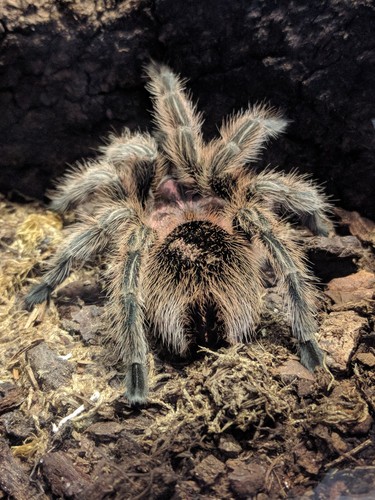
Rose Hair Tarantula identified by the community
Real finds identified with Bug Identifier.

Other bugs you may enjoy
Woodlouse Spider
Damp leaf litter, under logs, stones, and mulch
Wolf Spider
Gardens, grasslands, forests, leaf litter, ground burrows
Wandering Spider
Tropical and subtropical forest floor, foliage, and banana plants
Banded Garden Spider
Tall grass, meadows, and gardens with open sunny vegetation
Banana Spider
Wooded trails, forest edges, and gardens across the southeastern U.S. and the American tropics
Sydney Funnel-web Spider
Burrows in moist soil, gardens, and forested gullies around the Sydney basin of eastern Australia
Trapdoor Spider
Self-dug silk-lined burrows with a camouflaged door, in dry, well-drained soil worldwide
American House Spider
Corners, basements, garages, and outbuildings worldwide
Tube Web Spider
Wall crevices, bark, rockeries, and masonry
Tarantula
Burrows, rock crevices, and tree hollows in deserts, grasslands, and tropical forests worldwide
Zebra Jumping Spider
Sunny walls, fences, tree bark, and building exteriors
Wall Spider
Cracks and crevices on exterior and interior walls