
Rosy Apple Aphid Identification Guide
Identify the rosy apple aphid by its pink-gray waxy body and the tightly curled young apple leaves it leaves behind.
Read the full Rosy Apple Aphid encyclopedia entry →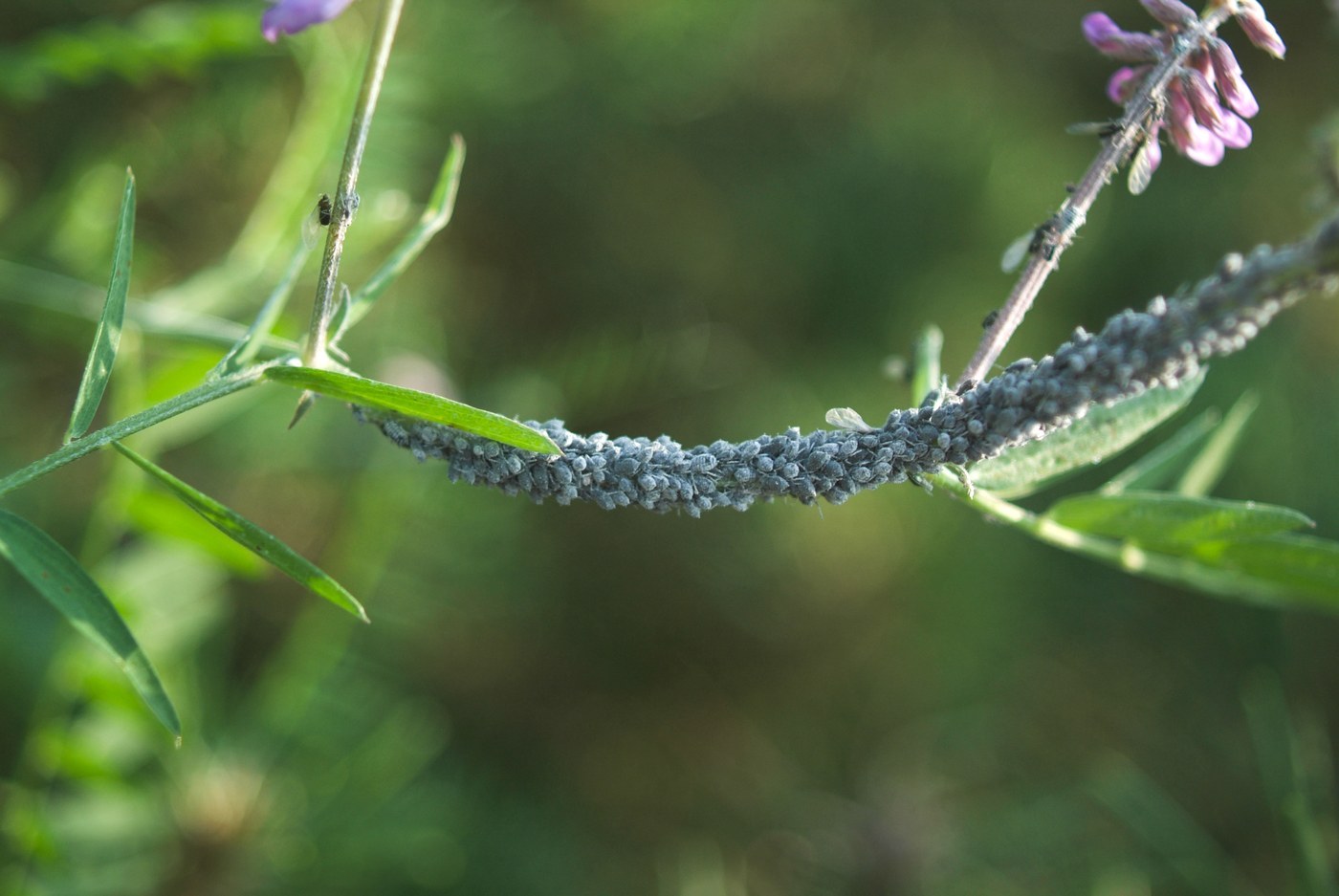
Key Features
- Small, pear-shaped body about 2mm long
- Distinctive pinkish-gray to lilac-purple coloring, often dusted with a light waxy bloom
- Short, dark cornicles (the paired tube-like structures on the rear of the abdomen) typical of aphids
- Wingless forms are rounder and softer-bodied, while winged forms have a darker head and thorax with clear wings
- Found in dense colonies clustered together rather than as isolated individuals
- Antennae are relatively short compared to the body
Where and When to Look
- Primarily associated with apple trees, feeding on the undersides of young leaves and on developing shoots in spring
- Feeding causes leaves to curl and pucker tightly around the colony, so tightly curled new apple leaves are often the first clue to check
- Most abundant in early to mid-spring, coinciding with bud break and early leaf development
- Colonies decline by mid-summer as winged forms disperse to secondary host plants such as plantain
Similar-Looking Bugs
- Green peach aphids are yellow-green rather than pink-gray and feed on a much broader range of host plants rather than being tied specifically to apple in spring
- Woolly aphids are covered in white waxy filaments, giving a cottony look entirely different from the smooth, dusty pink-gray body of the rosy apple aphid
- Other pinkish aphid species can look similar; checking for the tightly curled apple leaf symptom and the light waxy bloom on the body helps confirm identification
Quick ID Checklist
- Pinkish-gray to lilac body with a light waxy dusting
- Small, pear-shaped, soft body
- Dense clusters on the undersides of young apple leaves
- Associated with tightly curled, puckered new leaves
- Most visible in early to mid-spring
Frequently asked questions
What color is the rosy apple aphid?
It has a distinctive pinkish-gray to lilac-purple body, often with a faint waxy bloom.
How does leaf curling help identify this aphid?
Rosy apple aphid feeding causes young apple leaves to curl and pucker tightly, which is a strong visual clue even before you spot the insects themselves inside the curl.
When is the rosy apple aphid most commonly seen?
In early to mid-spring, around bud break and early leaf expansion on apple trees.
Does the rosy apple aphid stay on apple trees all year?
No, colonies typically decline by mid-summer as winged individuals move to alternate host plants like plantain.