
Ruby Tiger Moth Identification Guide
A small, uniformly reddish-pink moth with rosy hindwings, often seen resting on grasses in open, sunny habitats.
Read the full Ruby Tiger Moth encyclopedia entry →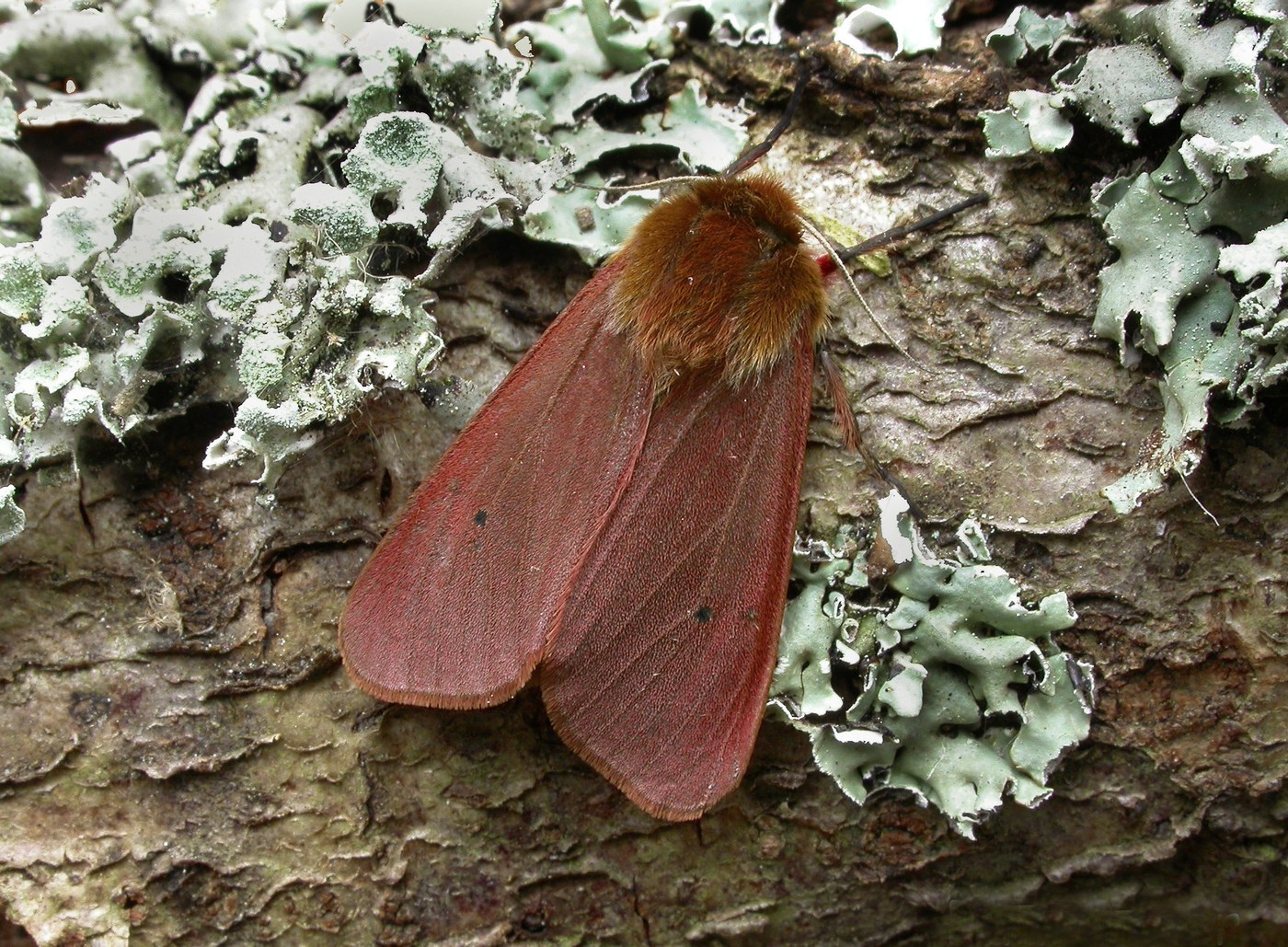
Key Visual Features
The Ruby Tiger Moth is a compact, furry moth with a wingspan of about 30-42mm.
- Forewings: Uniform pinkish-brown to reddish-tan, generally unmarked or with only faint, small dark spots near the edges.
- Hindwings: Pale pink to rosy-red, edged with a row of small black spots along the outer margin.
- Body: Furry and reddish overall, often with a darker stripe running down the center of the thorax.
- Antennae: Short, comb-like (feathery) in males; thinner and simpler in females.
- Size and shape: Noticeably smaller and more slender than many other tiger moths, with a compact, rounded resting posture.
Where and When You'll See It
This moth favors open, sunny habitats such as grasslands, heathland, coastal dunes, roadside verges, and gardens. It can produce one or two generations per year in warmer areas, with adults on the wing from late spring through early autumn. Ruby Tiger Moths rest low in vegetation during the day and become active at dusk and after dark, when they are frequently drawn to outdoor lights.
Similar-Looking Species
- Muslin Moth - greyer and more uniformly pale, lacking the warm pink-red tone and the spotted hindwing margin.
- Cinnabar Moth - far bolder, with black forewings crossed by red stripes and spots, easily distinguished at a glance.
- Scarce Ruby Tiger - very similar in color but tends to be slightly larger, with reduced spotting on the hindwing margin; best separated by close comparison of size and range.
Life Cycle & Behavior
The caterpillar is a bristly, brownish larva that feeds on a wide range of low-growing plants and overwinters before pupating in spring. Where two generations occur, the first-brood adults appear in late spring and the second in late summer. Adults are capable, if unspectacular, fliers and typically stay close to the ground, rarely venturing far from the grassy patches where their caterpillars developed.
Quick ID Checklist
- Small, furry moth roughly 3-4cm across
- Forewings plain pinkish-brown with little or no pattern
- Hindwings rosy-pink with a border of small black spots
- Compact, rounded resting shape low in grass or foliage
- Active at dusk and night in open, sunny habitats
Frequently asked questions
What is the easiest way to identify a Ruby Tiger Moth?
Look for its overall warm pink-red color and lack of bold patterning on the forewings, combined with the row of black spots along the pale pink hindwing edge.
Where is the Ruby Tiger Moth most commonly found?
It favors open, sunny habitats like grasslands, dunes, heathland, and gardens, resting low among grasses and low vegetation during the day.
Can I see this moth during daylight?
Yes, though it is primarily active at dusk and night, it can sometimes be flushed from vegetation during the day, after which it quickly settles again.
How do I tell males and females apart?
Males have more visibly feathery, comb-like antennae, while females have simpler, thread-like antennae; overall coloring is similar between the sexes.