
Saucer Bug Identification Guide
Identify this flattened, oval water bug by its broad, disc-like shape and paddle-shaped hind legs built for gliding underwater.
Read the full Saucer Bug encyclopedia entry →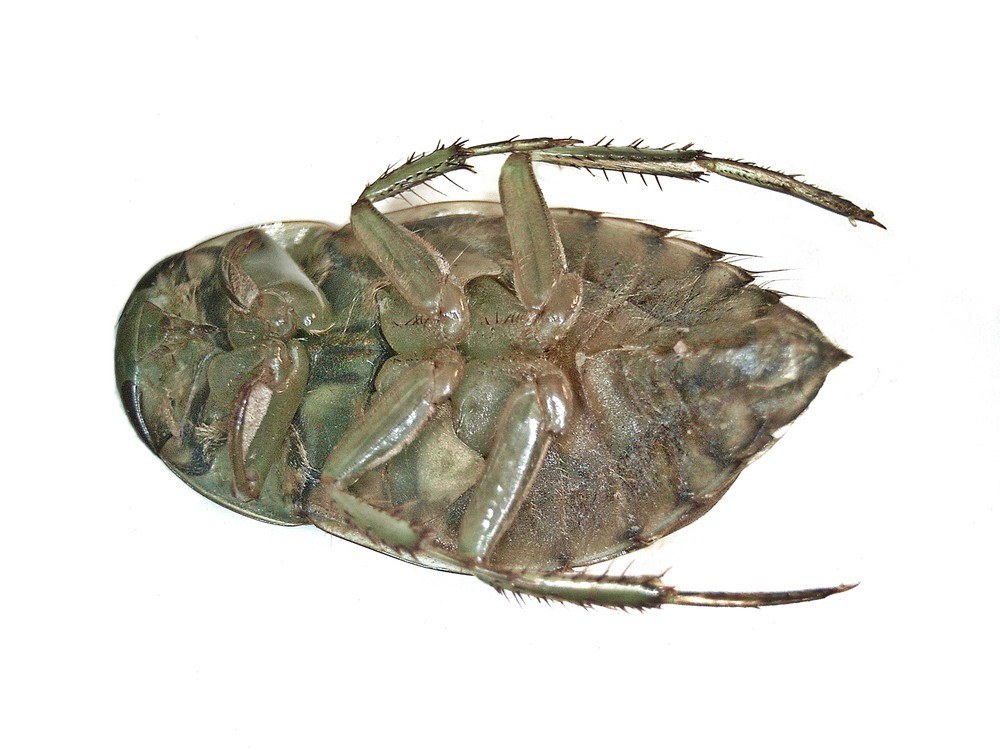
Key Visual Features
The saucer bug is a broad, flattened true bug adapted for life beneath the water's surface.
- Size: Typically 12-18 mm long, giving it a compact but noticeably wide appearance compared to other water bugs.
- Color: Mottled brown, tan, or grey-brown, often with fine speckling that provides camouflage against muddy or leaf-littered pond bottoms.
- Body shape: Distinctly broad, flattened, and oval to almost circular in outline — hence "saucer" — much wider relative to its length than most other aquatic bugs like water boatmen.
- Legs: The hind legs are flattened and fringed with hairs, forming paddle-like oars for swimming, while the shorter front legs are adapted for gripping prey and substrate.
- Wings: Wings are held flat over the back when at rest, following the broad, disc-like body outline.
- Underside: Unlike backswimmers, the saucer bug typically swims and rests right-side up (dorsal side up), rather than upside down.
Where and When You'd See It
Saucer bugs are found in still or slow freshwater habitats such as ponds, ditches, and the shallow, muddy margins of lakes, often resting on the bottom debris or clinging to submerged vegetation rather than swimming in open water for long periods. They tend to be more sedentary than active swimmers like water boatmen, preferring to crawl along the substrate. Active year-round in mild climates, they are most visible in the warmer months when pond activity generally increases.
Similar-Looking Bugs
- Water boatmen: More elongated and less rounded, with a more streaked or lined pattern on the back, and generally more active swimmers in open water.
- Backswimmers: Swim upside down (ventral side up) and have a more elongated, keeled body shape rather than the broad, flattened saucer bug outline.
- Giant water bugs: Much larger and more elongated with a distinctly pointed rear end, lacking the compact, rounded, disc-like shape of the saucer bug.
Quick ID Checklist
- Broad, flattened, almost circular or oval body, 12-18 mm
- Mottled brown-grey camouflage pattern
- Paddle-like, hair-fringed hind legs for swimming
- Swims and rests right-side up, unlike backswimmers
- Found resting on debris or vegetation in still, muddy water
Frequently asked questions
What makes the saucer bug's body shape distinctive?
It has an unusually broad, flattened, almost circular or disc-like outline compared to most other water bugs, which tend to be more elongated.
How can you tell a saucer bug from a backswimmer?
A saucer bug rests and swims right-side up with a broad, flat, rounded body, while a backswimmer swims upside down and has a more elongated, keeled body shape.
Is the saucer bug an active open-water swimmer?
Not usually; it tends to be more sedentary, often resting or crawling on submerged debris and vegetation rather than swimming continuously through open water like a water boatman.
What habitat should you check for saucer bugs?
Still or slow freshwater with muddy bottoms and debris, such as ponds, ditches, and shallow lake margins, is the typical habitat where saucer bugs are found.