Scarab Beetle Identification Guide
Learn the general features that identify a beetle as a scarab, from fan-shaped antennae to a stout, rounded body.
Read the full Scarab Beetle encyclopedia entry →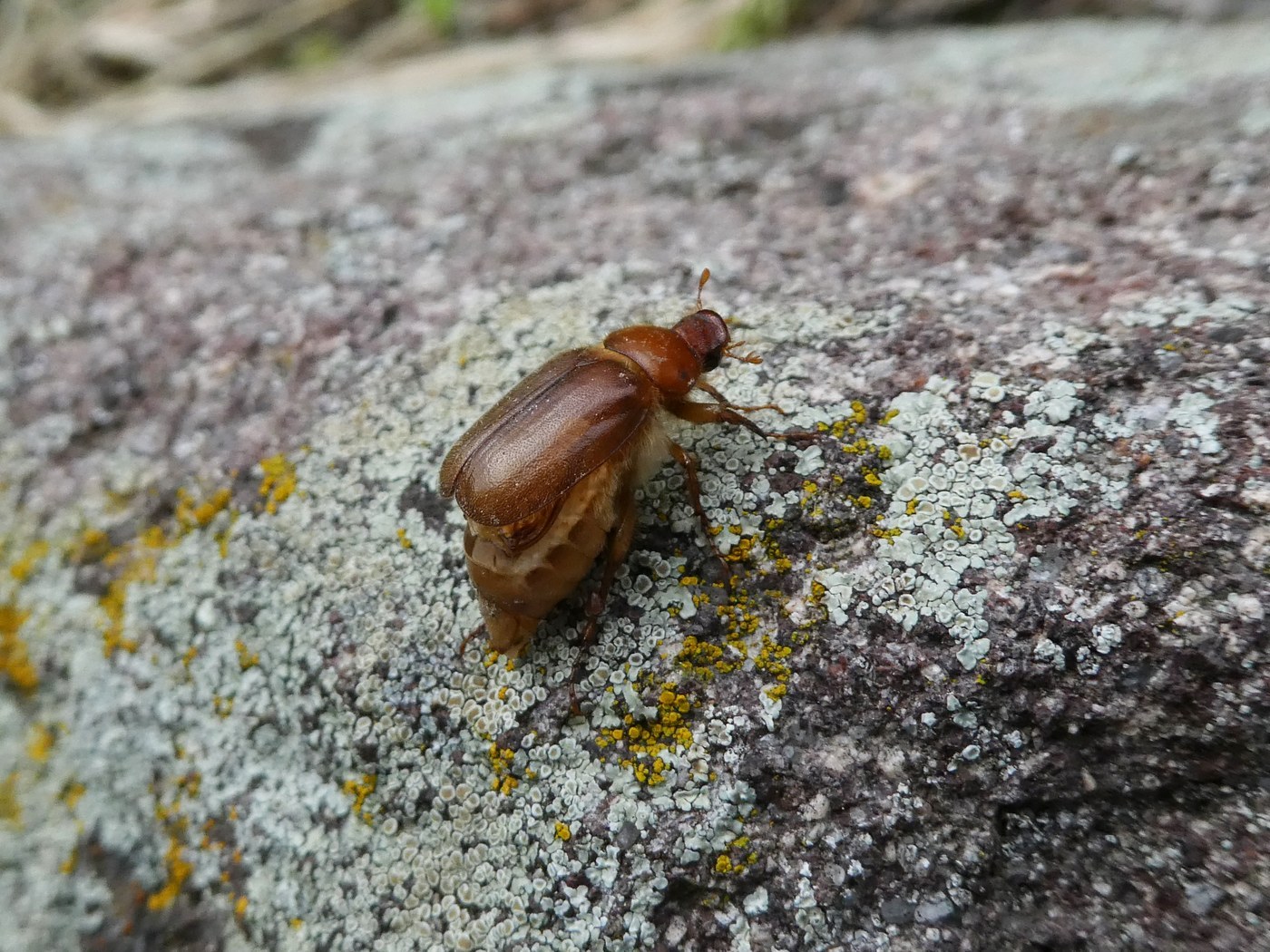
Key Visual Features
"Scarab beetle" refers to the large, diverse family Scarabaeidae, which includes thousands of species worldwide. Despite their variety, most scarabs share a few core identifying traits:
- Body shape: A stout, oval to rounded, convex body, often noticeably domed on top.
- Antennae: The single most reliable scarab feature is lamellate antennae, ending in a club made of flat, leaf-like plates that can fan open or close together like a hand of cards.
- Legs: Strong, often spiny or broadened front legs adapted for digging, along with sturdy claws.
- Coloring: Highly variable across the family, ranging from dull brown or black to brilliant iridescent green, blue, or copper.
- Size: Also highly variable, from tiny species under a quarter inch to some of the largest beetles in the world at several inches long.
Where and When You'll See One
Because the scarab family is so large, its members occupy nearly every habitat, from gardens and lawns to forests, grasslands, and dung-rich pastures. Depending on the species, scarabs may feed on dung, decaying organic matter, wood, roots, leaves, flowers, or fruit. Many are nocturnal and fly toward lights with a characteristic buzzing hum, while others, like many chafers, are active during the day.
Similar-Looking Bugs
- Click beetles: Elongated and narrower than most scarabs, with simple thread-like antennae rather than a lamellate club, and a spring mechanism that lets them flip upright.
- Ground beetles: Flatter and more elongated, with thread-like antennae and long legs built for running rather than digging.
- Stag beetles: Related but generally larger-jawed, with antennae that are elbowed and only slightly lamellate at the tip rather than the fully fan-shaped club of true scarabs.
Behavior Notes
Because the scarab family spans so many species and lifestyles, behavior is one of the more useful secondary clues once the antennae shape confirms a beetle belongs to this group. Dung-feeding scarabs are typically found on open ground near animal waste, wood-feeding species near decaying logs, and flower- or fruit-feeding species on blossoms or ripening produce, so paying attention to what the beetle is doing, and where, can help narrow down which type of scarab you are looking at.
Quick ID Checklist
- Stout, oval, domed body shape
- Distinctive lamellate (fan-shaped, club-tipped) antennae that can open and close
- Strong, often spiny digging legs
- Highly variable coloring, from dull brown to bright metallic
- Found across nearly every habitat depending on species
Frequently asked questions
What is the single best feature for identifying a beetle as a scarab?
Look at the antennae: true scarabs have lamellate antennae that end in a club of flat, leaf-like plates that can fan open or close, a feature not shared by most other beetle families.
Why do scarab beetles look so different from one another?
The scarab family is extremely large and diverse, containing thousands of species with different colors, sizes, and lifestyles, from dull brown grubs' adults to brilliant iridescent chafers.
Are scarab beetles mostly active at night or during the day?
It depends on the species; many scarabs are nocturnal and drawn to lights, while others, particularly certain chafers, are active during the day.
How can I tell a scarab beetle from a click beetle?
Scarab beetles have distinctive fan-shaped, club-tipped antennae and a stout, domed body, while click beetles have simple thread-like antennae, a narrower body, and a spring mechanism that lets them snap themselves upright.
Scarab Beetle identified by the community
Recent Scarab Beetle finds identified with Bug Identifier.