
Silvery Checkerspot Identification Guide
A mid-sized orange-and-black checkerspot best confirmed by the pale silvery band on its hindwing underside.
Read the full Silvery Checkerspot encyclopedia entry →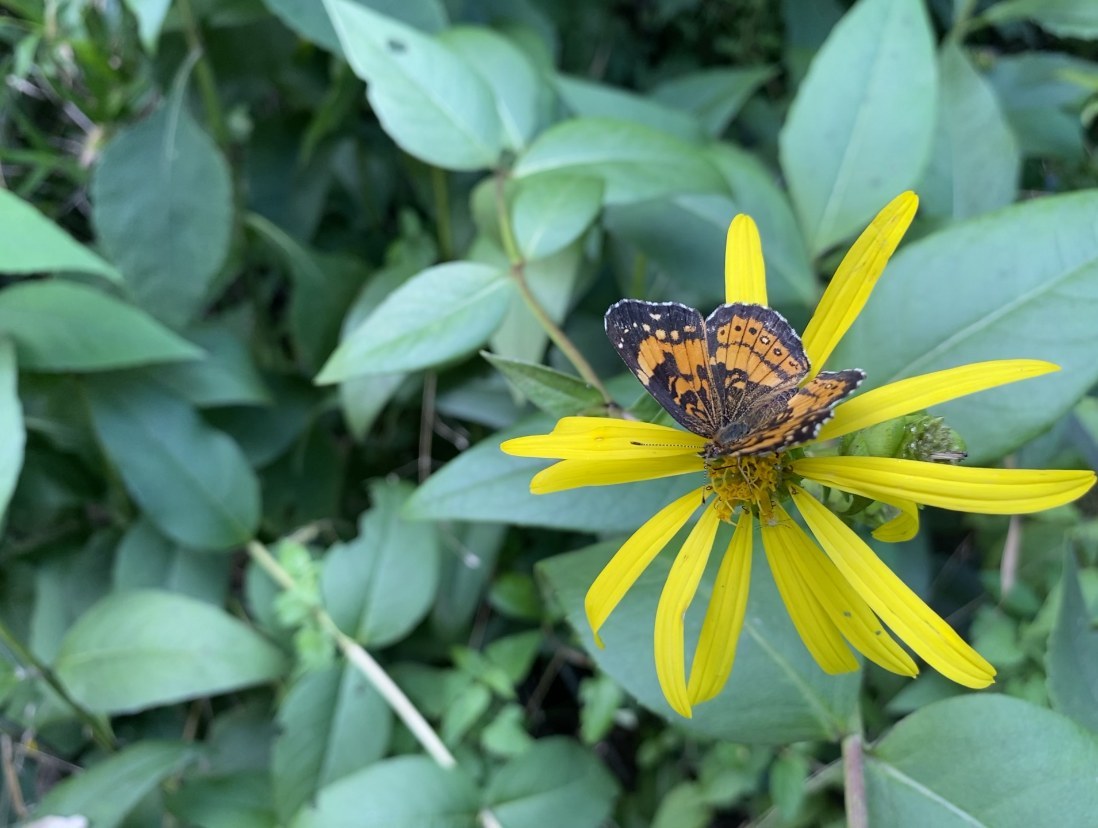
Key Visual Features
The Silvery Checkerspot (Chlosyne nycteis) is a medium-sized butterfly with a wingspan of roughly 1.5 to 2 inches (3.8-5 cm). Its upperside is burnt orange to orange-brown, broken up by a busy network of black checks, bars, and a solid black border along the wing edges, giving the whole insect a checkerboard appearance.
- Body is stout and dark, covered in short hairlike scales
- Antennae are clubbed and black-and-white ringed, typical of the checkerspot group
- Forewings are somewhat rounded rather than pointed
- The single most reliable field mark is on the underside of the hindwing: a pale cream-to-silvery band of crescent-shaped spots running near the outer margin, bordered by darker scaling. This band is what gives the species its common name.
- Upperside markings can vary a good deal between individuals, so the underside pattern is the safer clue
Where and When to Look
Silvery Checkerspots favor moist, semi-open habitats across the eastern and central United States and adjacent Canada: woodland edges, streamside clearings, damp meadows, and old fields. They perch low on vegetation and nectar at flat-topped flowers like coneflowers, milkweeds, and daisies. Depending on latitude there are one or two broods per year, with adults most commonly seen from late spring through mid-summer.
Similar-Looking Species
- Pearl Crescent: noticeably smaller, with a simpler black-and-orange pattern and no distinct silvery hindwing band
- Harris's Checkerspot: has a more orderly, less busy upperside pattern and a different underside band color (more orange-cream, less silvery-white)
- Gorgone Checkerspot: underside hindwing pattern is more finely reticulated with less contrast than the Silvery Checkerspot's bold pale band
When in doubt, get a good look at the underside hindwing band; the Silvery Checkerspot's pale crescent row is the most dependable separator from its close relatives.
Quick ID Checklist
- Wingspan about 1.5-2 inches, orange-brown with heavy black checkering
- Pale silvery-cream crescent band on hindwing underside
- Black-and-white ringed clubbed antennae
- Found near moist meadows, woodland edges, and stream corridors
- Perches low, visits flat flower clusters
Frequently asked questions
What is the easiest way to tell a Silvery Checkerspot from a Pearl Crescent?
Look at size and the hindwing underside: the Silvery Checkerspot is larger and shows a distinct pale silvery-cream band near the wing margin, while the Pearl Crescent is smaller with a simpler pattern lacking that silvery band.
Where is the best place to spot a Silvery Checkerspot?
Check moist, semi-open sites such as woodland edges, streamside clearings, and damp fields where it perches on low vegetation and visits flat-topped flowers.
Does the Silvery Checkerspot's upperside pattern vary between individuals?
Yes, the amount and boldness of black checkering on the upperside can vary, so the underside hindwing band is a more consistent identification feature.
When during the year are Silvery Checkerspots active?
Adults are typically seen from late spring through mid-summer, with one or two broods depending on the region.