Sleepy Orange Identification Guide
A small, fast-flying orange butterfly with jagged black wing borders and a seasonally shifting underside pattern.
Read the full Sleepy Orange encyclopedia entry →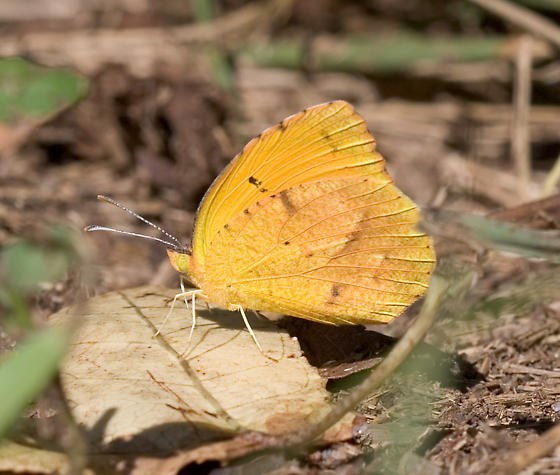
Key Features
The sleepy orange (Abaeis nicippe) is a small-to-medium sulphur, with a wingspan of about 1.5 to 2.25 inches. Key traits include:
- Bright orange upperside on males, with a wide, jagged (scalloped) black border along the wing edges.
- Females are duller orange to yellow-orange with broader, less crisp black borders.
- A small dark spot near the base of the forewing that some observers liken to a closed, sleepy eye, which gives the species its common name.
- Underside coloring changes with the season: summer-form individuals show plain yellow-orange undersides, while fall/winter-form individuals develop darker, mottled reddish-brown undersides that blend into dry leaf litter.
- Wings are rounded, and the flight is quick, low, and somewhat erratic.
Where and When to Spot It
Sleepy oranges favor open, sunny habitats: fields, roadsides, vacant lots, and disturbed ground across the southern half of the United States, straying farther north in summer. They are active from spring through fall in warmer climates and can be seen nearly year-round in the Deep South and Gulf Coast. Look for them low to the ground, nectaring on small flowers or puddling on damp soil, and around sennas, their caterpillar host plants.
Similar Species
- Little yellow: Noticeably smaller and pale lemon-yellow rather than orange.
- Orange sulphur: Larger, with a pink-fringed wing edge and different underside spotting.
- Dainty sulphur: Much smaller with more gray-and-yellow patchwork patterning. The combination of medium-small size, orange color, and jagged black border is usually enough to separate sleepy orange from these look-alikes.
Quick ID Checklist
- Small-to-medium orange butterfly with scalloped black wing borders
- Small dark "sleepy eye" mark near the forewing base
- Underside shifts from plain in summer to mottled brown in fall/winter
- Fast, low, erratic flight over open ground
- Common in open fields and roadsides across the southern US
FAQs
Frequently asked questions
Why does the sleepy orange look different in fall versus summer?
It has seasonal forms: the underside becomes darker and more mottled in cooler months, which likely helps it blend in with dry vegetation and leaf litter.
How is the sleepy orange different from the little yellow butterfly?
The sleepy orange is larger and colored orange, while the little yellow is smaller and pale lemon-yellow with a thinner black border.
Where does the name 'sleepy orange' come from?
It refers to a small dark mark near the base of the forewing that resembles a half-closed, sleepy eye.
What kind of habitat should I search for this butterfly?
Open, sunny areas such as fields, roadsides, and disturbed ground, especially where senna plants grow, are the best places to look.
Sleepy Orange identified by the community
Recent Sleepy Orange finds identified with Bug Identifier.