Soldier Fly Larva Identification Guide
Identify this tough, flattened, segmented fly larva by its leathery grey-brown skin and slow gliding movement in wet organic matter.
Read the full Soldier Fly Larva encyclopedia entry →Key Visual Features
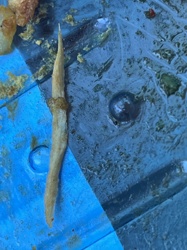
Soldier fly larvae are the immature stage of soldier flies, recognizable by their armored, flattened appearance.
- Size: Ranges by species, but common larvae are roughly 12-25 mm long, with some larger species reaching over an inch.
- Color: Dull grey, brown, or tan, sometimes with a slightly translucent or leathery look to the skin.
- Body shape: Elongated, flattened, and tapered toward the head, with a tough, somewhat rigid, segmented exoskeleton that feels leathery rather than soft compared to typical fly maggots.
- Rear end: The posterior end is blunt and often bears small fringed structures around the breathing spiracles, without any long tail or siphon.
- Legs: No true legs are present; movement is achieved by muscular contractions of the body along with tiny hooks on the underside.
- Surface texture: The skin frequently appears granular, ridged, or calcified, giving a rougher texture than the smooth, glossy skin of most other maggots.
Where and When You'd See It
Soldier fly larvae are found in a wide range of moist, decaying organic material, including compost piles, wet leaf litter, manure, rotting plant matter, and the sludgy margins of ponds and puddles. Some species live fully aquatic or semi-aquatic lives in stagnant water rich in organic debris. They are present through the warmer months and can be abundant in compost bins and shallow, nutrient-rich water from spring through autumn.
Similar-Looking Bugs
- Rat-tailed maggots: Have a long, extendable breathing tail absent in soldier fly larvae, and a softer, more wrinkled body.
- House fly maggots: Smoother, more uniformly cylindrical, and soft-skinned, lacking the tough, flattened, segmented armor of soldier fly larvae.
- Beetle larvae in compost: Often have visible true legs near the head, whereas soldier fly larvae are entirely legless.
Quick ID Checklist
- Flattened, tough, leathery-skinned larva, roughly 12-25 mm
- Dull grey-brown color with a segmented, slightly ridged surface
- Blunt rear end without any long breathing tail
- No true legs; moves by body contractions
- Found in compost, wet organic debris, or nutrient-rich stagnant water
Frequently asked questions
How is a soldier fly larva different from a typical maggot?
Soldier fly larvae have a tough, flattened, leathery, segmented body rather than the soft, smooth, rounded body typical of common house fly maggots.
Does a soldier fly larva have a breathing tail like a rat-tailed maggot?
No, soldier fly larvae have a blunt rear end without any long extendable tail, distinguishing them from rat-tailed maggots which have a prominent telescoping breathing tube.
Where is the best place to look for soldier fly larvae?
Compost piles, wet leaf litter, manure, and the sludgy, organic-rich margins of stagnant ponds or puddles are common places to find them.
Do soldier fly larvae have legs?
No, they are entirely legless and move by contracting their muscular, segmented body along with tiny hooks on the underside.
Soldier Fly Larva identified by the community
Recent Soldier Fly Larva finds identified with Bug Identifier.