
Speckled Bush Cricket Identification Guide
Spot this small, finely speckled bush cricket that rarely flies and prefers to stay hidden in shrubs.
Read the full Speckled Bush Cricket encyclopedia entry →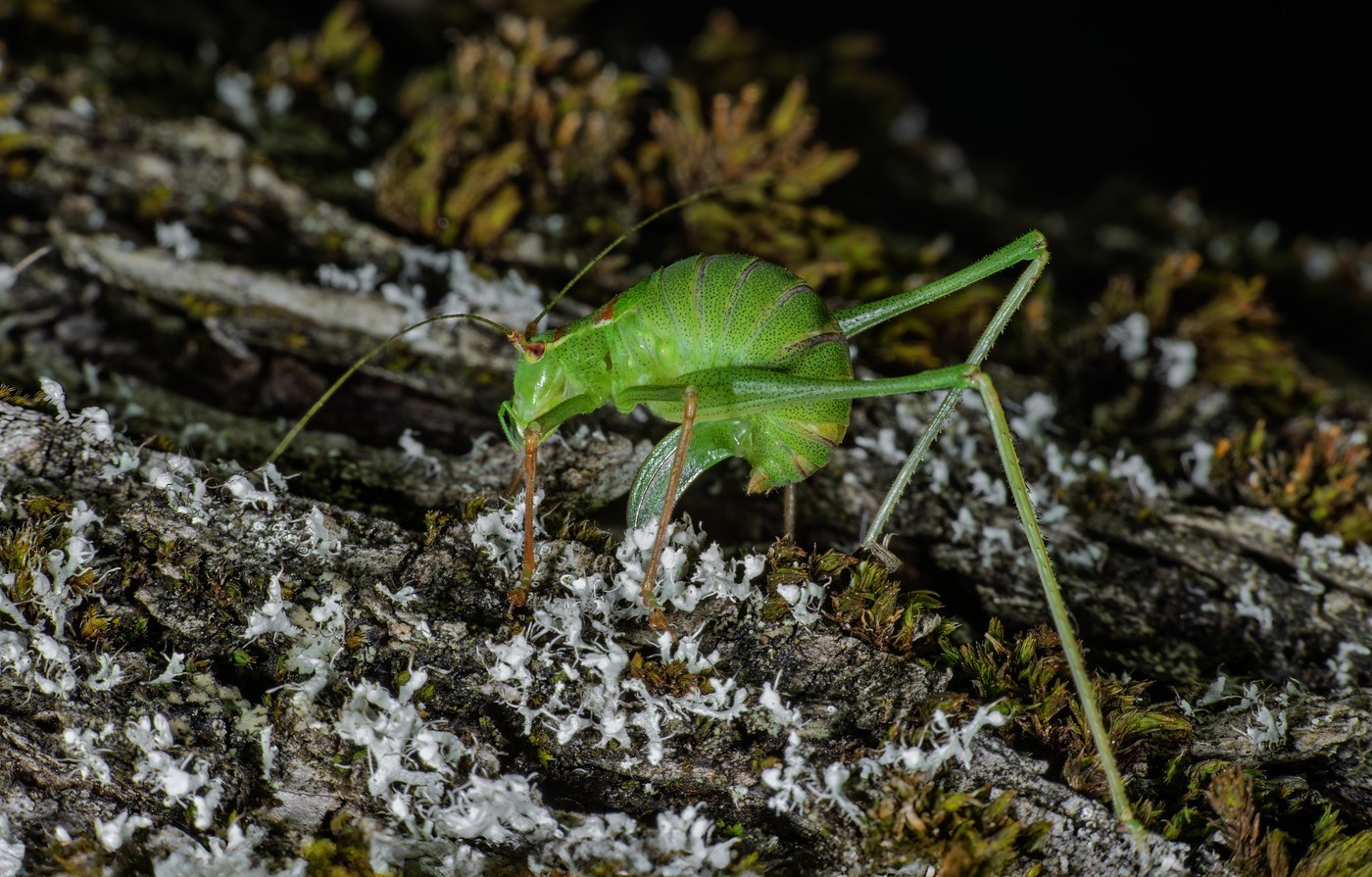
Key Visual Features
The speckled bush cricket (Leptophyes punctatissima) is a small, distinctively marked species common in gardens and hedgerows. Look for:
- Small size, typically 1–1.5 cm (0.4–0.6 inches) in body length, noticeably smaller than many other bush crickets
- Bright green body covered in numerous fine black speckles or dots across the back and sides
- Very short wings, especially in females, which are reduced to small flaps and non-functional for flight
- Long, thin antennae, considerably longer than the body
- Rounded, plump body shape compared to the more elongated great green bush cricket
- Females display a broad, upward-curving, sickle-shaped ovipositor, distinct from the straighter ovipositors of other species
Where and When You'd See It
This species is common across much of Europe, including the UK, where it favors brambles, nettles, shrubs, hedgerows, and garden vegetation. Because its wings are too short for flight, it relies on climbing and short hops to move between plants rather than flying. Speckled bush crickets are active from mid-summer into autumn. Unlike many other bush crickets, the male's song is extremely faint and high-pitched, largely beyond typical human hearing range, so this species is more often identified visually than by sound.
Similar-Looking Bugs
- Great green bush cricket: much larger, uniformly green without speckling, and has long wings that extend past the abdomen
- Roesel's bush cricket: has a cream-colored border around the pronotum and lacks the fine black speckling seen on this species
- Nymphs of other green bush crickets: young nymphs of several species can appear speckled at first, but the adult speckled bush cricket retains its dotted pattern and stays wingless-looking even as an adult
- Green grasshopper nymphs: also small and green, but have shorter antennae and lack the fine black speckling across the body
Since the male's call is barely audible to humans, checking for the dense speckling pattern and stub-like wings remains the most dependable way to confirm this species in the field.
Quick ID Checklist
- Small, plump green body with fine black speckles
- Very short, non-functional wings
- Antennae much longer than the body
- Found on brambles, nettles, and garden shrubs
- Rarely flies; moves mainly by climbing and hopping
Frequently asked questions
What is the easiest way to identify a speckled bush cricket?
Look for its small, plump green body covered in fine black speckles combined with very short wings that make it unable to fly.
Can the speckled bush cricket fly?
No, its wings are reduced to small, non-functional flaps, so it moves around by climbing through vegetation and taking short hops rather than flying.
Why is this species hard to detect by sound?
Males produce a very faint, high-pitched song that is largely outside typical human hearing range, so visual spotting is usually more reliable than listening for it.
Where is the best place to look for one?
Check brambles, nettle patches, hedgerows, and dense garden shrubs from mid-summer through autumn, where the species prefers to stay hidden among leaves.