
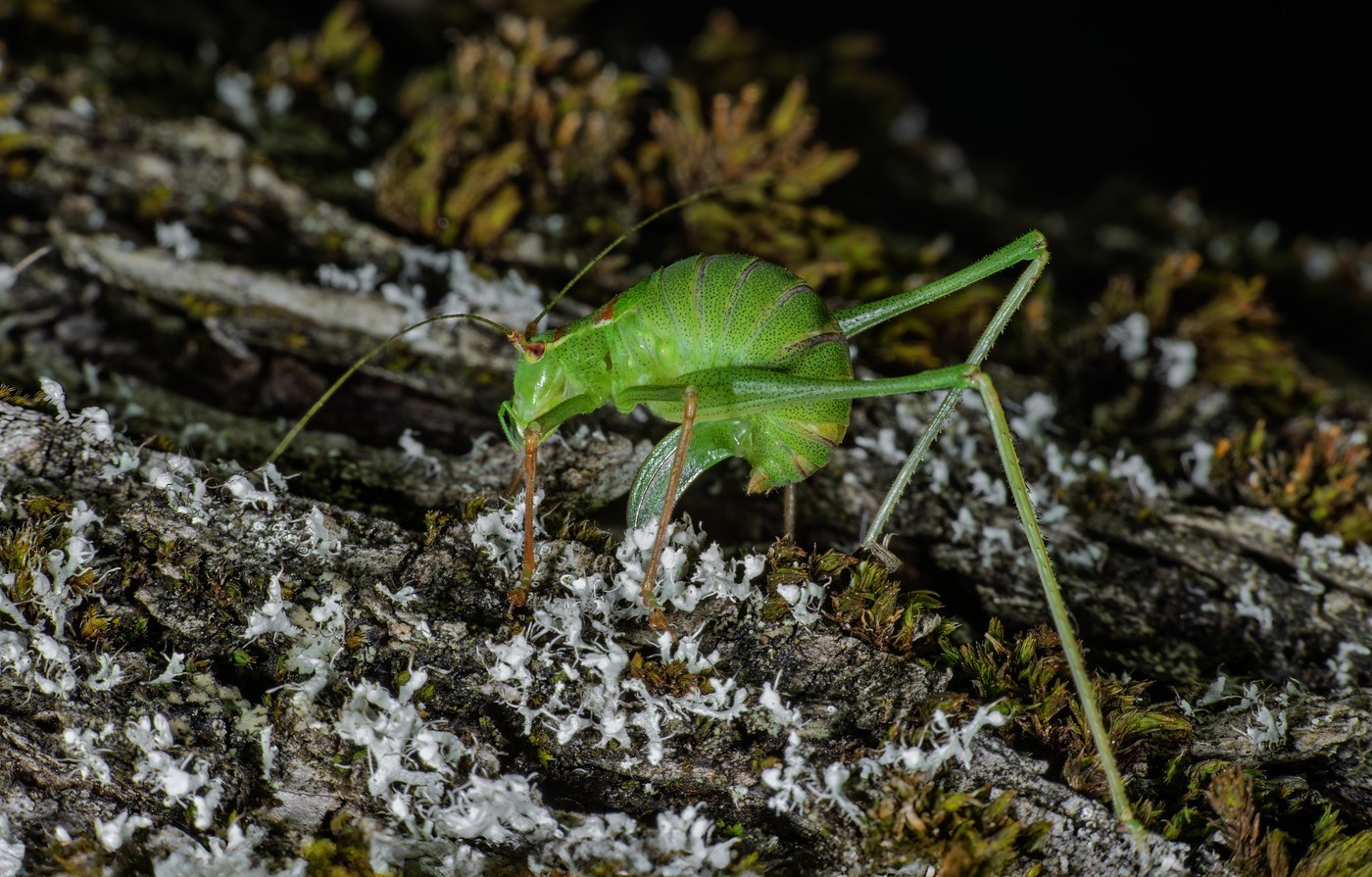
Speckled Bush Cricket
Leptophyes punctatissima
A tiny, plump, green insect finely dotted with dark speckles, this bush cricket forgoes song almost entirely, communicating instead through nearly silent, ultrasonic clicks.
- Size
- Adults roughly 1-1.5 cm long
- Habitat
- Brambles, hedgerows, nettles, and shrubby vegetation
- Danger
- Harmless
Spotted a bug like this?
Identify any bug or insect from a photo, free.
Overview
The speckled bush cricket is a small, rounded species easily identified by the fine dark speckling scattered across its otherwise green body, a feature that gives the species its common name. Unlike many of its relatives, it has greatly reduced wings and cannot fly, and its song is largely inaudible to the human ear, consisting of faint, high-frequency clicks rather than the loud buzzing typical of larger bush crickets.
Widespread across much of western and central Europe, this species favors dense, shrubby vegetation such as brambles, nettles, and hedgerows, where its plump green body and speckled pattern provide effective camouflage among leaves. It is a harmless, herbivorous to omnivorous insect that poses no threat to people.
How to Identify
- Small, plump, rounded body, generally green with fine dark speckles across the surface
- Wings greatly reduced to small pads, rendering the species flightless
- Long, thin antennae typical of bush crickets, extending well beyond the body
- Females possess a short, upward-curving, sickle-shaped ovipositor
- Overall compact shape compared to larger, more elongated bush cricket species
- Distinguished from other small green bush crickets primarily by its speckled pattern and greatly reduced wings
Habitat & Range
This species is found throughout much of western and central Europe, including the UK, favoring dense shrubby vegetation such as brambles, nettle patches, hedgerows, and woodland edges. It is most commonly encountered from mid-summer through autumn, sheltering low among leaves and stems within its preferred bramble and hedge habitats.
Behavior & Diet
The speckled bush cricket feeds on a mix of soft plant material, such as leaves and flowers, along with occasional small invertebrates, making it broadly omnivorous. Because it lacks functional wings, males produce their mating song using a much quieter, higher-frequency clicking method than other bush crickets, one that is often beyond the range of human hearing, meaning the species is more often located by careful searching among vegetation than by sound. It remains close to dense cover throughout its life, relying on camouflage and stillness among leaves to avoid predators such as birds and spiders. As a small omnivore, it plays a modest role in its ecosystem both as a consumer of plant material and as prey for a range of predators.
Life Cycle
Females use their short, curved ovipositor to lay eggs into plant stems or bark crevices, where the eggs overwinter before hatching in spring. Nymphs emerge resembling smaller versions of the adult and, lacking developed wings even at maturity, pass through their nymphal molts without acquiring flight capability. There is no pupal stage, consistent with incomplete metamorphosis typical of bush crickets. Adults are generally present from mid-summer into autumn, representing a single generation each year.
Frequently asked questions
Why is it called the speckled bush cricket?
Its common name refers to the fine dark speckling scattered across its otherwise green body.
Can the speckled bush cricket fly?
No, its wings are greatly reduced to small pads, making it flightless.
Why is its song so hard to hear?
Males produce a much quieter, higher-frequency clicking sound compared to other bush crickets, often at frequencies beyond typical human hearing range.
What does the speckled bush cricket eat?
It feeds on a mix of soft plant material such as leaves and flowers along with occasional small invertebrates.
Speckled Bush Cricket guides
In-depth guides for identifying, understanding, and living alongside Speckled Bush Cricket.
Other bugs you may enjoy
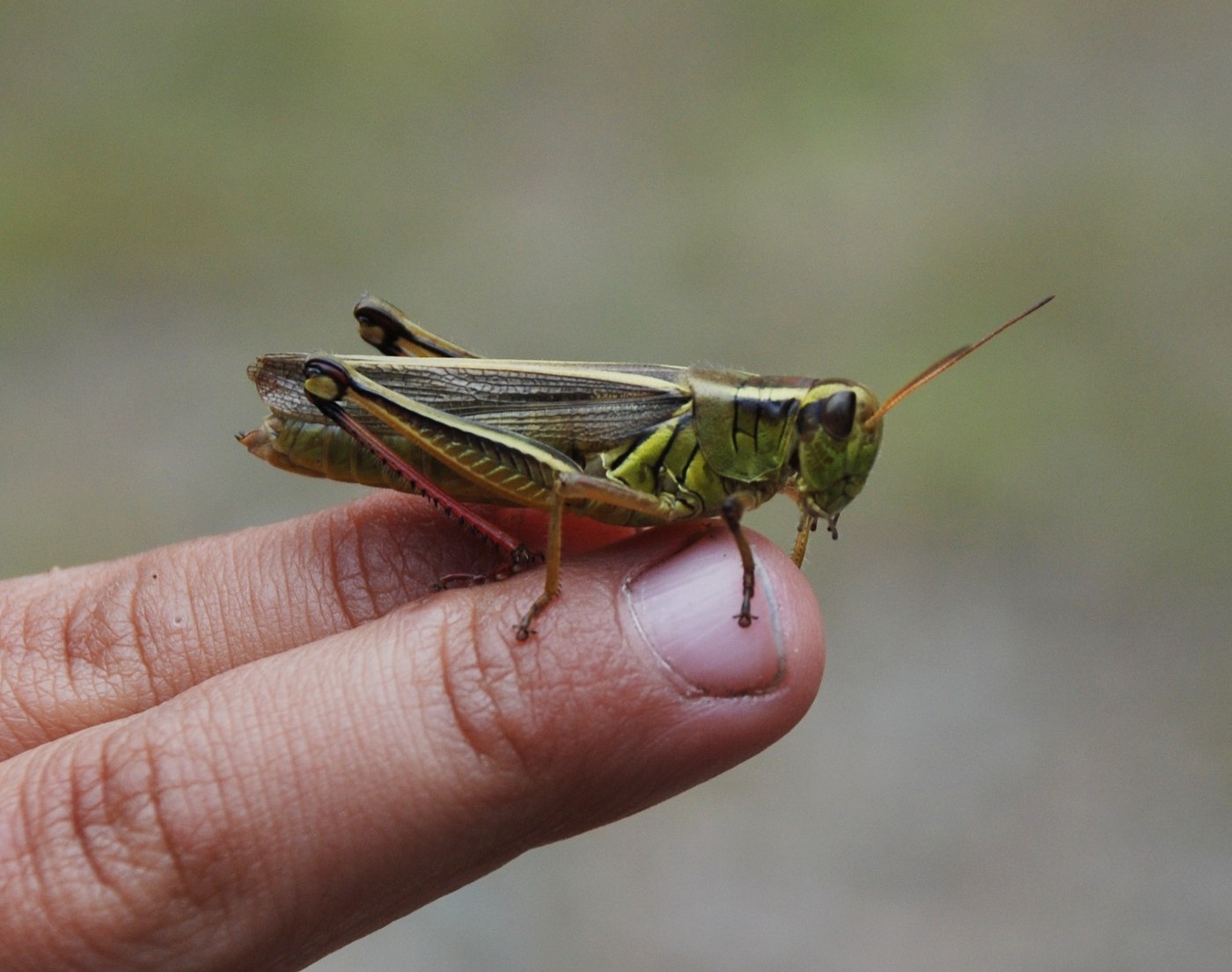
Two-striped Grasshopper
Meadows, pastures, riverbanks, and agricultural fields across North America
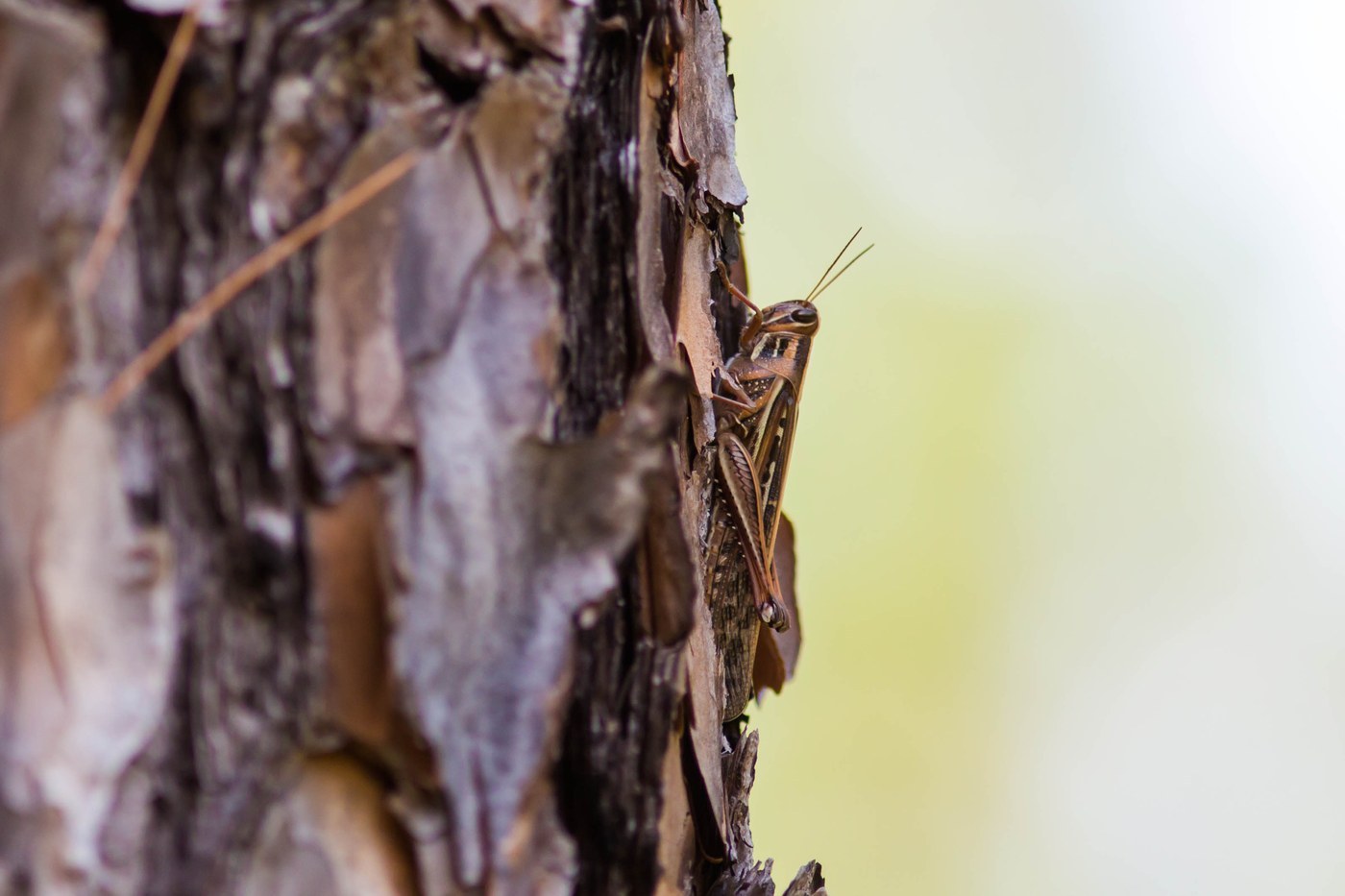
American Grasshopper
Woodland edges, citrus groves, gardens, and open fields across the southern and southeastern United States
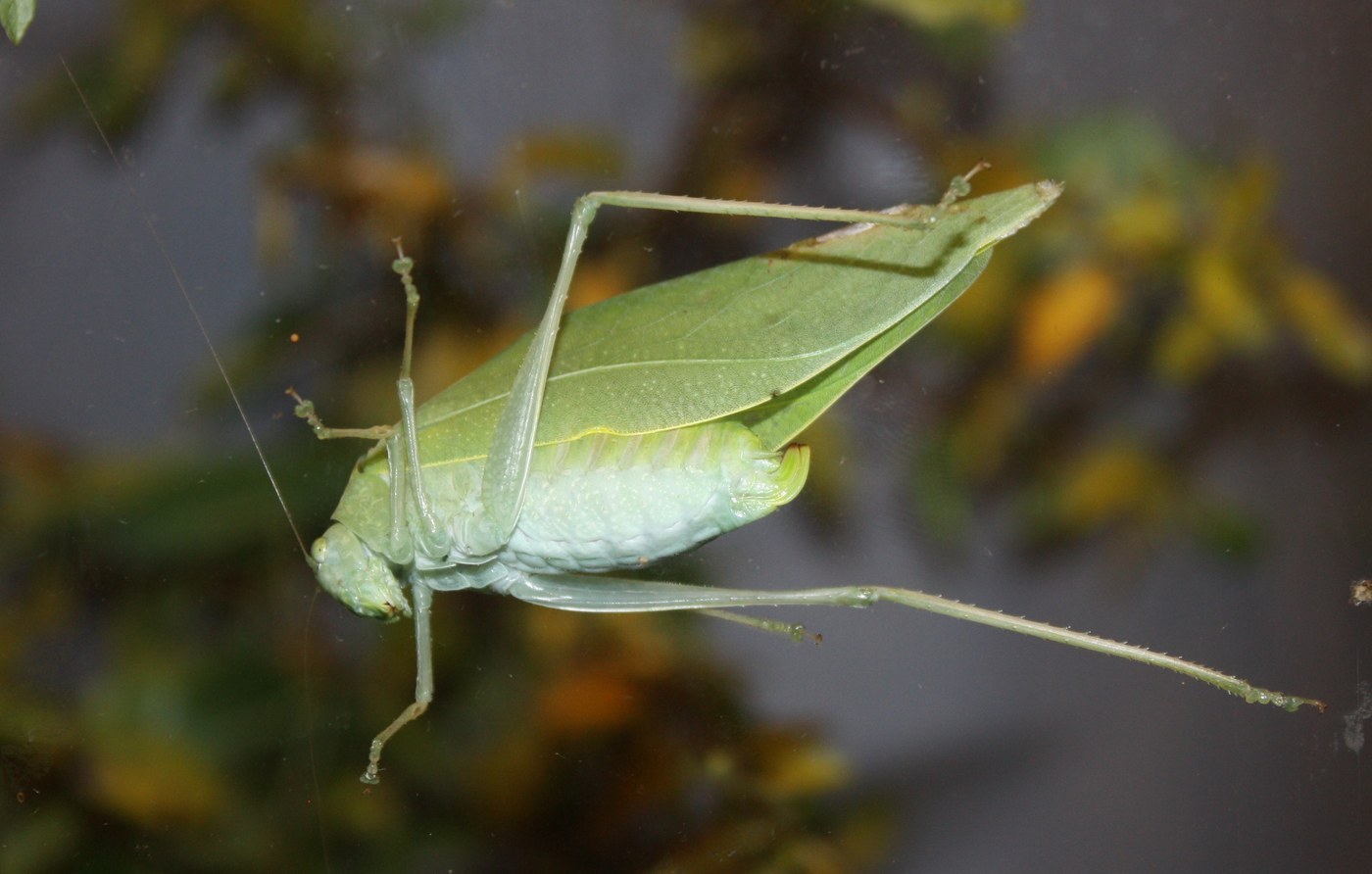
Angular-winged Katydid
deciduous trees, shrubs, and hedgerows across eastern and central North America
Spur-throated Grasshopper
grasslands, meadows, croplands, and roadsides across North America
Snowy Tree Cricket
Shrubs, trees, and tall vegetation across North America
Rocky Mountain Locust
historically open grasslands and river valleys of the Rocky Mountains and Great Plains (now believed extinct)
Spotted Camel Cricket
damp caves, crawl spaces, basements, leaf litter, and rotting logs in eastern North America
Pygmy Grasshopper
damp soil, mud, and low vegetation near ponds, streams, and marshes
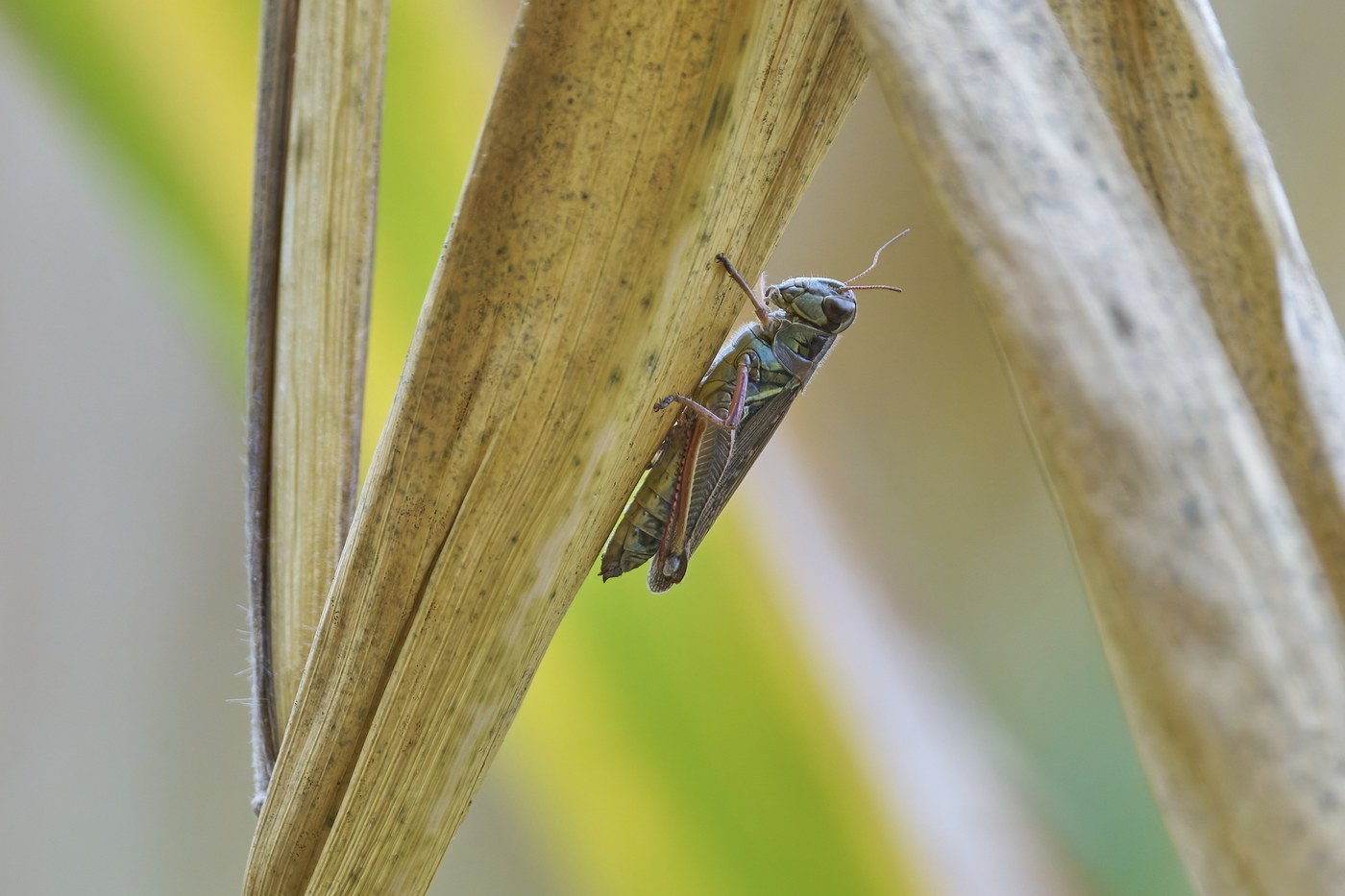
Red-legged Grasshopper
Meadows, pastures, field edges, and gardens across North America
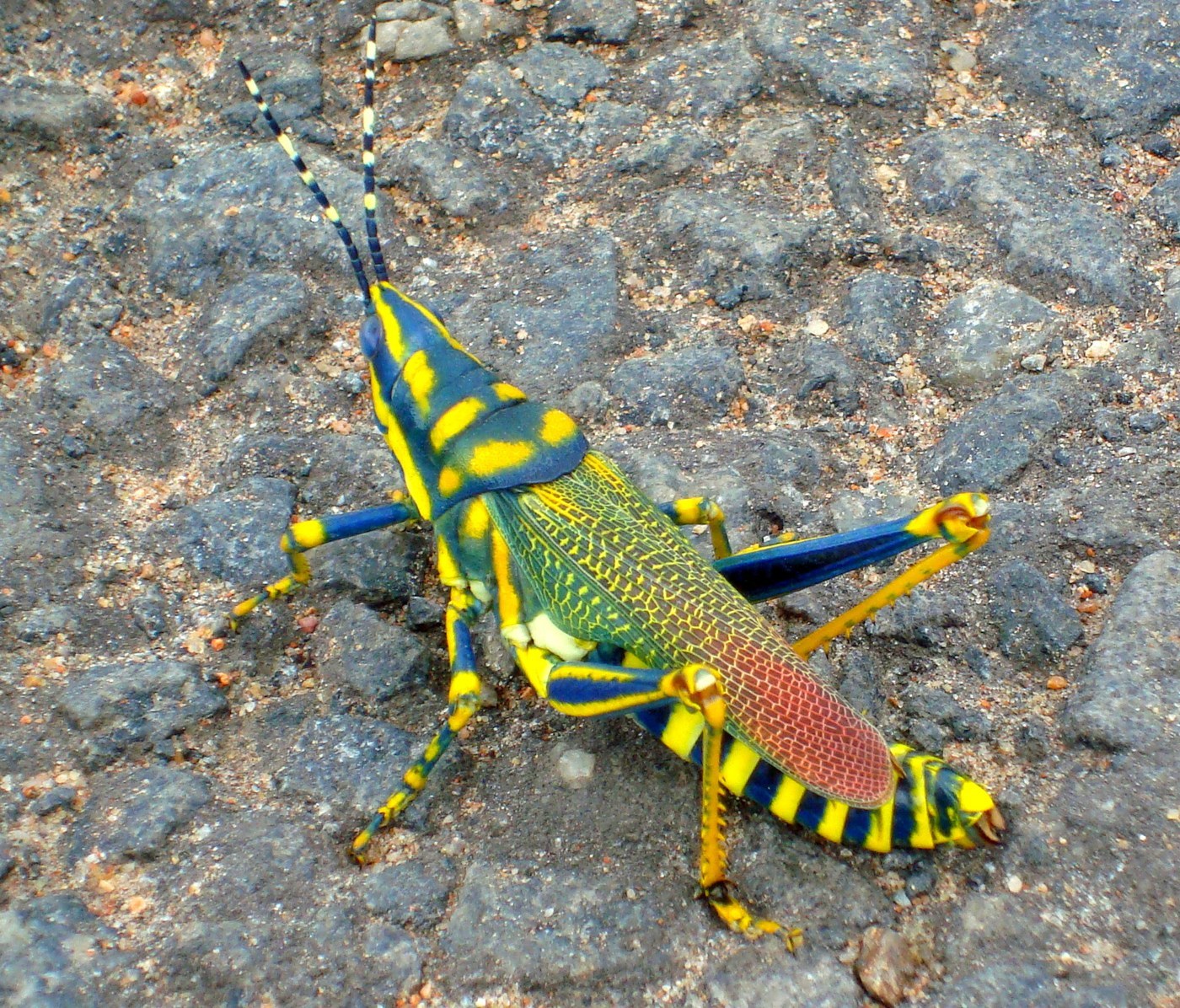
Painted Grasshopper
arid scrub, wastelands, and gardens of the Indian subcontinent, especially near milkweed plants
Northern Mole Cricket
wet soil, pond margins, and marshy ground across eastern and central North America
Roesel's Bush Cricket
Damp grasslands, meadows, and roadside verges