
Sphinx Moth Identification Guide
A large, streamlined, fast-flying moth known for its hummingbird-like hovering and heavy, torpedo-shaped body.
Read the full Sphinx Moth encyclopedia entry →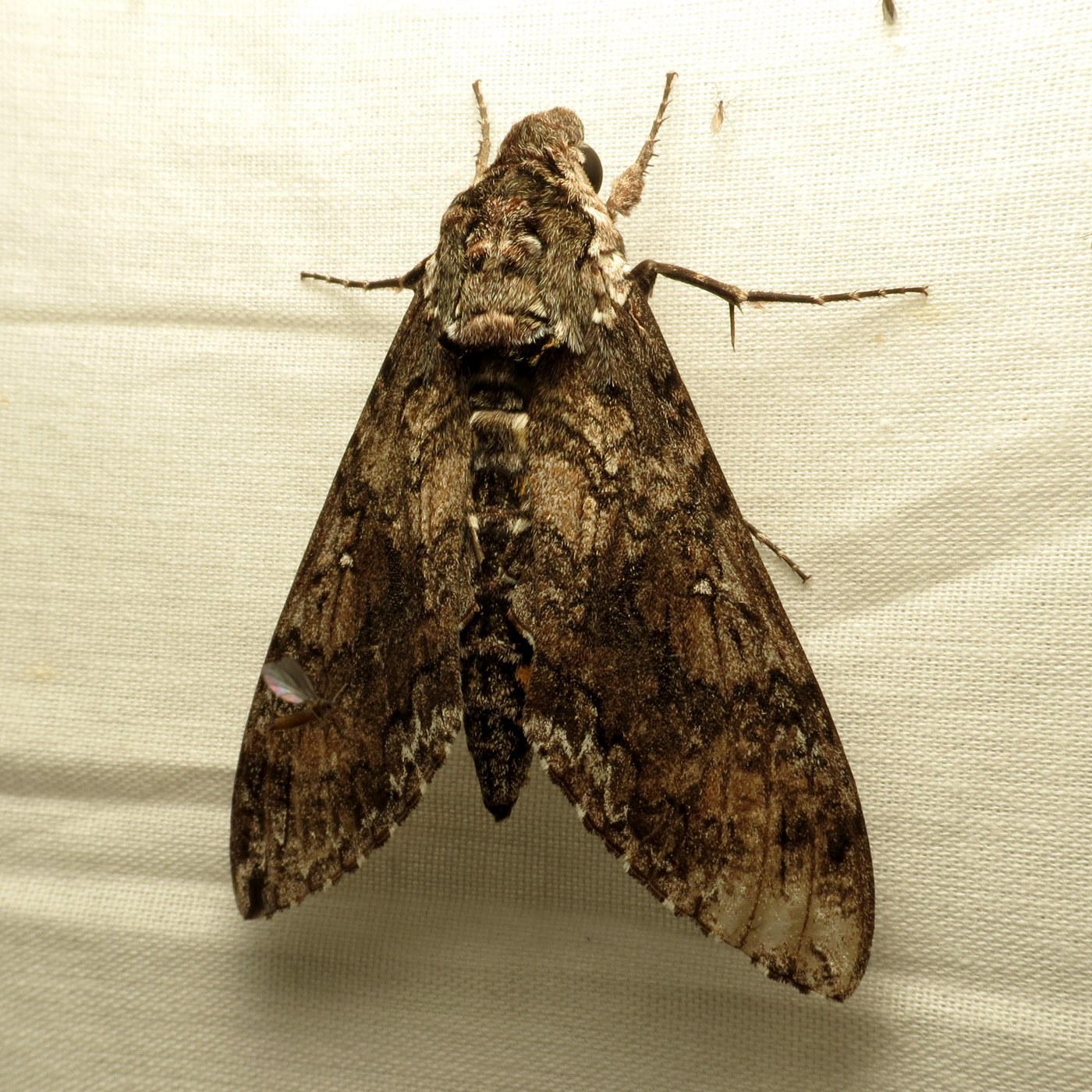
Key Visual Features
Sphinx moths (also called hawk moths) form a large family, but most share a recognizable body plan:
- Size: Large-bodied, with wingspans typically ranging from 5-15 cm (2-6 in) depending on species.
- Body shape: Thick, tapered, torpedo-like body that narrows toward the rear, built for powerful, fast flight.
- Wings: Long, narrow forewings held swept back in a triangular shape at rest; hindwings are smaller and often more colorful, sometimes hidden beneath the forewings.
- Color: Typically mottled gray, brown, or tan on the forewings for camouflage, though hindwings can flash pink, yellow, or orange.
- Antennae: Thick, tapered antennae, often slightly hooked at the tip.
- Flight muscles: A noticeably robust thorax packed with flight muscle, giving the moth a strong, buzzing hover.
Where and When You're Likely to See It
Sphinx moths are found worldwide in gardens, woodland edges, deserts, and fields, wherever nectar-rich flowers grow. Most species are active at dusk and after dark, earning them the nickname "hawk moths," though a number of species fly during the day. They are frequently seen hovering in place in front of tubular flowers such as petunias, jasmine, and evening primrose, feeding through a very long coiled proboscis. They are also commonly drawn to porch lights and moth traps at night.
Similar-Looking Moths and Insects
- Bumblebee moths and other clearwings: Much smaller sphinx moth relatives with transparent wings; true sphinx moths keep full scale coverage on their wings.
- Large owlet or underwing moths: Can be similarly bulky but have a broader, less tapered body and lack the strong hovering flight.
- Hummingbirds: Sphinx moths are frequently mistaken for hummingbirds at dusk due to similar hovering behavior, but the moth has visible antennae and a coiled proboscis rather than a rigid beak.
Quick ID Checklist
- Thick, torpedo-shaped body
- Long, narrow, swept-back forewings
- Strong hovering flight with a long proboscis
- Active mainly at dusk or night
- Thick, tapered antennae
Frequently asked questions
What makes a moth a 'sphinx moth' rather than another type?
The name refers to a large family (Sphingidae) known for a heavy, streamlined body, narrow swept-back wings, and powerful hovering flight, plus caterpillars that often rear up in a sphinx-like posture.
Are all sphinx moths active at night?
Most fly at dusk or after dark, but several species, including clearwing sphinx moths, are active during the day at flowers.
How long is a sphinx moth's proboscis?
In many species it is exceptionally long relative to body size, allowing the moth to feed from deep tubular flowers while hovering without landing.
Why do sphinx moths hover instead of landing on flowers?
Their large flight muscles and rapid wingbeats let them hold a stationary hover, which lets them feed quickly and move on to the next bloom without the drag of a full landing.