Spicebush Swallowtail Caterpillar Identification Guide
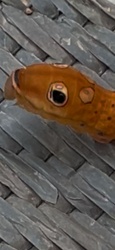
A green caterpillar with bold yellow-orange eyespots dotted in blue, usually found tucked inside a folded leaf of spicebush or sassafras.
Read the full Spicebush Swallowtail Caterpillar encyclopedia entry →Key Visual Features
The spicebush swallowtail caterpillar reaches about 2 inches long and, like other swallowtails, changes appearance as it grows.
- Mature coloring: Green to yellow-green body with a swollen thorax bearing two large eyespots that are yellow-orange with black pupils, often accented by small blue dots along the surrounding area
- Young coloring: Early instars are dark, mottled brown and white, resembling a bird dropping
- Body shape: Thorax swollen and tapering toward a slimmer rear end, giving a slightly humped profile
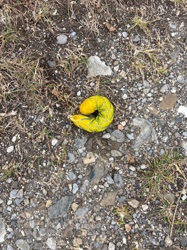
- Underside/late stage: Some late-stage individuals develop an orange-yellow tint just before pupation
- Osmeterium: A hidden orange forked organ behind the head that can be briefly extended when disturbed
Where and When You'll See It
This caterpillar feeds almost exclusively on spicebush and sassafras leaves, making its presence a good indicator of these host plants nearby. It is most often found from late spring through early fall, folding a leaf over itself and securing it with silk to create a shelter it returns to when not actively feeding. Because it stays hidden inside these leaf folds for much of the day, spotting one usually means noticing an oddly folded or curled leaf on a spicebush or sassafras shrub first.
Similar-Looking Bugs
- Tiger swallowtail caterpillar: Also green with large eyespots, but the eyespots are usually more solid yellow with a black center and blue crescent rather than the finer blue-dotted pattern of spicebush, and it feeds on cherry, tulip tree, and ash instead
- Eastern black swallowtail caterpillar: Green with black bands and yellow-orange spots rather than large eyespots, found on carrot-family plants
- Palamedes swallowtail caterpillar: Very similar in appearance and also found on plants in the laurel family, but ranges and host plant details can help distinguish them regionally
Quick ID Checklist
- Green body with a swollen thorax and two yellow-orange eyespots dotted in blue
- Young stage resembles a bird dropping
- Found folded inside a silk-lined leaf shelter
- Feeds specifically on spicebush or sassafras
- Hidden orange forked organ behind the head
Frequently asked questions
What plants do spicebush swallowtail caterpillars feed on?
They feed almost exclusively on spicebush and sassafras leaves.
How can I tell a spicebush swallowtail caterpillar from a tiger swallowtail caterpillar?
Spicebush caterpillars typically show yellow-orange eyespots with fine blue dotting, while tiger swallowtail eyespots are more solid yellow with a black center and a single blue crescent; host plant also differs, with spicebush caterpillars restricted to spicebush and sassafras.
Why is a folded leaf a clue for finding this caterpillar?
The caterpillar folds a leaf over itself and secures it with silk to create a hidden shelter, so an oddly curled leaf on spicebush or sassafras is often a sign one is present inside.
Do young spicebush swallowtail caterpillars look like the adults?
No, young caterpillars are dark brown and white, resembling a bird dropping, and only develop the green color and large eyespots as they mature.
Spicebush Swallowtail Caterpillar identified by the community
Recent Spicebush Swallowtail Caterpillar finds identified with Bug Identifier.