Spiny Flower Mantis Identification Guide
Spot this vividly patterned African mantis by its flower-like markings and spined abdomen.
Read the full Spiny Flower Mantis encyclopedia entry →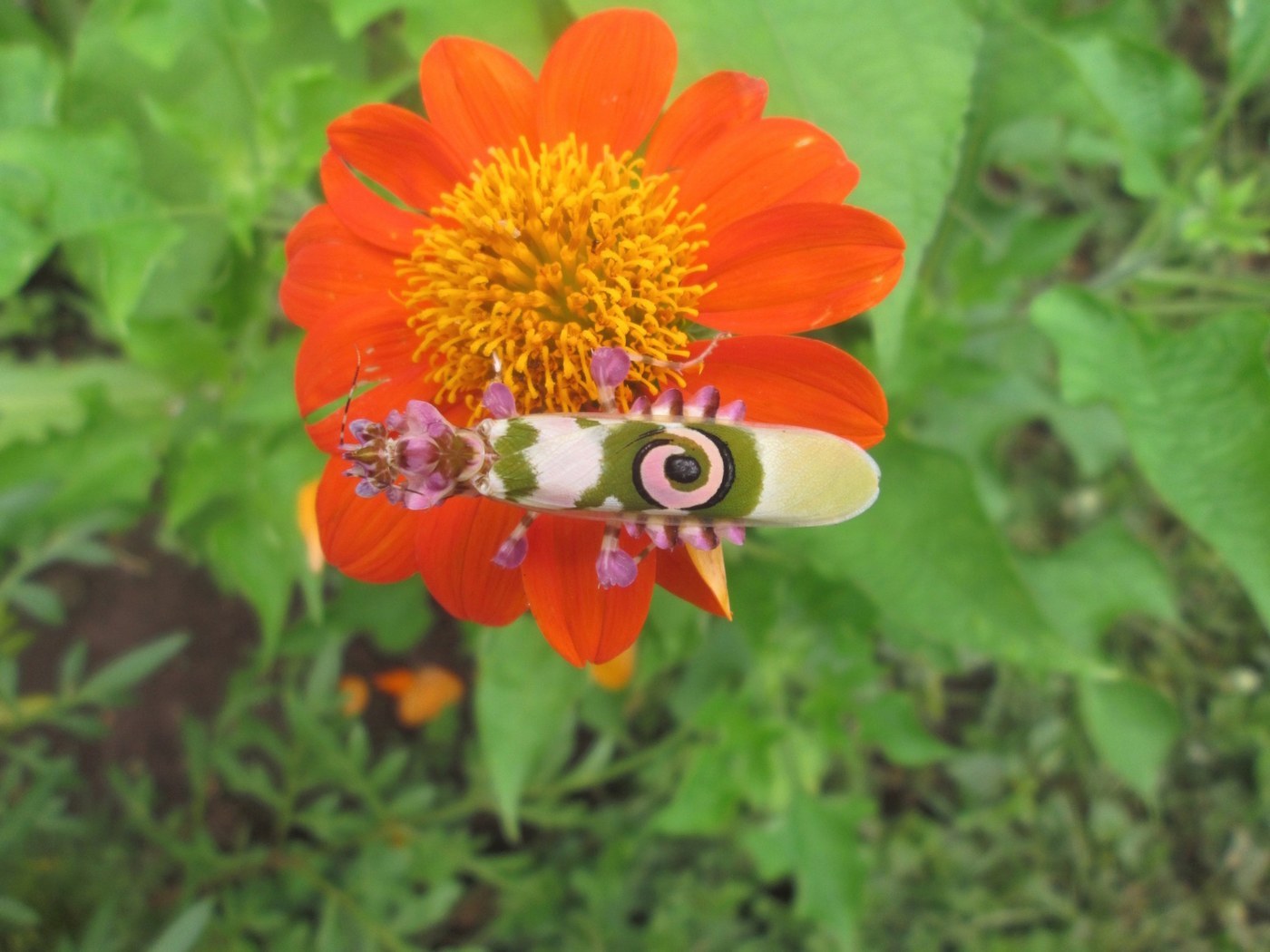
Key Visual Features
The spiny flower mantis (Pseudocreobotra wahlbergii) is a small, strikingly patterned mantis native to Africa. Identify it by:
- Compact size, adults reaching only about 3–4 cm (1.2–1.6 inches) in length
- Bright green or pale green body with patches of white, cream, and purple
- Distinctive eye-spot pattern on the forewings, a bold circular marking resembling a large eye when the wings are raised in a threat display
- Serrated, spiny edges along the abdomen, which give the species its common name
- Triangular head with large, prominent eyes and a mobile neck that allows it to track movement
- Slender raptorial front legs held folded in front of the body, ready to strike
Where and When You'd See It
This mantis is native to southern and eastern Africa, where it lives among flowering shrubs and grasses. It relies on its coloring to blend in with blossoms while it waits for small flying insects to approach. Spiny flower mantises are most active during the day, unlike many nocturnal mantis species, since they hunt visually among sunlit flowers. Nymphs are often seen with their abdomens curled up over their backs, adding to the flower-like disguise, while adults hold a flatter posture.
Similar-Looking Bugs
- Devil's flower mantis: much larger with more dramatic banded coloring on the forelegs and lacks the small, rounded eye-spot wing pattern
- Orchid mantis: paler, pink-and-white coloring that mimics orchid petals rather than the green-and-purple pattern of the spiny flower mantis
- Other flower mantis species: check the shape and color of the wing eye-spot and the presence of spiny abdominal edges, which are diagnostic for this species
- Leaf mantises: broader, plainer green bodies without the bold circular eye-spot or purple wing accents
Because coloring can vary somewhat between individuals, the combination of the wing eye-spot and spiny abdomen together is a more reliable identifier than color alone.
Quick ID Checklist
- Small mantis, roughly 3–4 cm long
- Green body with white/cream and purple patches
- Bold circular eye-spot pattern on the forewings
- Spiny, serrated edges along the abdomen
- Found on flowering plants during daylight hours
Frequently asked questions
What is the easiest way to identify a spiny flower mantis?
Look for the bold eye-spot pattern on its forewings combined with the serrated, spiny edges along its abdomen — this combination is unique to the species.
Is the spiny flower mantis active during the day or night?
It is primarily active during the day, hunting visually among flowers, which sets it apart from many other nocturnal mantis species.
How can I tell a nymph from an adult spiny flower mantis?
Nymphs often curl their abdomens up over their backs for extra camouflage, while adults hold a flatter, more elongated posture.
Where in the world is this mantis found?
It is native to southern and eastern Africa, typically found on flowering shrubs and grasses in warm, open habitats.
Spiny Flower Mantis identified by the community
Recent Spiny Flower Mantis finds identified with Bug Identifier.