
Spotted Wing Drosophila Identification Guide
Tell this tiny fruit fly apart from common fruit flies by the single dark spot on each male's wing tip.
Read the full Spotted Wing Drosophila encyclopedia entry →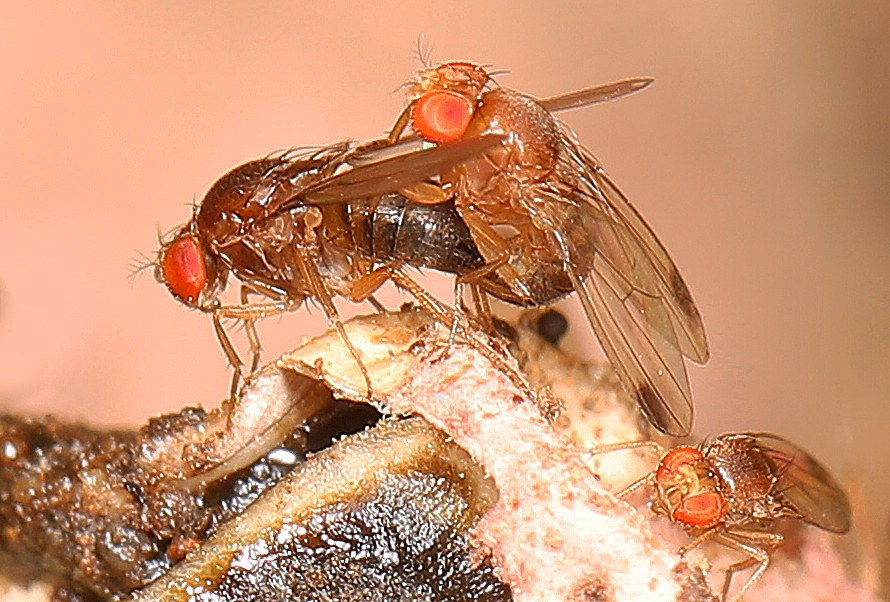
Key Visual Features
Spotted wing drosophila is a very small fruit fly, and the clearest identifying feature is found only on the males.
- Adults are tiny, about 1/8 inch (2-3 mm) long, with a tan to pale brown body and red eyes typical of drosophila flies.
- Males have a single small dark spot near the tip of each clear wing, which is the most reliable identification feature and gives the species its common name.
- Females lack the wing spot, so they look very similar to common fruit flies, but they have a large, saw-like, serrated ovipositor at the tip of the abdomen, visible under magnification, used for cutting into fruit skin.
- The body has faint dark stripes across the abdomen, and the legs are pale and slender.
- Wings are held flat, slightly overlapping, over the body at rest, typical of small drosophila flies.
Where and When You'd See It
Spotted wing drosophila is found around ripening and ripe soft-skinned fruit such as berries and cherries, where females lay eggs directly into fruit while it is still on the plant. Unlike common fruit flies, which are drawn mainly to overripe or rotting fruit, this species targets fruit that is still firm and freshly coloring, making early-season detection important. Adults are most active in warm months from late spring through fall, favoring humid, shaded areas within fruit plantings, and activity often peaks at dawn and dusk.
Similar-Looking Bugs
- Common fruit flies are nearly identical in size and shape but lack the dark wing spot on males and have a smoother, less blade-like ovipositor on females.
- Vinegar flies in general form a large group that spotted wing drosophila belongs to, so the wing spot on males remains the single best field mark to separate this species from its many relatives.
- Fungus gnats are similarly tiny but have longer legs, longer antennae, and a more mosquito-like silhouette rather than the rounded drosophila body.
- Because females of this species look so much like ordinary fruit flies, confirming identification often relies on finding males with the telltale wing spot in the same population.
Quick ID Checklist
- Very small fly, about 2-3 mm, with red eyes and a tan body
- Males show one dark spot near each wing tip
- Females have a large, serrated ovipositor at the abdomen tip
- Found around ripening, still-firm soft fruit, not just rotting fruit
- Most active in warm, humid conditions from late spring through fall
Frequently asked questions
How do I know if a fruit fly is a spotted wing drosophila male?
Look for a single small dark spot near the tip of each wing, which is unique to males of this species among common small fruit flies.
How can I identify a female spotted wing drosophila?
Females lack the wing spot but have a noticeably large, saw-toothed ovipositor at the abdomen's tip, visible with magnification.
How is this fly different from typical household fruit flies?
It is nearly identical in size but the male's wing spot and the female's serrated ovipositor distinguish it, and it targets fruit still on the plant rather than only overripe fruit.
When is spotted wing drosophila most commonly seen?
It is most active during warm, humid periods from late spring through fall, particularly around ripening soft-skinned fruit.