
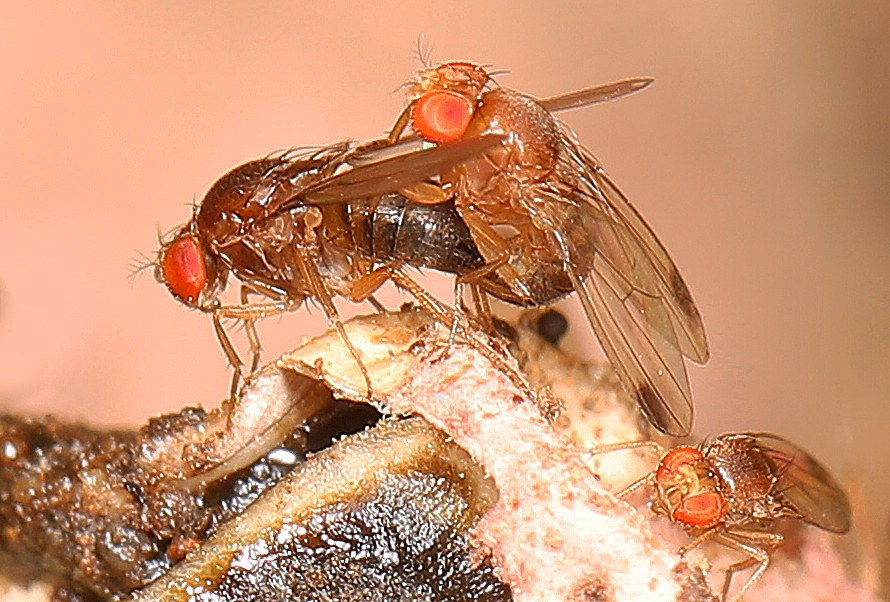
Spotted Wing Drosophila
Drosophila suzukii
A tiny reddish-brown fruit fly, each male marked with a single dark spot near the wingtip, notable for laying eggs in ripening rather than overripe fruit.
- Size
- 1/8–1/6 in (2–3.5 mm)
- Habitat
- Soft fruit orchards, berry plantings, and gardens
- Danger
- Nuisance pest
Spotted a bug like this?
Identify any bug or insect from a photo, free.
Overview
Spotted wing drosophila is a small vinegar fly native to East Asia that has become a widespread invasive pest of soft fruit since spreading to North America, Europe, and other regions in the late 2000s. Unlike most common fruit flies, which lay eggs only in damaged, rotting, or fallen fruit, females of this species have a large, saw-toothed egg-laying organ (ovipositor) that allows them to cut into and lay eggs inside intact, ripening fruit still on the plant.
This ability to attack sound, ripening fruit rather than waste material has made spotted wing drosophila a significant concern for growers of berries and other thin-skinned fruit, since larvae developing inside otherwise marketable fruit can cause it to soften and collapse. The species reproduces rapidly, with a short generation time that allows populations to build quickly over a growing season.
Adults are tiny and easily overlooked among other small flies, and the diagnostic dark wing spot is present only on males, making females harder to distinguish from other common fruit flies without close examination.
How to Identify
- Body small, pale yellow-brown to reddish-brown, about 1/8–1/6 in (2–3.5 mm) long
- Eyes bright red, typical of vinegar flies in the genus Drosophila
- Males have a single distinct dark spot near the tip of each wing, visible with magnification
- Females lack the wing spot but have a large, dark, serrated ovipositor used to cut into ripening fruit skin
- Larva is a tiny, white, legless maggot found inside soft fruit
- Lookalike: common fruit flies (Drosophila melanogaster and relatives), which lack the male wing spot and the female's enlarged serrated ovipositor
Habitat & Range
Native to East Asia, spotted wing drosophila has spread to become established across much of North America, Europe, and other temperate and subtropical fruit-growing regions. It is found wherever soft, thin-skinned fruit such as cherries, blueberries, raspberries, blackberries, and strawberries are grown, as well as in some wild fruiting plants, with activity peaking during warm months when fruit is ripening.
Behavior & Diet
Unlike other common fruit flies that are attracted mainly to overripe or fermenting fruit, females actively seek out ripening, undamaged fruit and use their serrated ovipositor to cut a small slit in the skin to deposit eggs. Larvae then develop and feed inside the fruit, which often softens, collapses, or develops secondary rot as a result. Because of its very short generation time, populations can increase rapidly through a fruit-growing season, and the species has few effective natural enemies in many of the regions it has invaded.
Life Cycle
Development is complete metamorphosis and unusually fast for a fly of its size: eggs hatch within a day or two, and larvae complete feeding within about a week under warm conditions before pupating either inside or near the fruit. Adults can emerge within days of pupation, and under favorable warm-weather conditions the entire life cycle from egg to adult can be completed in one to two weeks, allowing many overlapping generations across a single growing season. In cooler climates, adults overwinter in sheltered locations and resume activity in spring.
Frequently asked questions
How is spotted wing drosophila different from a typical fruit fly?
Females have an enlarged, saw-like ovipositor that lets them cut into and lay eggs inside intact, ripening fruit, whereas typical fruit flies are limited to laying eggs in already damaged or overripe fruit.
How can you tell a male from a female of this species?
Males have a single small dark spot near the tip of each wing, a feature females lack, though females can be identified by their distinctive large, serrated egg-laying organ.
Why do populations of this fly increase so quickly during the season?
Its life cycle from egg to adult can be completed in as little as one to two weeks under warm conditions, allowing many overlapping generations to build up rapidly.
Which fruits are most commonly affected?
Thin-skinned, soft fruits such as cherries, blueberries, raspberries, blackberries, and strawberries are the most frequently attacked hosts.
Spotted Wing Drosophila guides
In-depth guides for identifying, understanding, and living alongside Spotted Wing Drosophila.
Other bugs you may enjoy
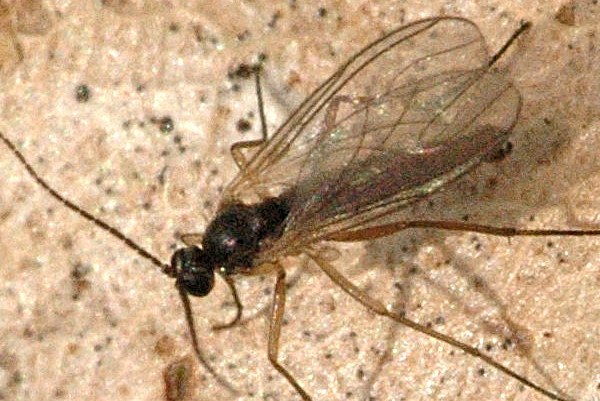
Aphid Midge
Gardens, greenhouses, and crops with aphids
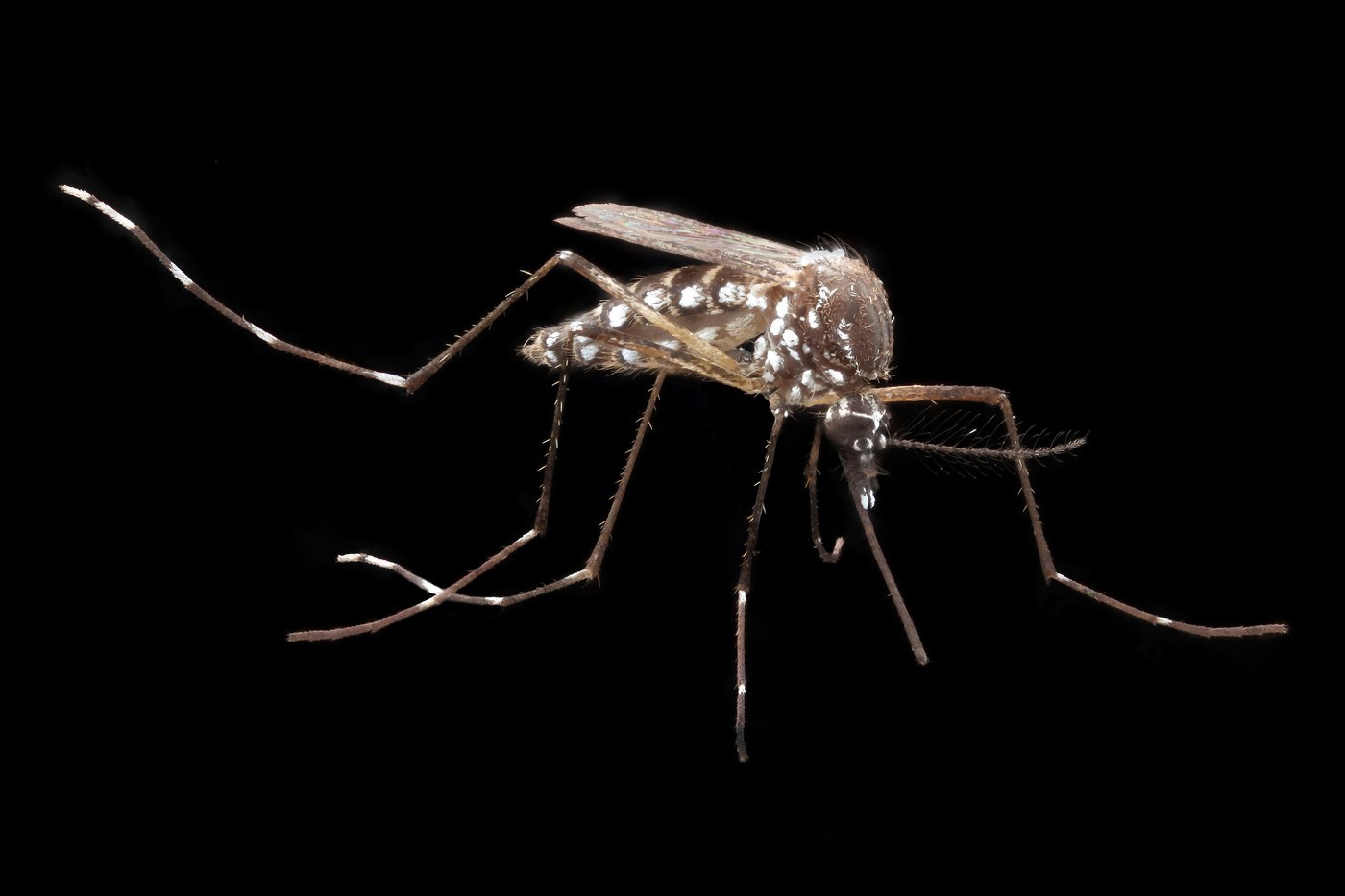
Yellow Fever Mosquito
Urban and peri-urban areas near small artificial water containers in tropical and subtropical regions worldwide
Root Maggot
Garden and field soil around the roots of cole crops and other vegetables
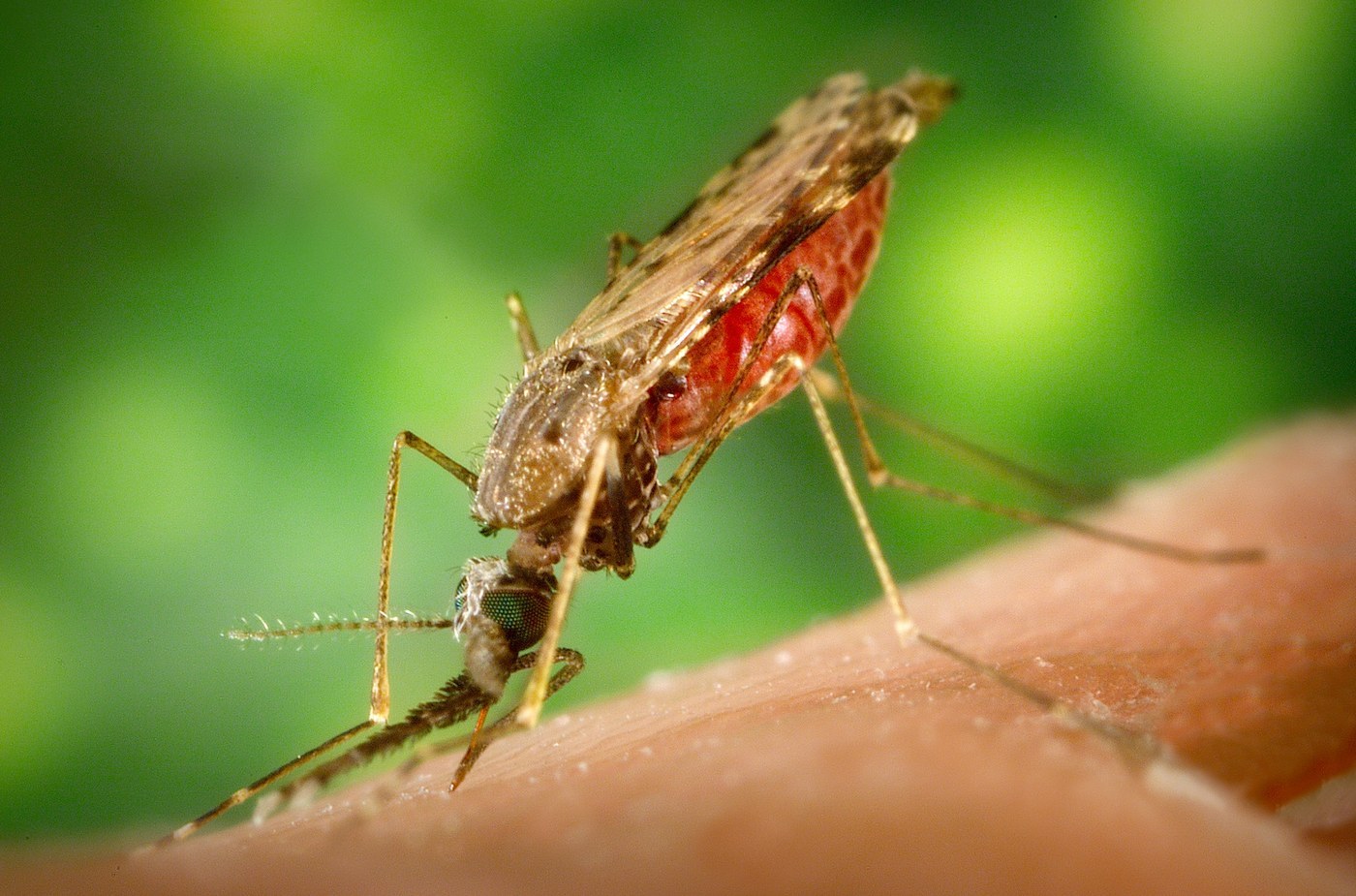
Anopheles Mosquito
Clean, still or slow-moving freshwater habitats such as marshes, ponds, and rice paddies
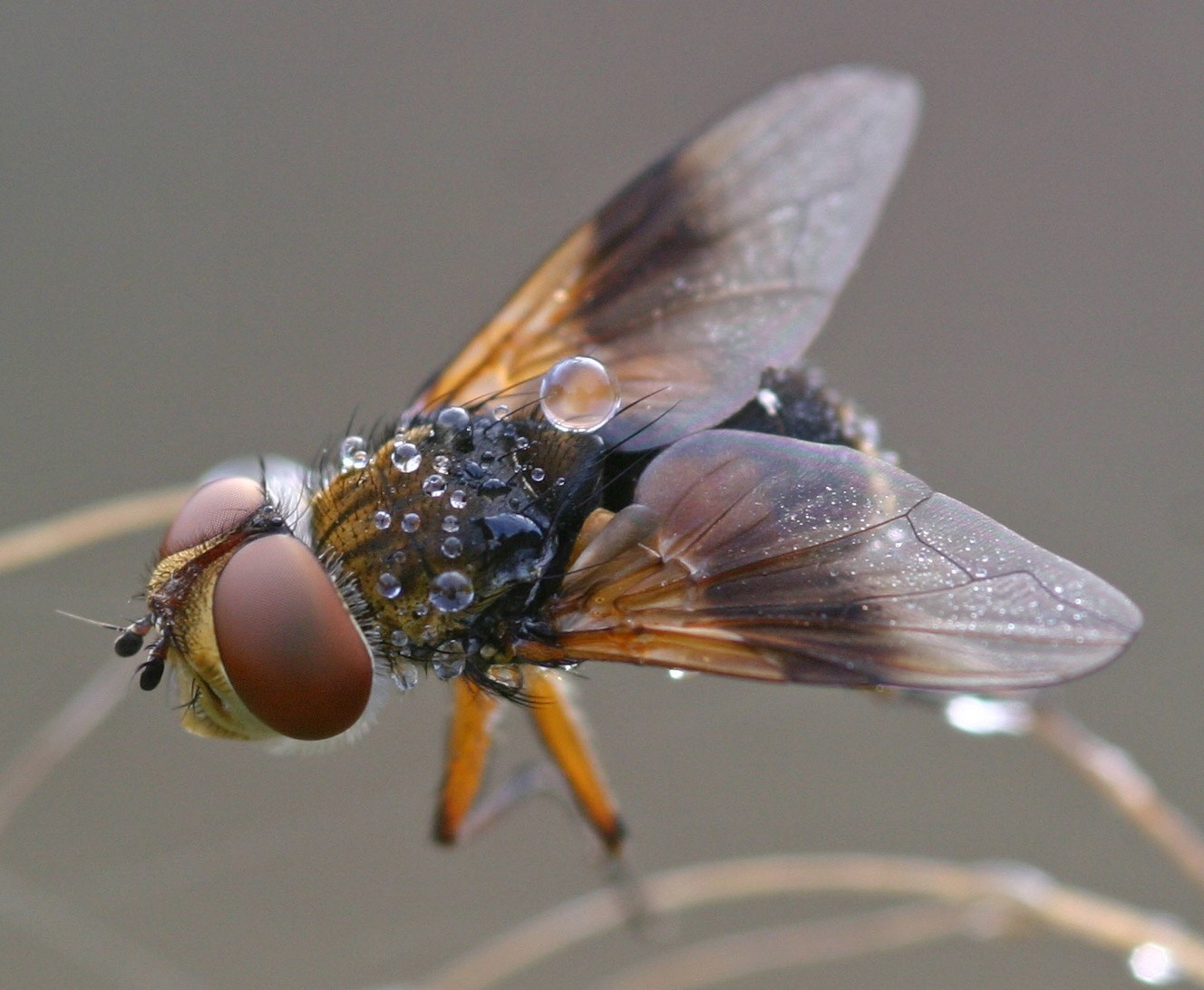
Tachinid Fly
Gardens, meadows, and woodlands wherever host caterpillars and other insects occur
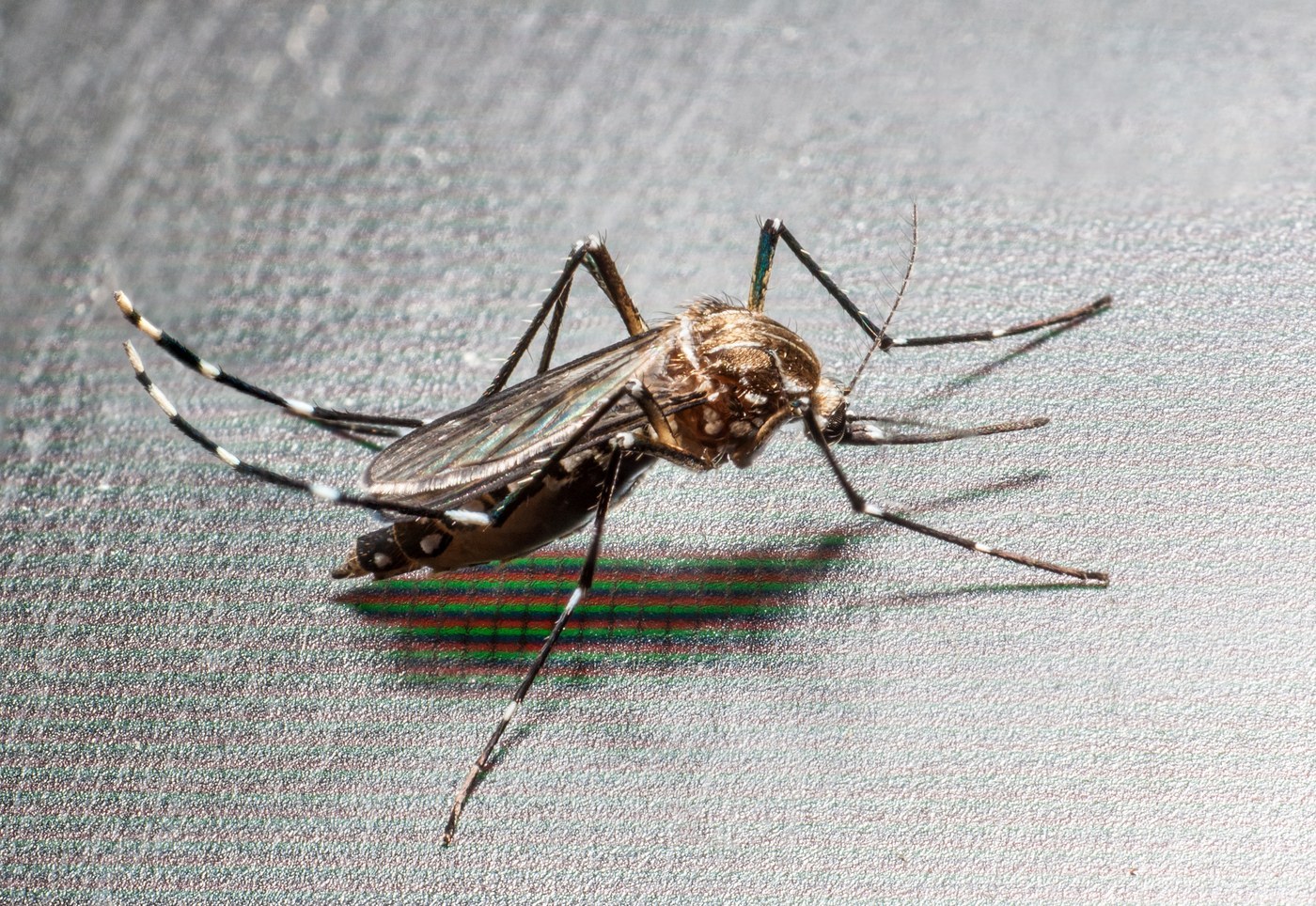
Asian Tiger Mosquito
Shaded urban and suburban areas near small water-holding containers, tires, and tree holes; native to Southeast Asia, now widespread
Tsetse Fly
Wooded savanna, riverine thickets, and forest edges across sub-Saharan Africa
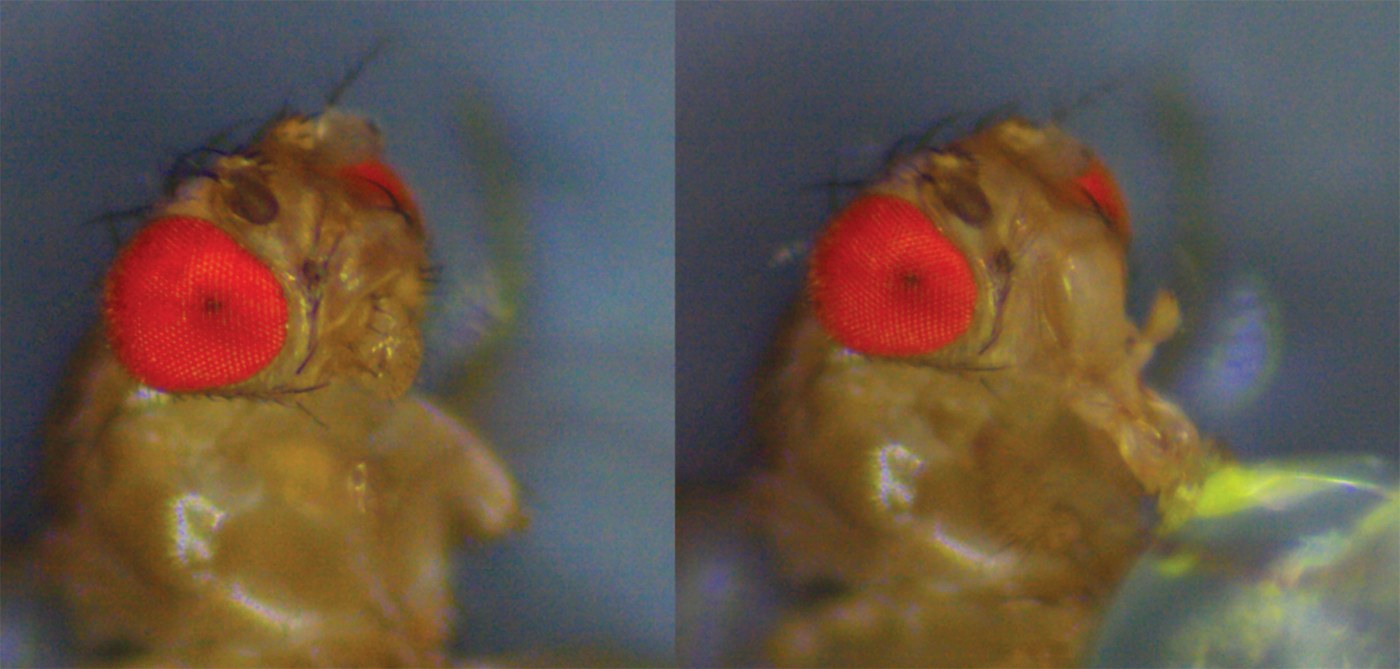
Vinegar Fly
Around overripe fruit, compost, and fermenting materials worldwide
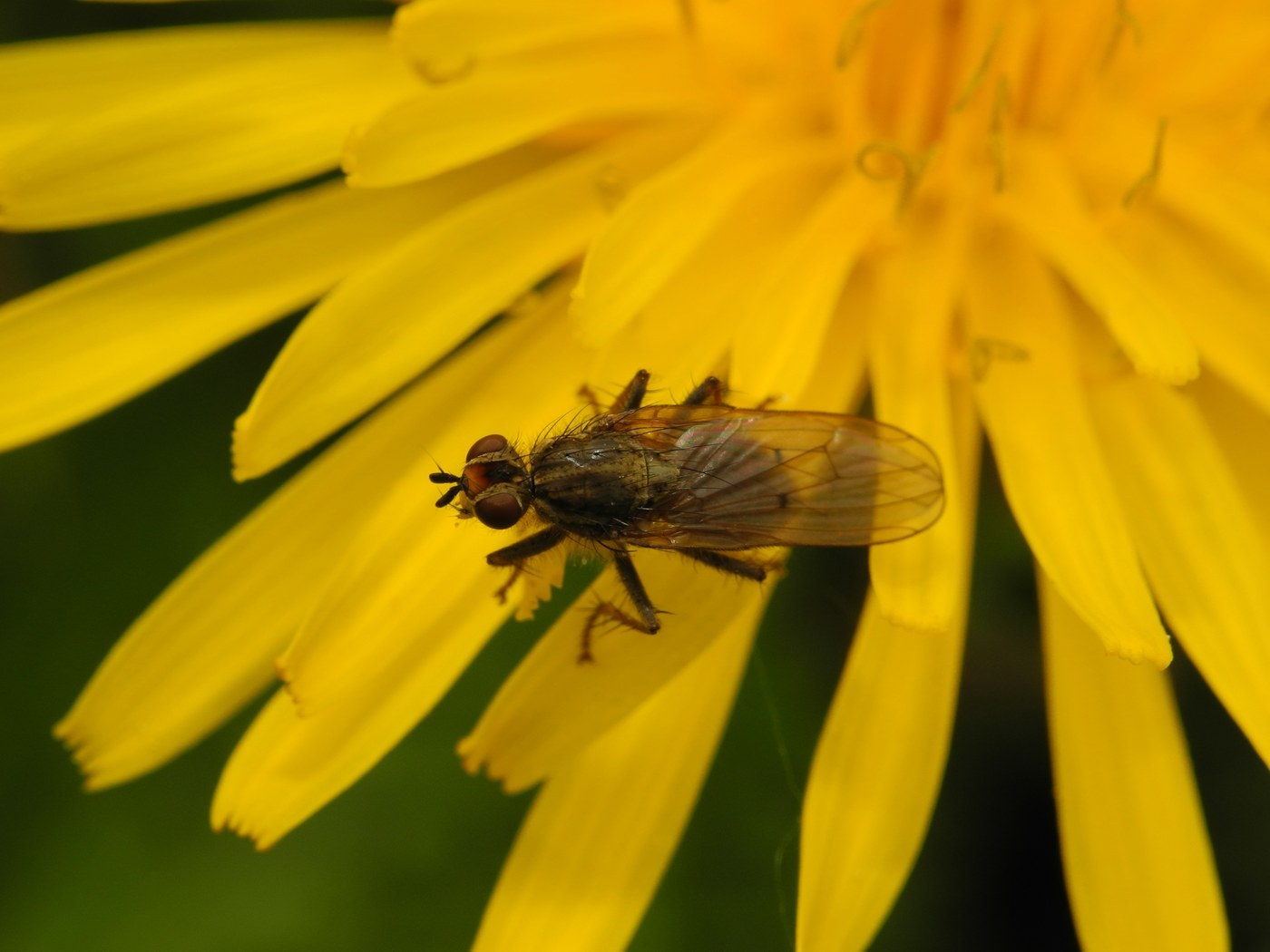
Yellow Dung Fly
Pastures and fields with fresh cattle dung
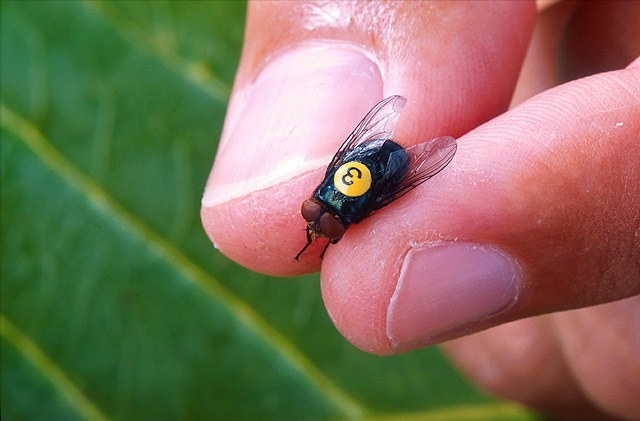
Screwworm Fly
Warm, humid lowlands of the Americas, especially near livestock and wildlife wounds
Soldier Fly
Wetland margins, decaying organic matter, and vegetation near water
Punkie
near marshes, mudflats, ponds, and other standing water