Spring Azure Identification Guide
Learn to recognize one of the earliest butterflies of the year by its pale lavender-blue wings.
Read the full Spring Azure encyclopedia entry →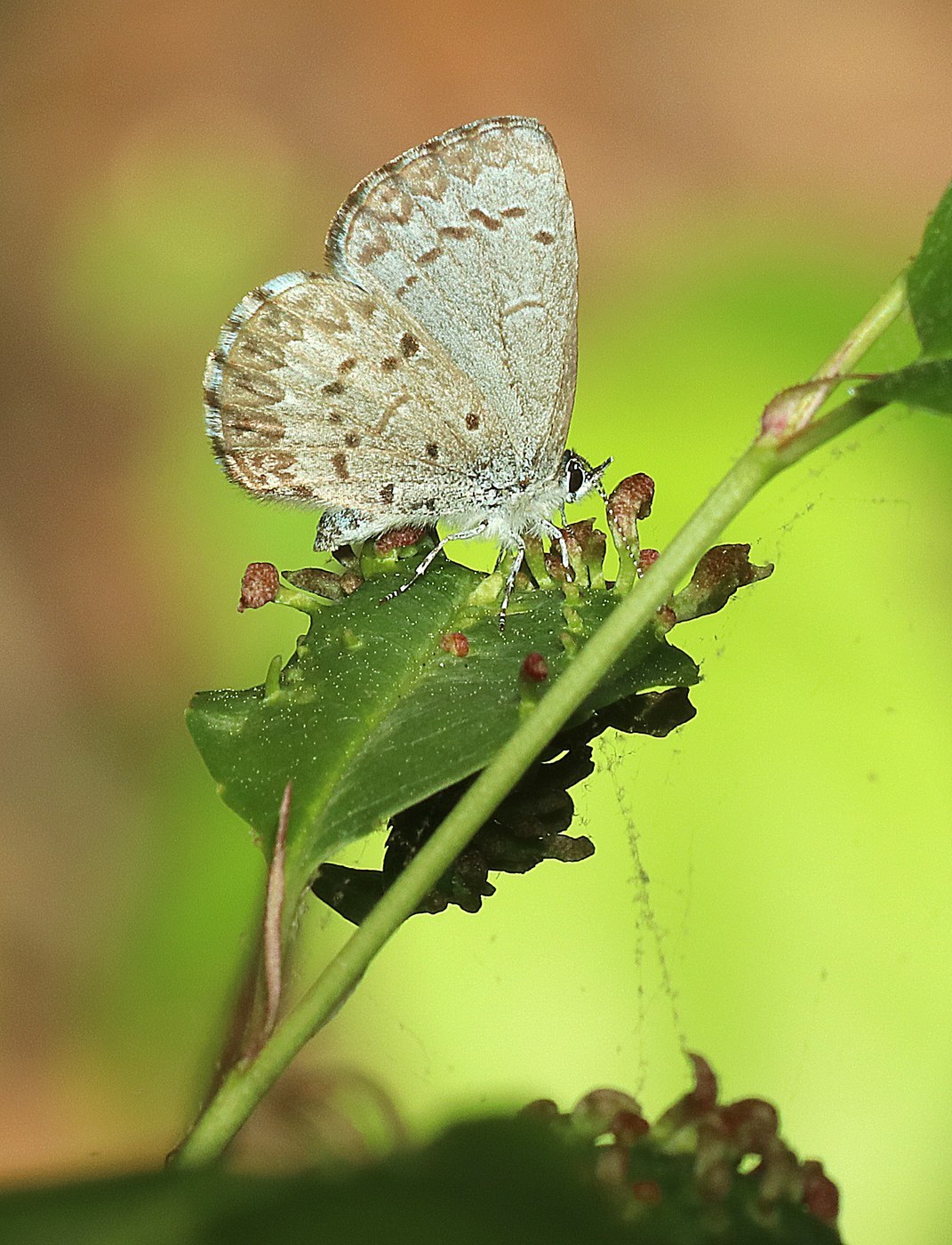
Key Visual Features
The Spring Azure (Celastrina ladon) is a small, delicate butterfly with a wingspan of roughly 0.75 to 1.25 inches.
- Color: Dorsal wings are a soft lavender-blue; males tend to appear brighter and more uniformly blue, while females typically show darker gray-black borders along the wing edges.
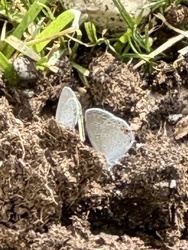
- Underside: Pale gray to nearly white, with small, scattered gray or black spots and no bold banding.
- Wing shape: Rounded wings without any tails.
- Body: Small and slender, colored to match the wings.
- Markings: Notably lacks orange spots or crescents, distinguishing it from several other small blue species.
Where and When You'll See It
Spring Azures are typically found at woodland edges, forest openings, and along wooded trails. As their name suggests, they are among the very first butterflies to appear each year, often flying in early spring before many other species have emerged, with a single main flight period. They are part of a complex of closely related "azure" butterflies that vary somewhat by region and flight timing, with the classic Spring Azure representing the earliest-flying members of this group.
Similar-Looking Species
- Summer Azure: Similar in appearance but flies later in the season and tends to look slightly paler; some references treat it as a separate, closely related species.
- Eastern Tailed-Blue: Has a thin hindwing tail and small orange spot near its base, both of which are absent in the Spring Azure.
- Karner Blue: Larger band of orange crescents on the underside, a feature the Spring Azure lacks entirely.
Quick ID Checklist
- Small size with soft lavender-blue upper wings
- No tails and no orange markings
- Pale gray underside with scattered small spots
- One of the earliest butterflies to appear each spring
- Found along woodland edges and forest openings
Frequently asked questions
Why is it called the Spring Azure?
It's named for both its pale blue (azure) coloring and its habit of being one of the first butterflies to fly in early spring.
How is the Spring Azure different from the Eastern Tailed-Blue?
The Spring Azure has no tails and no orange spots, while the Eastern Tailed-Blue has a thin hindwing tail paired with a small orange spot near its base.
What habitat should I check to find one?
Woodland edges, forest openings, and shaded trails are the most reliable places to spot a Spring Azure, especially in early spring.
Is the Spring Azure the same as the Summer Azure?
They are very closely related and similar in appearance, but the Summer Azure flies later in the season and is sometimes classified as a distinct species.
Spring Azure identified by the community
Recent Spring Azure finds identified with Bug Identifier.