Squash Beetle Identification Guide
Recognize this large, coppery, spotted beetle that resembles an oversized lady beetle on squash vines.
Read the full Squash Beetle encyclopedia entry →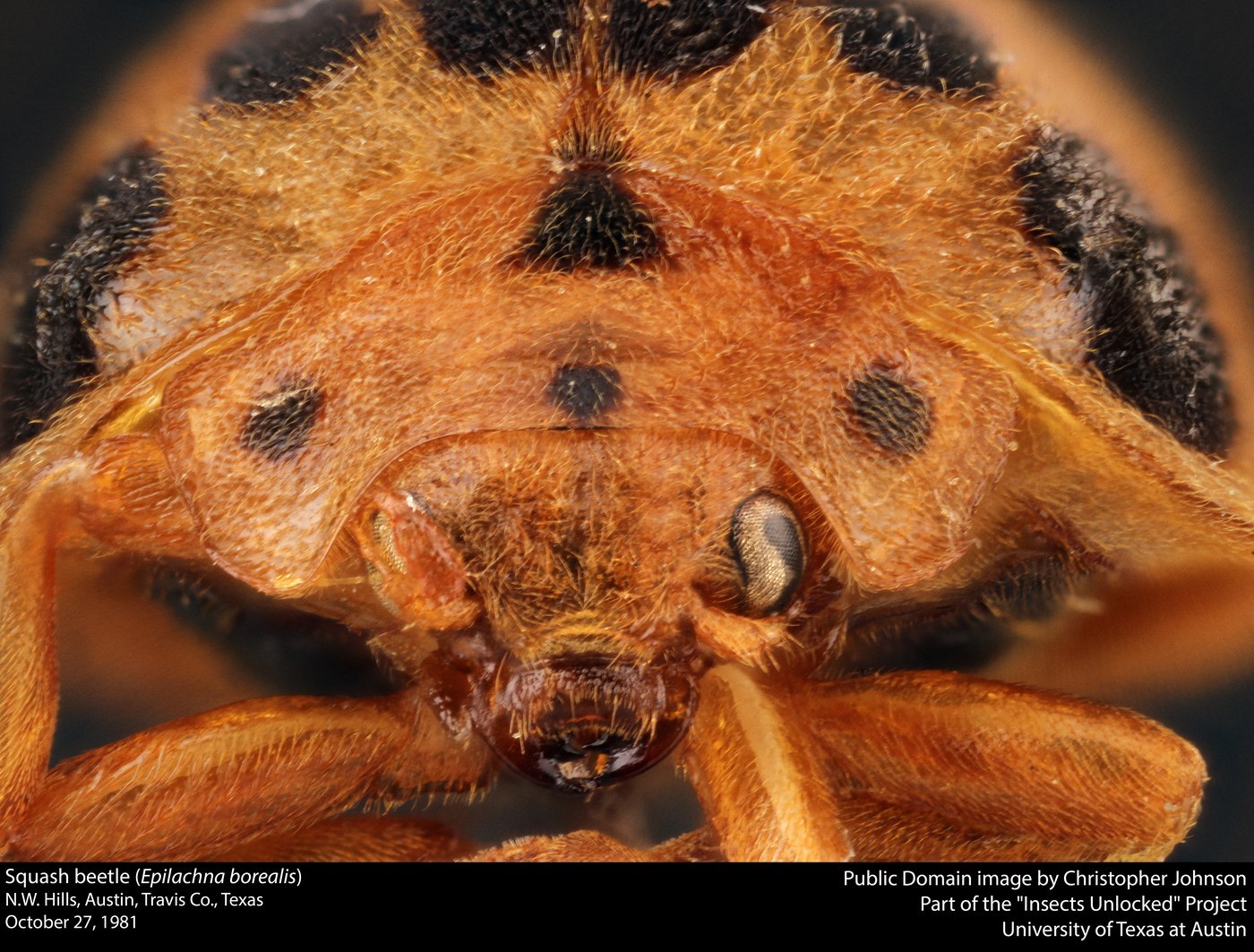
Key Visual Features
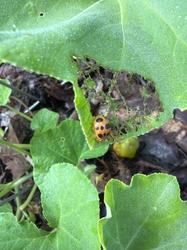
The squash beetle is a relatively large member of the lady beetle family, measuring about 7-10 mm long, noticeably bigger than common garden lady beetles. Its rounded, dome-shaped body is a coppery orange to yellowish-tan color, covered with numerous black spots arranged in rows across the wing covers. Unlike smooth, glossy lady beetles, the squash beetle's shell often has a faintly hairy or matte texture when viewed closely. The head is small and mostly hidden beneath the pronotum, and the legs and antennae are short and dark.
Where and When You're Likely to See Them
Look for squash beetles on the leaves of squash, pumpkin, and other cucurbit vines during the growing season, typically from late spring through summer. Adults and their spiny, yellow larvae are usually found feeding on the leaf surface during the day, often leaving characteristic circular feeding patterns behind. They favor warm, sunny garden and field settings wherever cucurbit crops are grown.
Similar-Looking Bugs
The squash beetle is frequently mistaken for a large lady beetle because of its rounded shape and spotted pattern, but its bigger size and duller, coppery-tan background color set it apart from the smaller, glossier red or orange lady beetles. It can also be confused with the Mexican bean beetle, a very close relative that looks almost identical; the main distinction is host plant, since Mexican bean beetles are found on beans rather than squash vines. Cucumber beetles, another common visitor to cucurbits, are more elongated and lack the dome-shaped, spotted lady-beetle profile.
Quick ID Checklist
- Large, dome-shaped body around 7-10 mm, bigger than typical lady beetles
- Coppery orange to tan background with numerous black spots
- Faintly hairy or matte shell texture rather than glossy
- Found on squash, pumpkin, and other cucurbit vine leaves
- Larvae are spiny and yellowish, feeding alongside adults on leaf surfaces
Frequently asked questions
How is a squash beetle different from a regular lady beetle?
Squash beetles are noticeably larger, have a duller coppery-tan color instead of glossy red or orange, and their shell has a slightly hairy texture compared to the smooth shell of common lady beetles.
What plants should I check for squash beetles?
They are specific to cucurbits, so check squash, pumpkin, and related vine leaves for adults and their spiny larvae.
How can I tell squash beetles apart from Mexican bean beetles?
The two look very similar, but squash beetles are found on cucurbit vines while Mexican bean beetles are found on bean plants, making host plant the most reliable clue.
What does squash beetle feeding damage look like?
Adults and larvae typically skeletonize leaves, leaving rounded, papery patches where only the leaf veins remain, which is a helpful sign to look for alongside the beetle itself.
Squash Beetle identified by the community
Recent Squash Beetle finds identified with Bug Identifier.