Squash Vine Borer Identification Guide
Learn to identify the squash vine borer moth by its wasp-like orange-and-black body and clear-tipped wings.
Read the full Squash Vine Borer encyclopedia entry →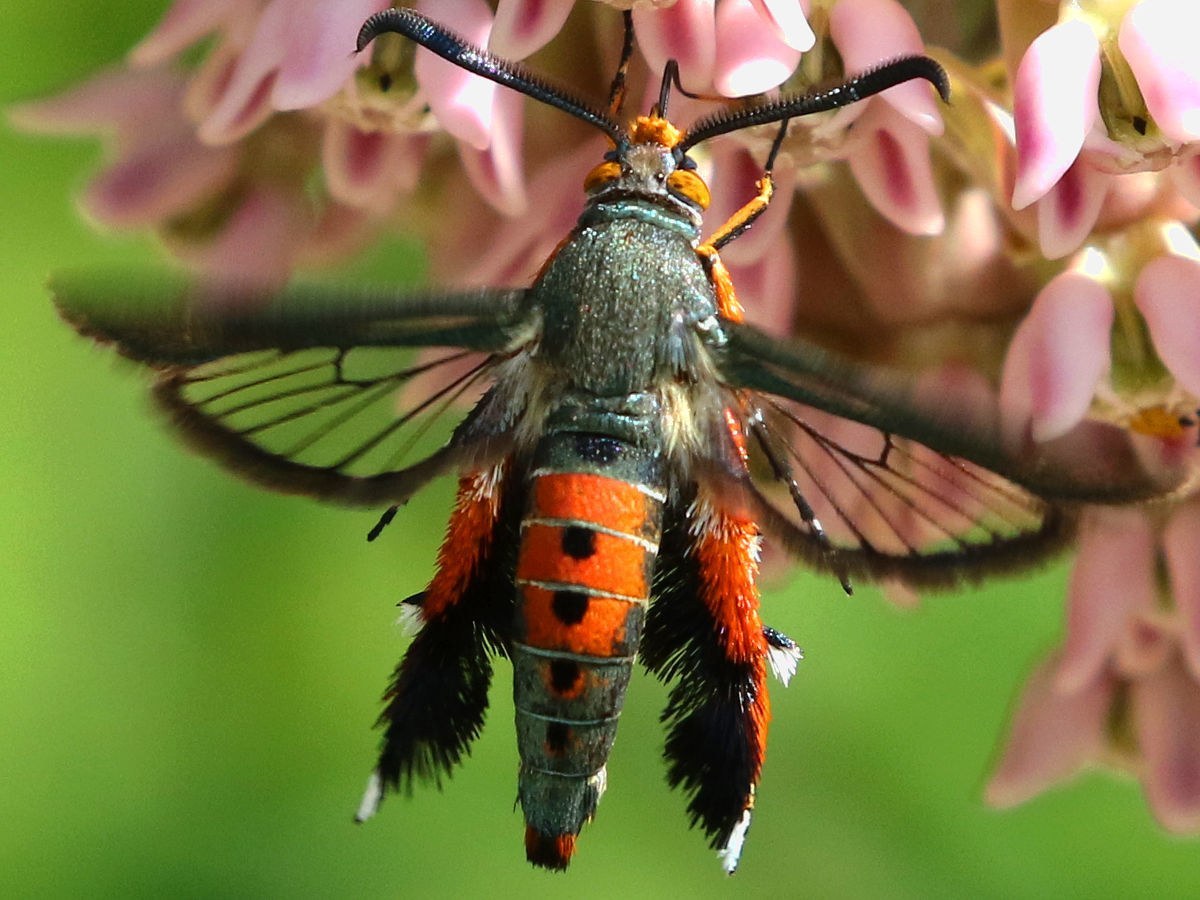
Key Visual Features
The squash vine borer (Melittia cucurbitae) is a day-flying moth that is often mistaken for a wasp due to its coloring and flight pattern.
- Size: Wingspan of roughly 25-38 mm, noticeably larger and more robust than many small household moths.
- Body color: Metallic olive-green to blackish body with a bright orange-red abdomen marked by a row of black dots running down its length, closely resembling wasp coloring.
- Forewings: Narrow and covered in metallic, coppery-green to dark scales, appearing solid and opaque.
- Hindwings: Largely clear or transparent with dark veining and a narrow dark border, a feature that sets it apart from most other moths, which typically have fully scaled wings.
- Legs: Notably long and fringed with orange and black hair-like scales, adding to the wasp-like appearance.
- Flight behavior: Unlike most moths, it is active during the day, with a fast, buzzing flight pattern more reminiscent of a wasp than a typical fluttering moth.
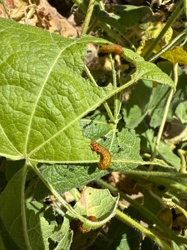
- Larvae: Cream-white, wrinkled caterpillars with a brown head, found boring inside plant stems rather than visible externally.
Where and When You'd See It
Adults are seen in gardens and agricultural areas during the day, particularly around the base of vining plants in the squash and gourd family, from late spring through summer depending on region and climate. Look for them hovering or darting quickly around the base of plant stems, where females lay eggs on the stem surface. Wilting sections of vine combined with small holes and a sawdust-like material (frass) near the base of the stem are strong indirect signs of larval activity inside, even when the moth itself is not directly visible.
Similar-Looking Bugs
- Wasps: The squash vine borer's coloring and flight closely mimic wasps, but it has a stouter, moth-like body and the two-toned wing structure (opaque metallic forewings, clear hindwings) that wasps lack entirely.
- Clearwing moths (related species): Share the clear-wing feature, but differ in host plant association and precise color pattern, with the squash vine borer specifically tied to vining cucurbit plants.
- Other day-flying moths: Generally lack the bold orange-and-black abdomen and clear hindwings seen in this species.
Quick ID Checklist
- Wasp-like moth, 25-38 mm wingspan, active during the day
- Metallic green-black forewings paired with mostly clear hindwings
- Bright orange-red abdomen with a row of black dots
- Long legs fringed with orange and black scales
- Found hovering near the base of squash and gourd vines in warmer months
Frequently asked questions
Why is the squash vine borer often mistaken for a wasp?
Its metallic green-black body, bright orange-red abdomen with black dots, and fast daytime flight pattern closely mimic the appearance and behavior of a wasp, even though it's a moth.
What makes the squash vine borer's wings unusual for a moth?
Its hindwings are largely clear or transparent, showing dark veins and a narrow border, which is unusual since most moths have fully scale-covered, opaque wings on both wing pairs.
When during the day is the squash vine borer active?
Unlike most moths, it flies actively during daylight hours, often seen hovering or darting quickly around the base of vining plants rather than at night.
How can I tell if squash vine borer larvae are present without seeing the moth?
Signs like wilting vine sections combined with small entry holes and a sawdust-like material near the base of the stem can indicate larval activity inside, even without spotting the adult moth directly.
Squash Vine Borer identified by the community
Recent Squash Vine Borer finds identified with Bug Identifier.