Stinging Rose Caterpillar Identification Guide
Identify this small, brightly striped slug caterpillar by its alternating purple and orange bands and tufted spines.
Read the full Stinging Rose Caterpillar encyclopedia entry →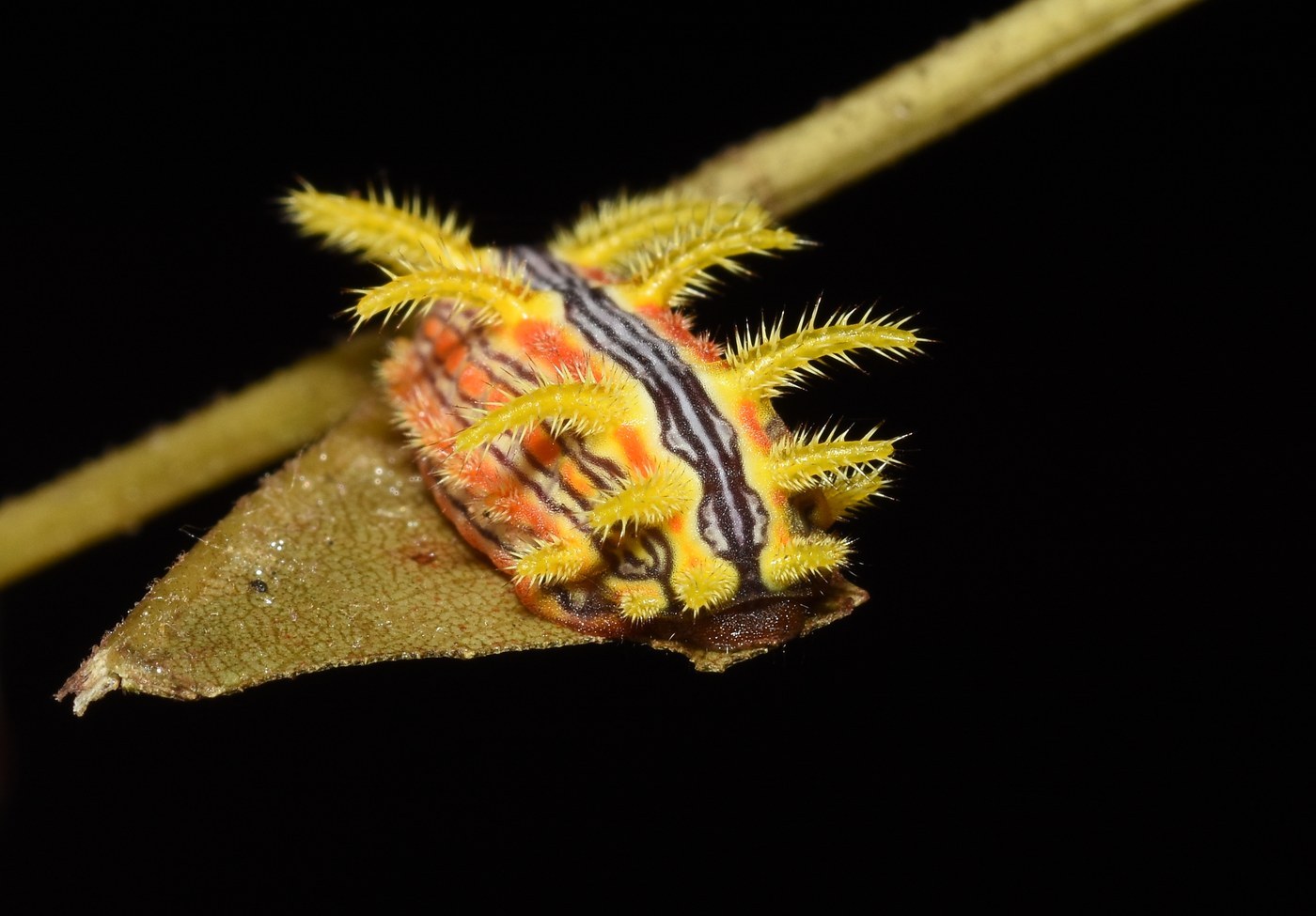
Key Visual Features
The stinging rose caterpillar is a compact, colorful member of the slug caterpillar family (Limacodidae).
- Body shape: Short, stout, and slug-like, flattened underneath, typically under an inch long.
- Color pattern: Alternating longitudinal stripes of maroon/purple and yellow-orange running the length of the body, giving it a candy-striped look.
- Spines: Tufted clusters of stiff spines project from bumps along the back and sides, arranged in symmetrical rows; spine clusters are often tipped in a darker shade.
- Head: Small and tucked beneath the front of the body, not easily visible from above.
- Texture: The body surface appears smooth between the spine clusters, in contrast to the bristly tufts themselves.
Where and When You'll See It
Despite its name, the stinging rose caterpillar feeds on more than roses — it is also found on dogwood, oak, maple, redbud, and cherry. It occurs across the southeastern and eastern United States, typically appearing on the undersides of leaves from mid to late summer into early fall.
Similar-Looking Caterpillars
- Saddleback caterpillar: Has a bold solid-green saddle patch rather than fine longitudinal stripes.
- Spiny oak-slug caterpillar: Usually shows a mottled or saddle-like pattern rather than clean, parallel stripes.
- Hag moth caterpillar (monkey slug): Has long, drooping, hairy lobes instead of short spine tufts, making it easy to tell apart at a glance.
- Nason's slug moth caterpillar: Similar small size and slug shape, but typically shows a more solid green body with less pronounced striping.
Quick ID Checklist
- Small, stout, slug-shaped body under 1 inch long
- Alternating purple/maroon and yellow-orange longitudinal stripes
- Tufted spine clusters arranged in symmetrical rows along the back
- Head hidden beneath the front of the body
- Found on rose, dogwood, oak, or maple leaves in mid-to-late summer
Frequently asked questions
Is the stinging rose caterpillar only found on rose bushes?
No, despite the common name it also feeds on dogwood, oak, maple, redbud, and several other woody plants.
How can I distinguish it from a saddleback caterpillar?
The saddleback shows one bold green saddle patch, while the stinging rose caterpillar has multiple thin, alternating purple and orange stripes running the length of its body.
What time of year are stinging rose caterpillars most active?
They are typically seen from mid-summer through early fall, feeding on the undersides of host plant leaves.
What does the adult moth look like?
The adult is a small, plain brownish-tan moth, much less conspicuous than the brightly striped larval stage.
Stinging Rose Caterpillar identified by the community
Recent Stinging Rose Caterpillar finds identified with Bug Identifier.