Striped Bark Scorpion Identification Guide
Learn to identify the striped bark scorpion by its two dark parallel stripes and slender pale-yellow body.
Read the full Striped Bark Scorpion encyclopedia entry →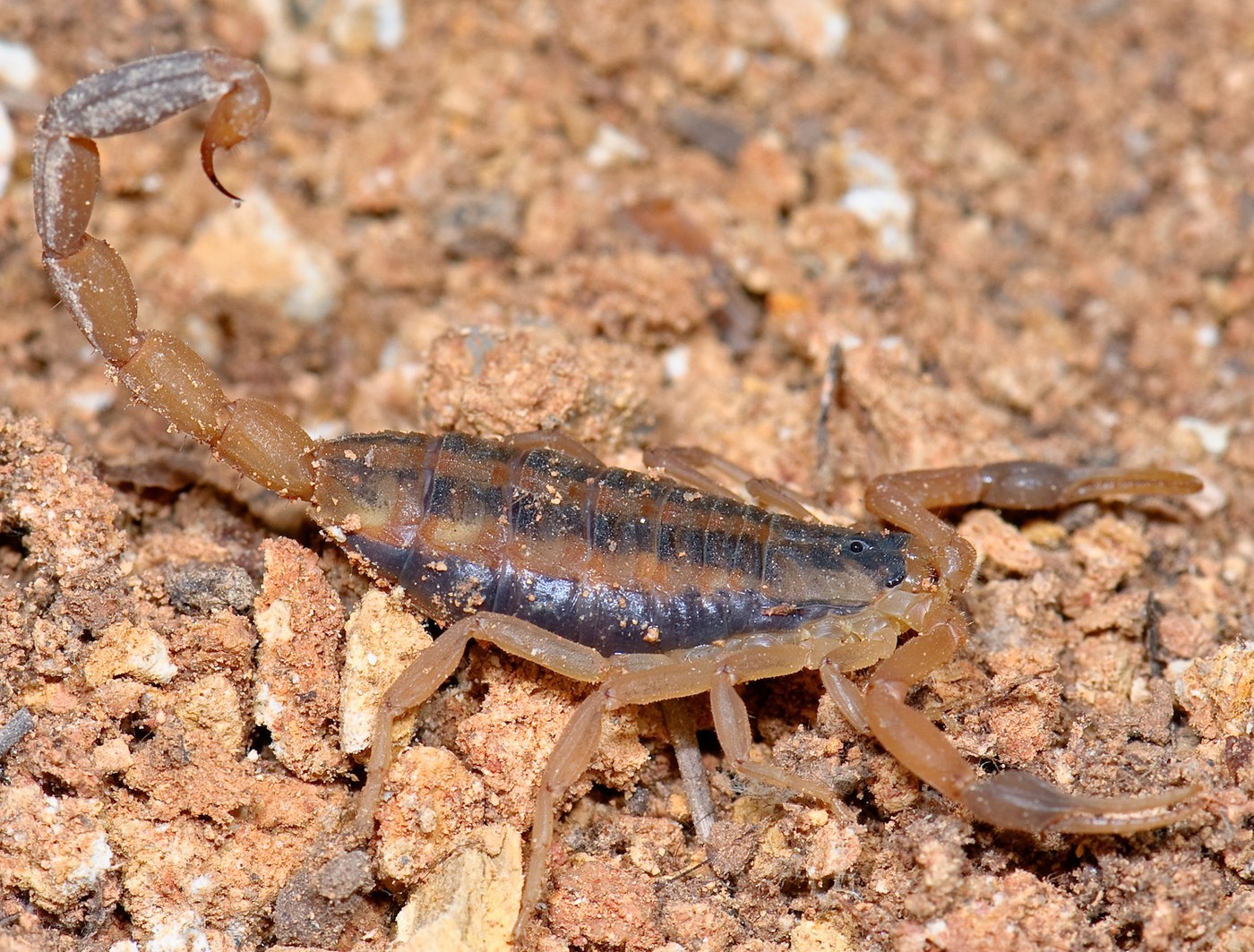
Key Visual Features
The striped bark scorpion (Centruroides vittatus) is one of the most commonly encountered scorpions in its range, recognizable by its distinctive striping.
- Size: Adults typically measure 2 to 2.75 inches (5-7 cm) in length, including the tail.
- Color: Pale yellow to tan base color with two broad, dark brown to black stripes running lengthwise down the back — the feature that gives this species its common name.
- Body shape: A slender, elongated body divided into a segmented abdomen and a narrow tail (metasoma) that curves upward, ending in a bulbous segment.
- Pincers (pedipalps): Slender and elongated compared to some other scorpion species, pale in color to match the body.
- Legs: Eight legs, pale yellowish, often with faint darker markings.
- Markings: A dark triangular mark on the front of the head area (carapace) is often visible in addition to the two dorsal stripes.
Where and When You'd See It
Striped bark scorpions are found in a variety of dry habitats including grasslands, rocky outcrops, and areas with loose bark, fallen logs, or debris piles — hence the name "bark" scorpion. They are nocturnal, hiding during the day under rocks, logs, loose bark, or debris, and becoming active at night when they hunt. They are most commonly encountered during warmer months, especially in the evening or after dark, and under ultraviolet light they fluoresce a pale blue-green, which is a helpful, though tool-assisted, identification aid at night.
Similar-Looking Bugs
- Arizona bark scorpion: Slimmer and typically a more uniform light tan color without the two bold dark stripes seen in the striped bark scorpion.
- Yellow scorpion: Generally a more solid, unstriped yellow or tan color overall, lacking the paired dark dorsal stripes.
- Flat rock scorpion: Has a noticeably flattened body suited for squeezing into rock crevices, differing from the more cylindrical body of the striped bark scorpion.
Quick ID Checklist
- Pale yellow to tan body with two bold dark stripes down the back
- Slender pincers and a narrow, upward-curving tail
- Dark triangular mark near the front of the head region
- Found hiding under bark, logs, rocks, or debris during the day
- Active at night, especially in warm weather
Frequently asked questions
What is the most distinctive feature of the striped bark scorpion?
The two broad dark stripes running down the length of its pale yellow to tan back are the clearest identifying feature, giving the species its common name.
How big does a striped bark scorpion get?
Adults typically reach about 2 to 2.75 inches in total length, including the tail, making them a moderately sized scorpion.
Where do striped bark scorpions hide during the day?
They shelter under rocks, loose bark, fallen logs, and debris piles, emerging at night to become active.
How can you tell it apart from an Arizona bark scorpion?
The striped bark scorpion shows two bold dark stripes on a pale body, while the Arizona bark scorpion is typically a more uniform light tan without that paired-stripe pattern.
Striped Bark Scorpion identified by the community
Recent Striped Bark Scorpion finds identified with Bug Identifier.