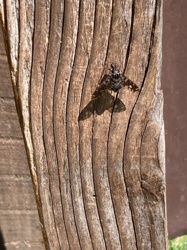
Tachinid Fly Identification Guide
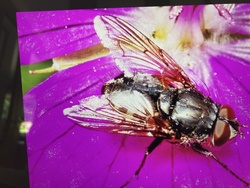
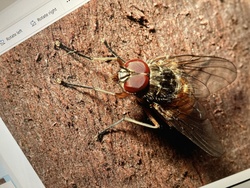
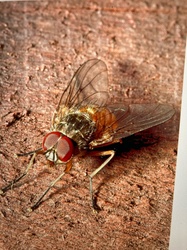
Recognize tachinid flies by their bristly abdomen, house-fly-like build, and habit of basking on flowers and foliage.
Read the full Tachinid Fly encyclopedia entry →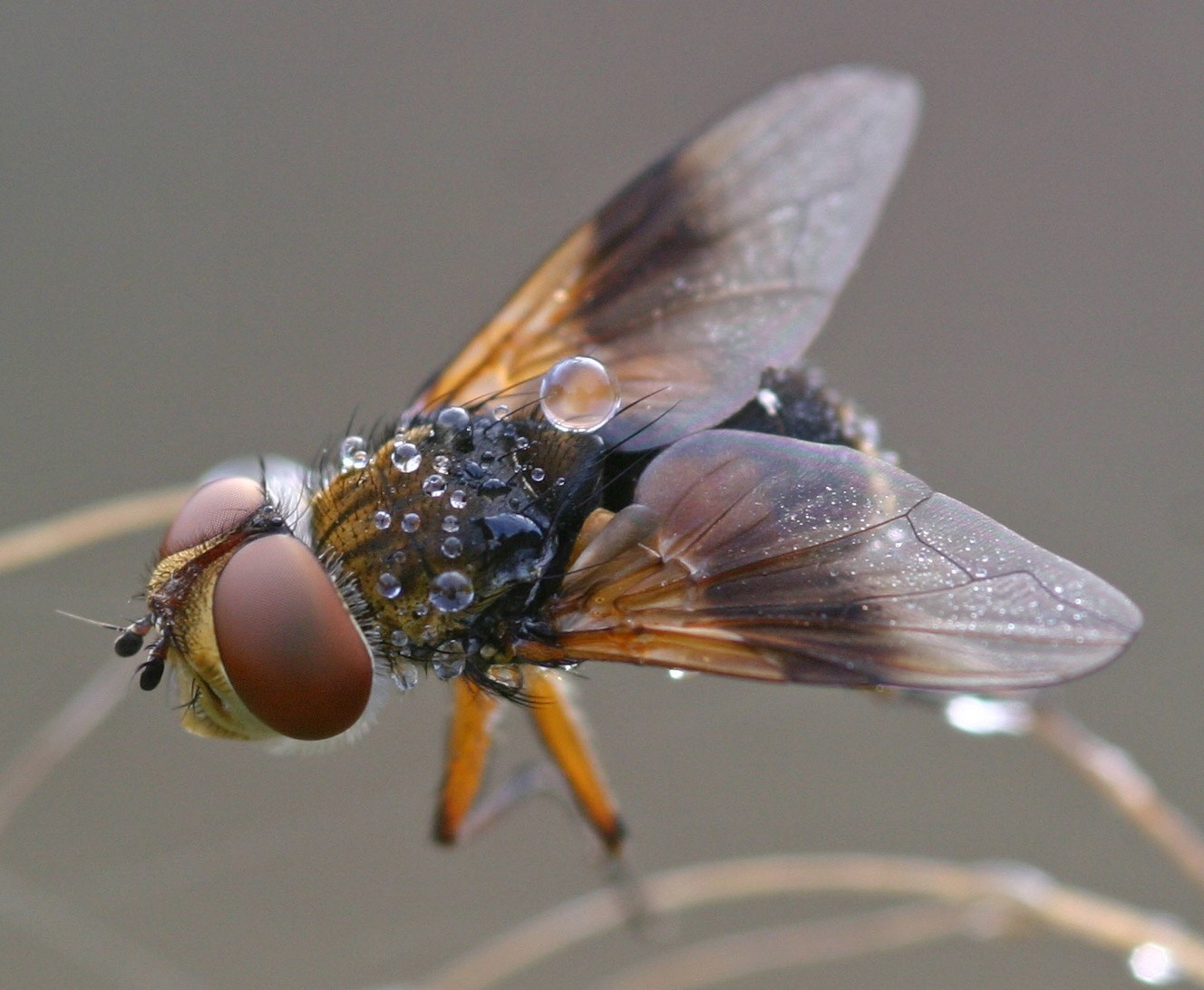
Key Visual Features
Tachinid flies (family Tachinidae) are a large and varied group, but most share a bristly, robust build.
- Body: Stout and somewhat house-fly-shaped, usually 0.3 to 0.6 inches long, though size varies widely across species.
- Bristles: A key identifying trait is the row of stiff bristles around the rear edge of the abdomen, which can look almost spiny.
- Color: Commonly gray, black, or brown, sometimes with a checkered pattern or metallic sheen; some species have orange or reddish abdomens.
- Head: Broad with large reddish or brown eyes and short antennae.
- Wings: Clear or lightly tinted, held out to the sides at an angle when at rest, unlike many flies that fold wings flat.
Where and When You'd See Them
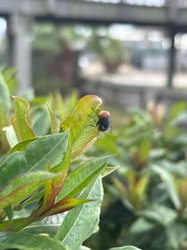
Tachinid flies are common from spring through fall in gardens, meadows, and along woodland edges wherever flowering plants are available, since adults feed on nectar and pollen. They are frequently seen basking on flat-topped flower clusters such as those of wild carrot or yarrow, or resting in sunny spots on leaves. Activity peaks during the warmer daylight hours. Because their larvae develop as parasites within other insects, adult tachinids are often found patrolling vegetation in search of host insects on which to lay eggs.
Similar-Looking Bugs
- House flies: Smoother-bodied and lack the prominent bristles around the abdomen tip.
- Blow flies: Often have a shinier, more uniformly metallic body without the coarse bristling.
- Flesh flies: Similar gray-and-checkered pattern, but tachinids typically show heavier bristling and hold wings more angled outward at rest.
- Bee flies: Rounder, furrier bodies with long, needle-like mouthparts; tachinids are bristly rather than fuzzy.
Quick ID Checklist
- Stout, house-fly-like body with a ring of stiff bristles at the abdomen tip
- Gray, black, or brown coloring, sometimes checkered
- Wings often held angled outward rather than flat
- Commonly seen basking on flat flower clusters in sunny gardens
- Active spring through fall wherever flowering plants grow
Frequently asked questions
What makes tachinid flies look bristly?
Most tachinid flies have a row of stiff, spine-like bristles around the tip of the abdomen, which is one of the most reliable visual clues separating them from similar house-fly-like species.
Where are tachinid flies commonly seen?
They are frequently spotted basking on flat-topped flower clusters in gardens and meadows, where the adults feed on nectar and pollen.
How do tachinid flies differ from house flies?
Tachinids generally appear bulkier and more heavily bristled, especially around the rear of the abdomen, and often rest with wings angled outward rather than folded flat.
What time of year are tachinid flies active?
They are typically seen from spring through fall, with activity closely tied to the blooming of nectar-rich flowers they visit.
Tachinid Fly identified by the community
Recent Tachinid Fly finds identified with Bug Identifier.